Baligasm
Baligasm

Destination guide · Central Bali

Ubud Area Guide

Temples, paddies and nightly dance, best explored on foot and early.

By the Baligasm editors · Updated 29 October 2026

Area brief

What Ubud is really like

Set in the hills of Gianyar regency, roughly 38 km north of Ngurah Rai airport and a 75-minute to two-hour drive away, Ubud is a cluster of ridge villages where temples, dance and rice farming are part of daily life. It is the right base for first-time visitors, walkers, couples and anyone on a wellness trip, less so for beach lovers. Give it three days, or five with Mount Batur and the waterfalls.

Ubud is less a town than a string of villages, each laid along a ridge between river gorges. Royalty still occupies the palace on Ubud Main Road. Gamelan and dance fill a stage somewhere each night, and most weeks a ceremony shuts a road for an hour or two. Walk ten minutes from the palace and you are among paddies. Few places in Bali keep tradition and farmland this close to the café strip, which is why Ubud remains the island's best base for temples and inland trips.

The downsides are real. The lanes in the centre were laid out long before coaches and scooters, and they clog easily. Gianyar introduced a one-way loop on 8 September 2026, sending Ubud Main Road traffic east and Pengosekan Road traffic north, and on day one drivers sat in jams for over four hours. Pavements along Monkey Forest Road and Hanoman Road are tight and uneven. Costs have climbed too: an adult ticket to the Monkey Forest is IDR 130,000, and Tegallalang's rim has filled with paid swings and view cafés.

A few familiar places have changed. Fire swept through part of the Ubud market in August 2024, taking one of its two blocks, and Sari Organik, the café that drew walkers onto the Subak Sok Wayah path, no longer trades, though the path itself is open. Within 15 to 60 minutes' drive lie Tirta Empul, Gunung Kawi, Goa Gajah and several waterfalls, and Batur trek drivers arrive at about 2 am. Mornings are when Ubud shines: at 6:30 the Campuhan ridge is empty and cool, and the farmers have started work.

Next to Canggu or Seminyak, Ubud swaps beaches and late bars for yoga shalas, galleries and cooking schools. Location within Ubud shapes your stay more than in most parts of Bali. A central room means walking everywhere, with the noise that comes with it. Penestanan and Nyuh Kuning are calmer yet still walkable. Sayan, Kedewatan and Tegallalang have the valley views, but you will need a car each evening.

Best for
Temples, dance, yoga, food and walks through the paddies
Vibe
Leafy, arty and spiritual; busy in the middle
From the airport
Roughly 38 km, a 75-minute to two-hour drive
Days needed
Three; five if you add Batur and the waterfalls
Best time
Dry months, April to October; any month at dawn
Getting around
Walk in the centre; hire a driver or scooter for trips

Ubud suits you if…

  • ✓A first trip that combines temples, dance and rice fields in one place
  • ✓Walking: the ridge and paddy paths start at the edge of town
  • ✓Yoga retreats and unhurried wellness breaks
  • ✓Easy access to Tirta Empul, the Batur trek and the Bangli falls
  • ✓Couples after a resort or villa above a jungle valley

Skip it if…

  • ✕Beach days are the priority: Sanur, 45–60 minutes' drive, has the nearest swimming beach
  • ✕You lose patience in traffic: the centre is gridlocked most afternoons
  • ✕You want bars and clubs open after midnight
  • ✕Steep steps are difficult: valley hotels and waterfalls involve many
  • ✕You picture empty terraces at noon

Neighbourhoods

Which part of Ubud to stay in

01

Central Ubud

Ubud Main Road, Monkey Forest Road, Hanoman Road and Goutama Road enclose the core, where you find the palace, the market, Saraswati temple and the bulk of the cafés, spas and dance stages. Everything, including the Monkey Forest at the southern tip of Monkey Forest Road, is walkable. In exchange you get noise, scooters and afternoon congestion, which the new one-way loop from September 2026 has not yet eased. For a quieter room in the core, look at Goutama Road or the side lanes of Hanoman Road; Kajeng Road runs straight into the paddies.

Best for: Walkers without a scooter who want dinner and dance within a few minutes

02

Penestanan and Campuhan

Across the Campuhan bridge, Penestanan sits on its own ridge, reached by a steep staircase from Campuhan Road or by lanes no car can fit down. It was here, in the 1960s, that Dutch painter Arie Smit handed village children paints, giving rise to the Young Artists school. Guesthouses, villas and cafés now share the ridge with rice fields, roughly 25 minutes on foot from the palace. Campuhan and Sanggingan to the north hold the ridge trail and the Neka Art Museum.

Best for: Longer stays and anyone who wants peace without depending on a car

03

Sayan and Kedewatan

On the western edge of Ubud, Sayan and Kedewatan line the lip of the Ayung River gorge. Here are the big resorts and villa estates, pools staring out at jungle, and the launch points for many rafting trips. The centre is 4 to 7 km off, or 15 to 30 minutes in a car depending on the traffic. Check whether the hotel has a town shuttle before you book; without one, each dinner in Ubud means arranging a ride.

Best for: Honeymooners and resort guests who put the view ahead of walkability

04

Nyuh Kuning and Pengosekan

South of the Monkey Forest, Nyuh Kuning is a small, quiet village of guesthouses and villas joined to the bottom of Monkey Forest Road. Pengosekan lies east of it, with ARMA, spas and cafés, and The Yoga Barn sits a few minutes north. From either, the market is a 15 to 25-minute walk. Since September 2026 Pengosekan Road has carried only northbound traffic, and it backs up at peak times.

Best for: Yoga students and couples after peaceful evenings that are still walkable

05

Tegallalang and Keliki

Ten kilometres or so north of the palace, Tegallalang stretches along a road of craft shops towards its famous terraces. West of it on a neighbouring ridge, Keliki is a farming village whose tiny, detailed paintings have been known since the 1990s. Villas and small resorts in both look over long sweeps of paddy and valley. In traffic the centre is 25 to 40 minutes away, so you depend on a driver or scooter for everything.

Best for: Guests who want a villa above the rice fields and are fine being driven

06

Mas, Peliatan and Lodtunduh

Workshops and farmland take the place of cafés in these villages south and east of the centre. Mas is famous for woodcarving, Peliatan keeps its own small palace, and Lodtunduh, south-west of Mas, is largely villas among the fields. Prices are lower than in central Ubud and evenings are calmer. The palace is 4 to 8 km away, so plan on a scooter or driver, and note that Peliatan's main roads became one-way in September 2026.

Best for: Families and travellers on a budget who want room and a pool

Top sights · 29 picks

Things to do in Ubud

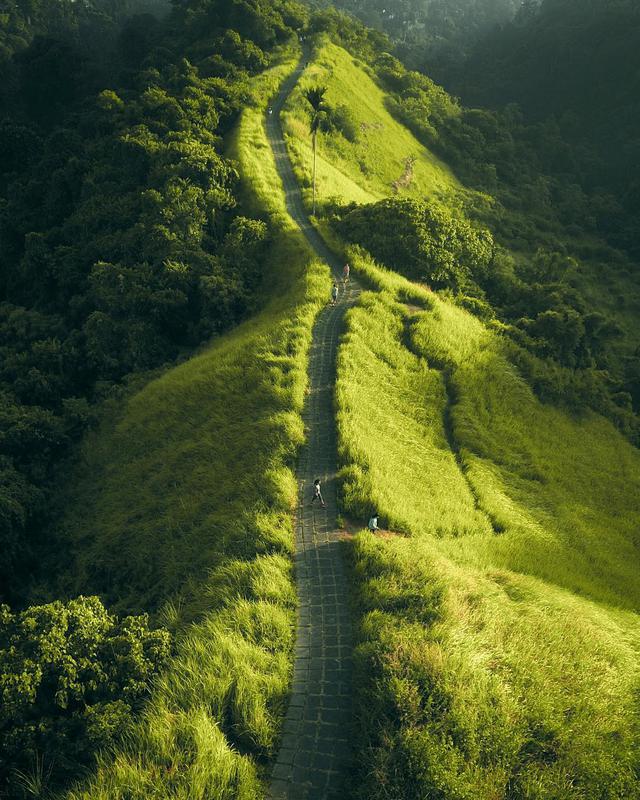
Campuhan Ridge Walk
Photo by @sudarma_55

01 · Nature

Campuhan Ridge Walk

📍 Campuhan, 1.5 km west of Ubud Palace

Starting next to Pura Gunung Lebah by the Campuhan bridge, a paved path climbs onto a grass-covered ridge between two valleys and continues for about 2 km to Bangkiang Sidem. Palms and jungle drop away on both flanks, yet Ubud Main Road is only ten minutes behind you. There is no fee. Allow 1.5 to 2 hours there and back, including stops, and finish with breakfast at one of the cafés at the northern end, such as Karsa Kafe.

Tip: No ticket. Set off at 6:00–7:30 am or after 5 pm, as there is no shade.

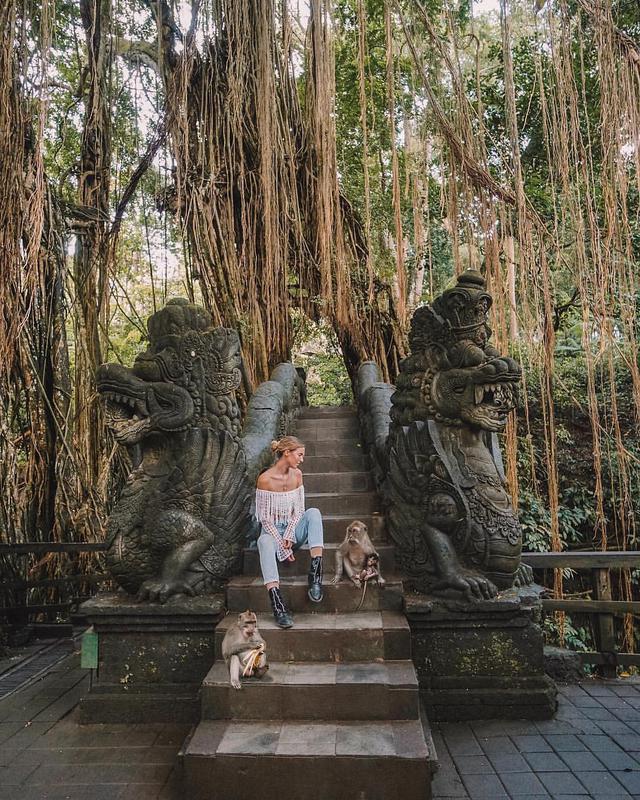
Sacred Monkey Forest Sanctuary
Photo by @meryldenis

02 · Nature

Sacred Monkey Forest Sanctuary

📍 South end of Monkey Forest Road, central Ubud

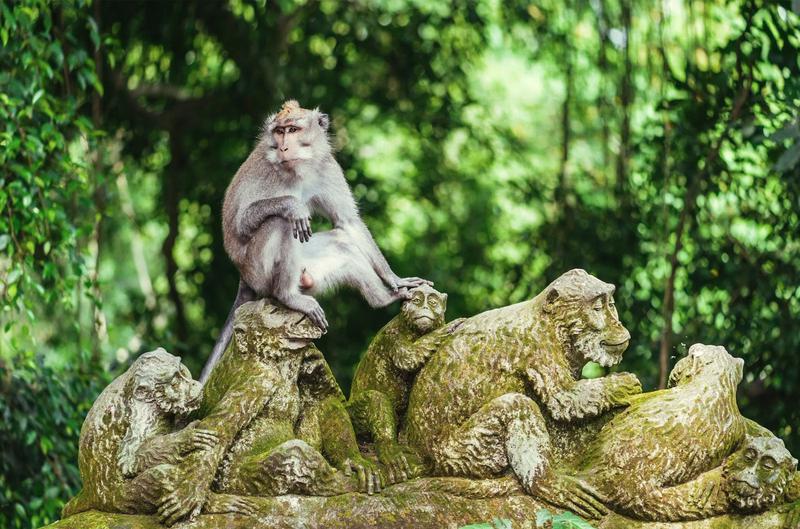
More than 1,000 long-tailed macaques live in this 12.5-hectare sanctuary of ravines, forest and mossy statues where Monkey Forest Road ends. Visitors may not enter its three temples, including Pura Dalem Agung Padangtegal, but can see them from the trails. Many people remember the banyan-shaded gorge and weathered stone steps as much as the animals. Zip every bag and leave pockets empty; staff at the on-site clinic treat any bites or scratches.

Tip: IDR 130,000 for adults and IDR 100,000 for children. Hours 9 am to 6 pm, last entry 5 pm. Food and plastic bags are banned.

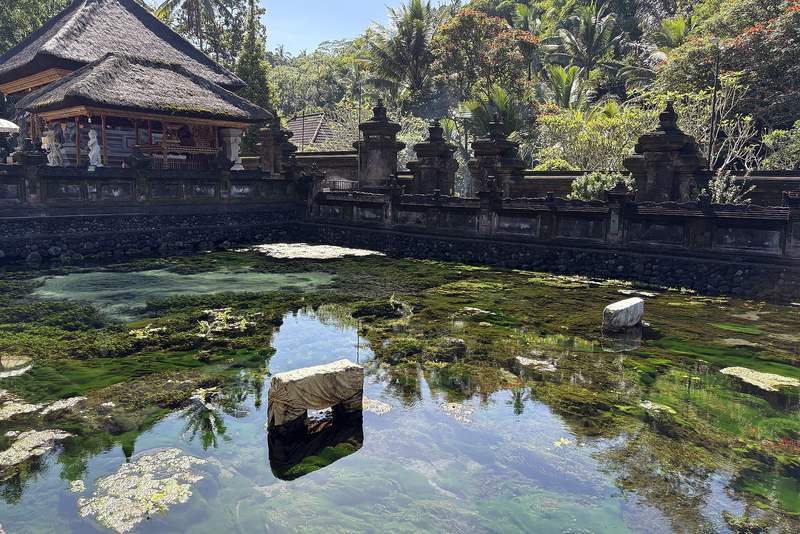
Tirta Empul
Photo: Chainwit. / Wikimedia Commons (CC BY 4.0)

03 · Temple

Tirta Empul

📍 Manukaya, Tampaksiring, 19 km north-east (30–40 min)

The spring here has fed a water temple since about 962 AD, and Balinese families still queue at its carved spouts to purify body and mind. You may take part too: rent the green sarong, begin at the left-hand end and leave out the two spouts used for funeral rites. Even as an onlooker, the procession of families with offerings is worth the trip. Overlooking the pools is Tampaksiring Palace, a presidential retreat started by Sukarno in 1957.

Tip: Adults pay about IDR 75,000 including sarong; hours 8 am to 6 pm. Come before 10 am and avoid full and new moon days.

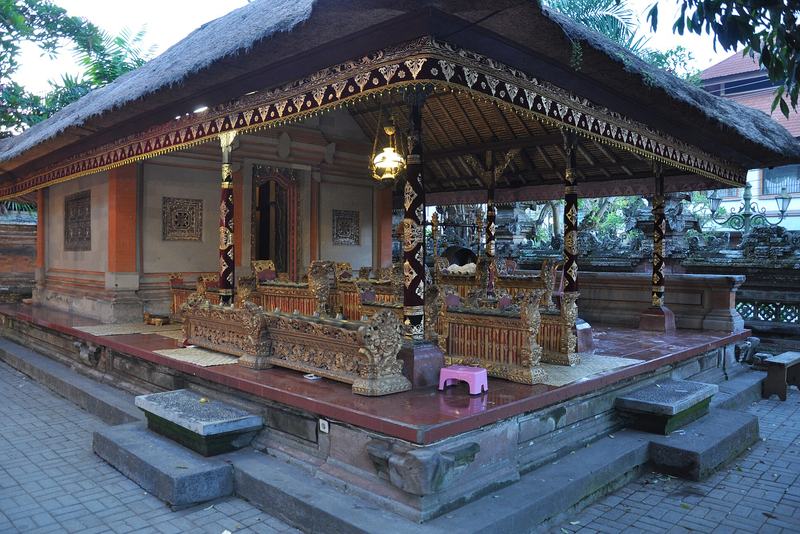
Ubud Palace and the nightly dance
Photo: Jorge Láscar / Wikimedia Commons (CC BY 2.0)

04 · Culture

Ubud Palace and the nightly dance

📍 Corner of Ubud Main Road and Monkey Forest Road

Facing the market across Ubud's main crossroads, Puri Saren Agung has housed the royal family since the 19th century. Its outer courtyards, carved gateways and pavilions are open and free during the day, while the inner compound is still lived in. In the evening the courtyard is lit up for a gamelan-accompanied performance at around 7:30 pm. The Legong is the usual choice, danced traditionally by young girls whose training begins at roughly five.

Tip: Around IDR 100,000 a ticket, from the gate or street sellers on Ubud Main Road. Seating is first come, so be there half an hour ahead.

Gunung Kawi Tampaksiring
Photo: Anandajoti / Wikimedia Commons (CC BY-SA 4.0)

05 · Temple

Gunung Kawi Tampaksiring

📍 Tampaksiring, 18 km north-east (30–40 min)

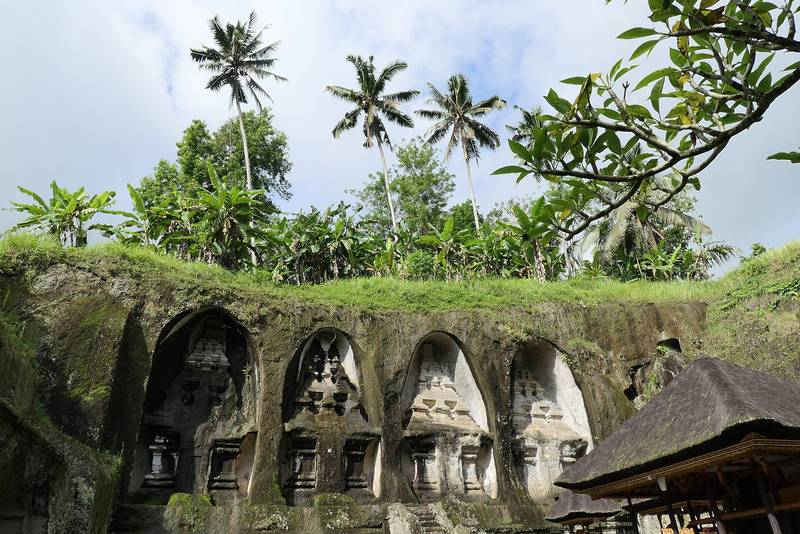
Carved in the 11th century, ten shrine facades about 7 metres tall fill niches in the cliffs of the Pakerisan valley: nine in two facing groups either side of the river and one on its own further south. They are linked to King Anak Wungsu and his queens. Reaching them means a long descent through rice terraces and a river crossing to the second group. It is close to Tirta Empul yet sees a fraction of the visitors, and its mix of stone, water and paddies is the finest in the valley.

Tip: Combine it with Tirta Empul in one morning. Sarongs are compulsory; take water for the steep stairs back up.

Tegallalang Rice Terrace
Photo by @whereisnikita

06 · Viewpoint

Tegallalang Rice Terrace

📍 Ceking, Tegallalang, 10 km north (20–30 min)

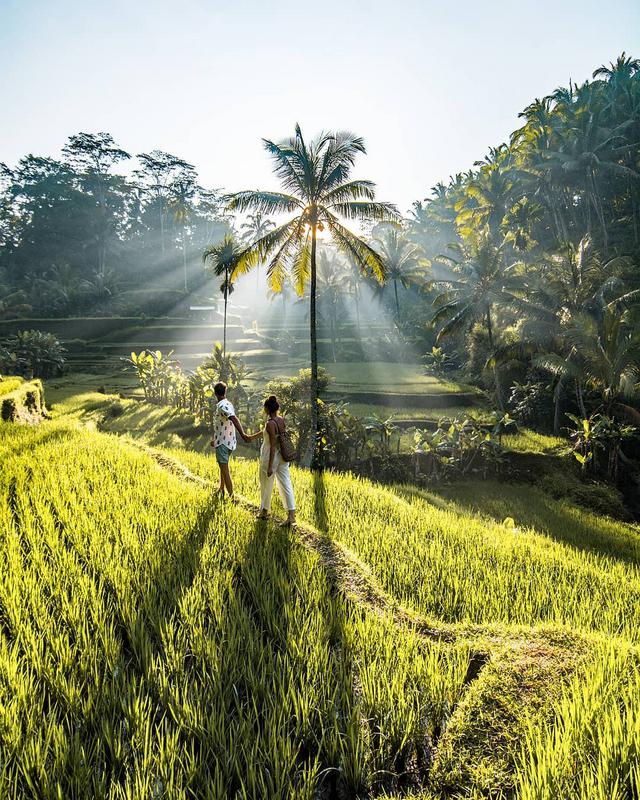
Around 10 km north of Ubud, steep terraces shaded by coconut palms tumble into a valley, the image on half of Bali's postcards. Go with open eyes. From late morning the rim fills with cafés, swings and zip lines, and farmers collect small donations at path junctions. At 7 am, before the crowds, you can descend to the valley floor and climb the opposite side, and the reason for the fame becomes obvious.

Tip: Carry small notes for entry, parking and donations. Midday is the worst time, and rain makes the paths slippery.

Goa Gajah (Elephant Cave)
Photo by @saraunderwood

07 · Temple

Goa Gajah (Elephant Cave)

📍 Bedulu, 5 km south-east (about 15 min)

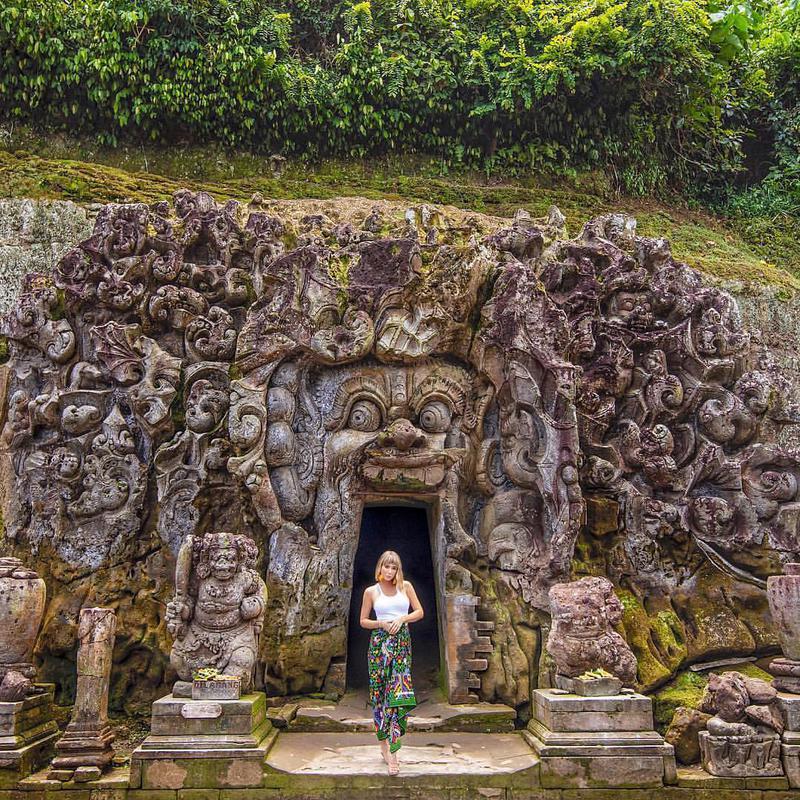
A demon's gaping mouth forms the entrance to this cave sanctuary, cut from the rock around the 11th century. A Ganesha statue and Shiva's lingam and yoni stand in the dark interior. The bathing pools before it were excavated only in 1954. Below, a stairway passes a small Buddhist site before reaching the Petanu River and a little waterfall, a corner many visitors skip. An hour is enough, a little more with the river.

Tip: Adults around IDR 50,000, sarong provided; 8 am to 6 pm. No handrails on the steps to the river.

Pura Taman Saraswati
Photo by @amanjivraj

08 · Temple

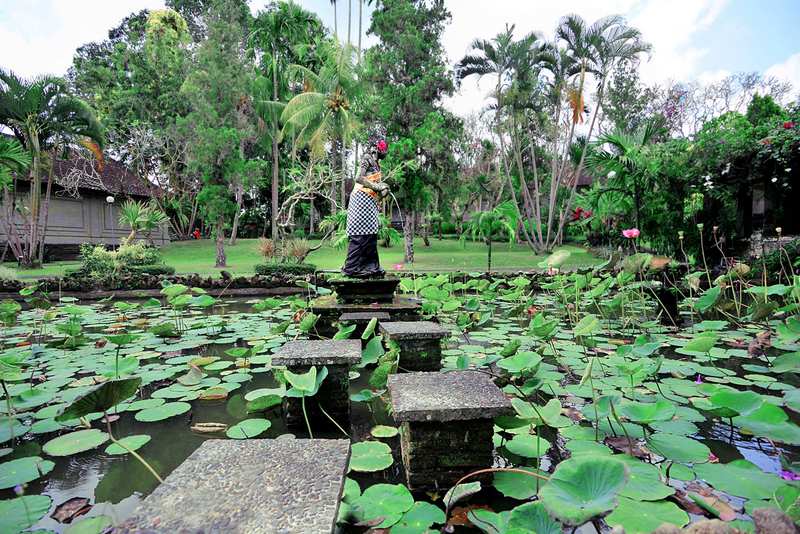
Pura Taman Saraswati

📍 Kajeng Road, off Ubud Main Road

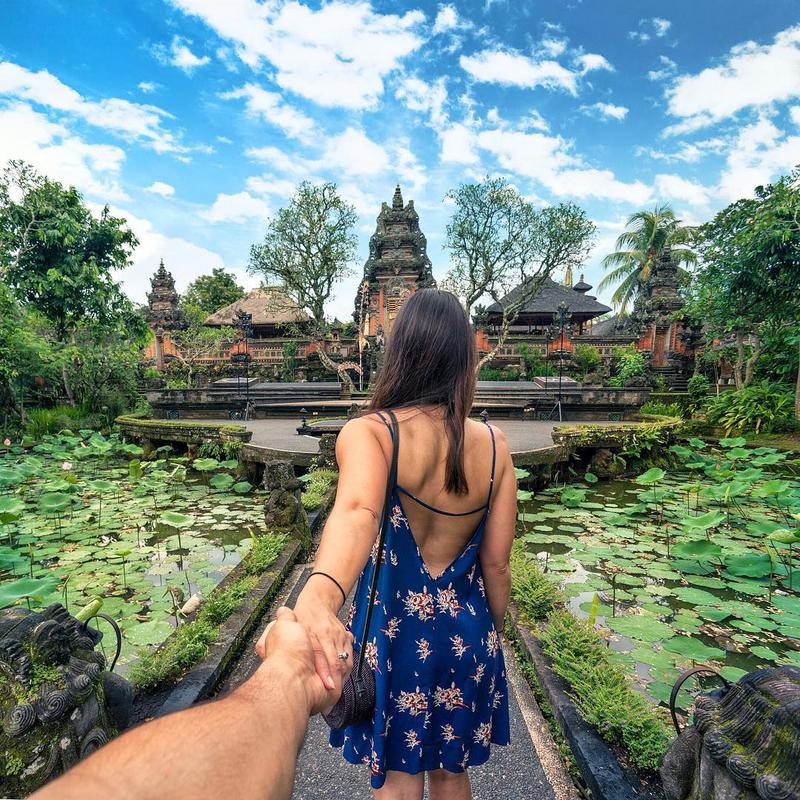
Lotus fills the pond in front of this temple to Saraswati, the goddess of learning and the arts, and a stone path leads across it to a carved red-brick gate. Ubud's master builder, I Gusti Nyoman Lempad, created it in 1951–52 for Prince Tjokorda Gede Agung Sukawati. Because it sits just behind Café Lotus on Ubud Main Road, a visit takes only twenty minutes. Come back after dark on a performance night, when the gate frames the stage.

Tip: Visit around 4–5 pm for gentle light; evening dances usually start near 7:30 pm.

Show all 29 things to do ↓

09 · Nature

Rice-field walks from the centre

📍 Kajeng Road and Subak Sok Wayah, central Ubud

Paddies are within walking distance of the centre. Start on Kajeng Road behind Saraswati temple, where a lane rises into Subak Juwuk Manis and circles back past fields and simple warungs. A second option begins near the Campuhan bridge: the Subak Sok Wayah lane leads onto a field path, roughly 15 minutes out and 15 back. The café that first drew walkers there, Sari Organik, has shut, yet the path is open and the fields are still farmed.

Tip: Grippy shoes help on the narrow, muddy paths. Go single file and step aside for farmers.

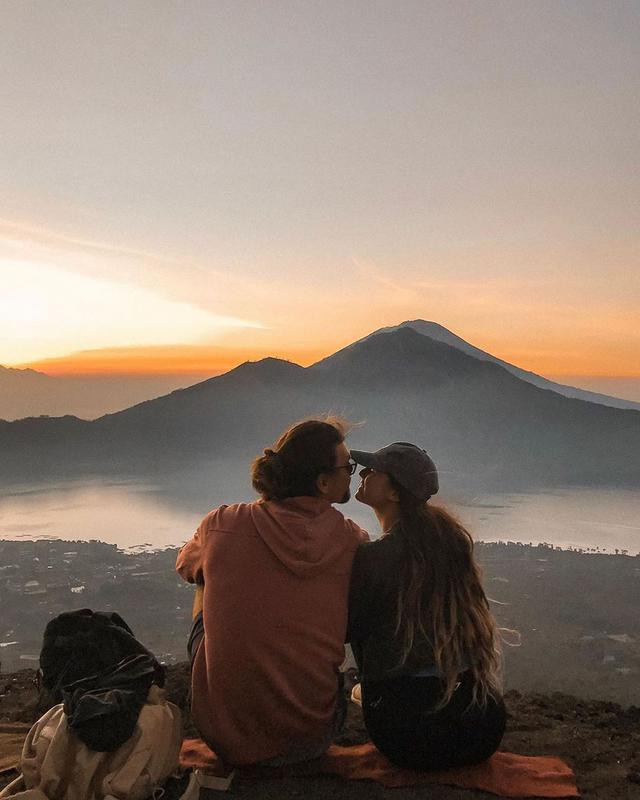
Mount Batur sunrise trek
Photo by @imaginhogangrey

10 · Adventure

Mount Batur sunrise trek

📍 Kintamani, Bangli, about 1.5 hours north to the trailhead

Ubud's best-loved excursion starts in the middle of the night. Drivers collect guests around 2 am for the trip north to Toya Bungkah, and guides lead the climb from about 4 am. After roughly two hours you stand on the 1,717-metre summit of an active volcano, whose last eruption was in 2000. Sunrise lights up Lake Batur, Mount Abang and, in clear weather, Mount Agung. Expect constant uphill walking, though nothing technical.

Tip: The local trekking association asks every group to use a guide. Bring a headlamp and something warm for the summit.

11 · Culture

Kecak in a temple courtyard

📍 Banjar Taman Kaja, north side of central Ubud

Kecak is performed by a chorus of dozens of men seated in circles, chanting 'cak' as a Ramayana story is acted out by firelight. Most visitors know the Uluwatu cliff version, but Ubud holds Kecak in temple courtyards on set evenings every week, a short walk from most hotels and far from the coach parties. Pura Dalem Taman Kaja runs it on Mondays and Fridays at 7 pm, and the dark temple gates make a fitting backdrop.

Tip: Expect IDR 100,000–150,000. Nights can change, so ask your hotel to confirm.

12 · Nature

Tibumana Waterfall

📍 Apuan, Bangli, 16 km east (30–40 min)

A mostly paved path through farmland and bamboo ends at Tibumana, where one curtain of water drops into a round pool. Allow about 12 minutes to walk down. The water is normally around waist height, and you can swim when the flow is gentle. Families with young children find it the most manageable of the Bangli falls. Kanto Lampo is only about 3 km away, so many people see both in one morning.

Tip: IDR 25,000 in cash; open 7 am to 6 pm. Keep out from directly under the falling water.

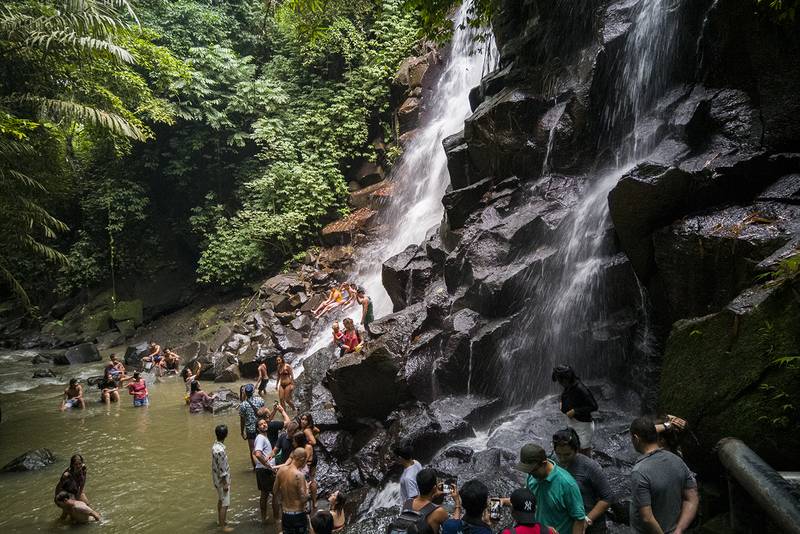
Kanto Lampo Waterfall
Photo: Lamacchiacosta / Wikimedia Commons (CC BY-SA 4.0)

13 · Nature

Kanto Lampo Waterfall

📍 Beng, Gianyar, 11 km south-east (about 30 min)

The water at Kanto Lampo tumbles 15 metres over stepped rock and breaks into separate strands, so you can stand in the middle of it. From the Beng village car park, concrete steps take 5 to 7 minutes. The catch is the crowd: between roughly 10 am and 1 pm people line up for the photo rock. Get there before 9 am for softer light and far fewer people around you.

Tip: IDR 25,000; usual hours 6:30 am–5:30 pm. Confirm it is open before you go, and wear sandals with grip.

14 · Nature

Tukad Cepung Waterfall

📍 Tembuku, Bangli, about 35 km east (45–60 min)

Tukad Cepung falls inside a narrow, cave-like chamber of rock, lit only through a crack in the cliff above. On sunny mornings, roughly 9 to 11 am, shafts of light cut through the mist, and that is when queues for photos form. Steep steps with railings lead down from the car park in 15 to 20 minutes. Without sun there are no beams, just a dark and wet gorge.

Tip: IDR 30,000, cash; hours 7 am to 6 pm. Do not go during heavy rain or straight after it.

Museum Puri Lukisan
Photo by @museumpurilukisan

15 · Culture

Museum Puri Lukisan

📍 Ubud Main Road, central Ubud

Ubud's oldest art museum opened in 1956. Its roots lie in Pita Maha, an artists' cooperative set up in 1936 by Walter Spies, Rudolf Bonnet and the royal family. Set among pavilions and lotus ponds on Ubud Main Road, the collection follows Balinese painting and woodcarving from the 1930s, including Batuan, Ubud, Young Artist and Keliki work. After an hour here, the galleries around town make much more sense.

Tip: Save it for the hot early afternoon: the gardens are shady and the palace is close.

Balinese cooking class
Photo by @baligasm

16 · Food & Drink

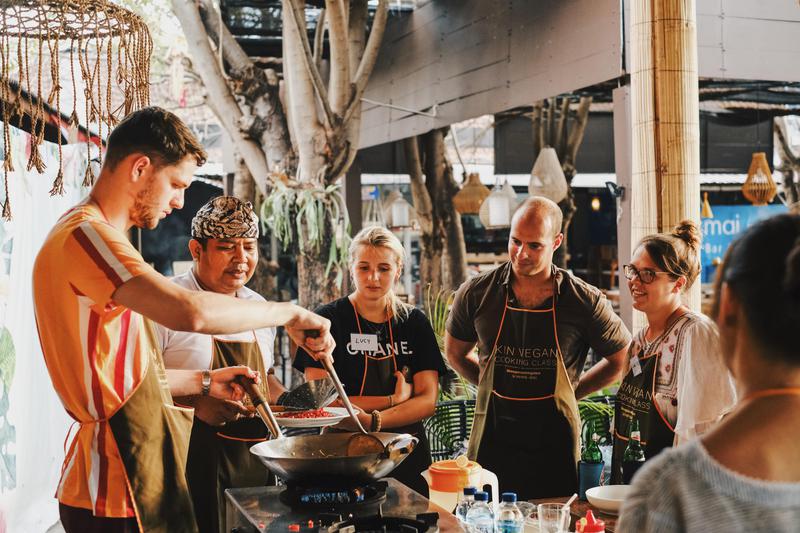
Balinese cooking class

📍 Laplapan, Petulu, 4 km north-east

Cooking them yourself is the quickest way to understand lawar, sate lilit and base genep, the spice paste that underpins most Balinese food. Good classes start with a market trip to choose herbs, vegetables and meat. In Laplapan, north-east of town, Paon Bali holds a morning class at 8:30 am that begins at the Ubud market, plus an afternoon class at 3:30 pm. Lunch or dinner is whatever you have prepared.

Tip: Book the morning session if you want the market, and flag allergies or vegetarian diets in advance.

Ubud Art Market and morning market
Photo by @emilyjaury

17 · Market & Shopping

Ubud Art Market and morning market

📍 Ubud Main Road, opposite Ubud Palace

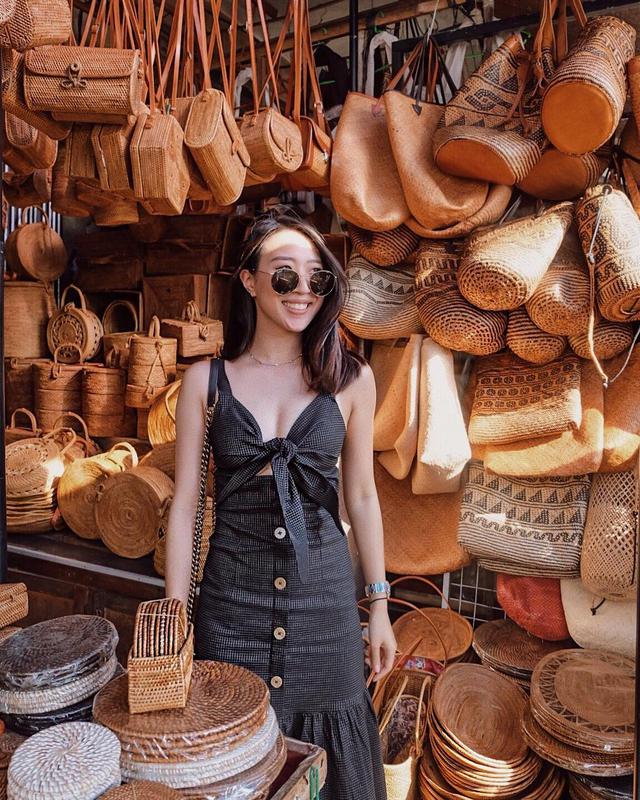
Pasar Ubud, facing the palace, changes character through the day. Early on, locals come for vegetables, flowers and offering materials. By mid-morning the craft sellers have moved in with rattan bags, sarongs, batik, carvings and silver, the quality varying from stall to stall. On 17 August 2024 fire gutted one of the two market blocks; business carries on in rebuilt areas and temporary stalls, so expect a layout that differs from older maps.

Tip: Haggle with good humour, as opening prices for visitors run high. Ubud Central Parking is nearby for cars.

18 · Culture

Penestanan village walk

📍 Penestanan, 2 km west

A long staircase from Campuhan Road brings you up into Penestanan. Arie Smit, a Dutch painter, saw children sketching in the sand here in the 1960s and gave them paint and paper; the flat, brightly coloured village scenes they made became known as the Young Artists style. Narrow car-free paths now run past paddies, villas and small galleries, and a circuit back down to Campuhan takes about an hour.

Tip: Go early, before it heats up, and add the Campuhan ridge on the opposite bank.

Ayung River rafting
Photo by @netriderdesigner

19 · Adventure

Ayung River rafting

📍 Ayung River gorge, west of Ubud (hotel pickup)

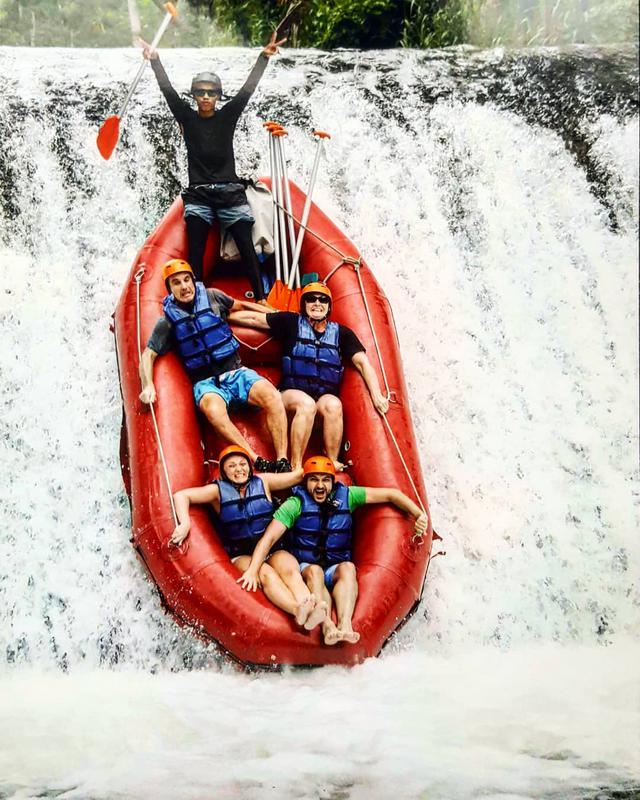
Bali's longest river, the Ayung, runs 68.5 km, and the stretch through the gorge west of Ubud is the island's go-to family rafting trip. Expect roughly 33 rapids of class II and III, jungle cliffs and waterfalls spilling in from the sides. Lunch, showers and hotel transfers are usually included, and the whole outing takes around five hours, departing morning or afternoon. Operators say it is unsuitable for under-fives and over-65s.

Tip: One major operator charges from about IDR 795,000 per person. Rapids are bigger and faster in the wet season.

Neka Art Museum
Photo: Harditaher / Wikimedia Commons (CC BY-SA 4.0)

20 · Culture

Neka Art Museum

📍 Sanggingan Road, 2.5 km north-west

Opened in 1982 by art dealer Suteja Neka, this was the first privately owned museum in Bali. Along Sanggingan Road, its galleries cover classical Balinese painting, the biggest Arie Smit collection, contemporary Indonesian work and a pavilion for I Gusti Nyoman Lempad, artist and builder. One hall alone displays more than 300 keris daggers. It rewards visitors who want to go deep rather than skim.

Tip: Sanggingan Road lies just west of the Campuhan ridge, so the two pair easily.

ARMA (Agung Rai Museum of Art)
Photo: Harditaher / Wikimedia Commons (CC BY-SA 4.0)

21 · Culture

ARMA (Agung Rai Museum of Art)

📍 Pengosekan Road, 2 km south

ARMA was founded by the collector Agung Rai and opened in 1996. In two buildings within a garden in Pengosekan you will find classical Kamasan paintings, Batuan pieces and works by Raden Saleh and Walter Spies. The museum doubles as a cultural centre: there is an open-air stage for performances, children practise dance here, and painting and craft workshops run regularly. That mix makes it ideal when rain sets in.

Tip: The front desk knows this week's shows and workshops, which are not always listed online.

22 · Wellness

The Yoga Barn

📍 Sukma Kesuma Road, Peliatan, south-east of central Ubud

No town in Bali takes yoga as seriously as Ubud, and The Yoga Barn is the name most people know. In a garden of open-sided halls it runs drop-in classes from morning to evening, plus ecstatic dance, kirtan, sound healing and teacher trainings from 50 to 200 hours. A café and rooms share the grounds. Try it once for the atmosphere, then find a smaller studio near your hotel for calmer sessions.

Tip: See the timetable first; hours vary and the studio shuts on certain ceremony days.

Tegenungan Waterfall
Photo by @taramichellebrose

23 · Nature

Tegenungan Waterfall

📍 Kemenuh, Sukawati, 11 km south (25–40 min)

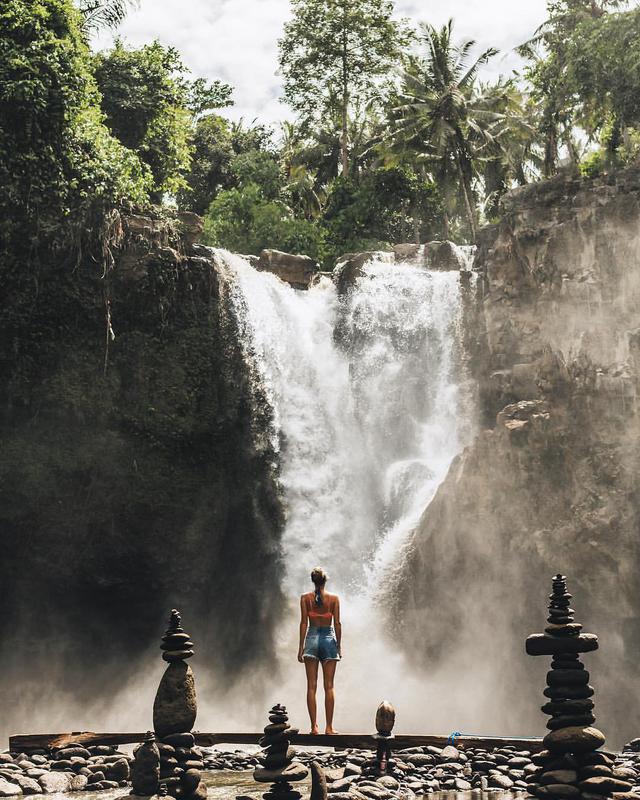
South of Ubud in Kemenuh village, Tegenungan is the nearest of the big, thundering waterfalls. A descent of about 200 steps, roughly 10 minutes, reaches a wide pool lined with river stones. You can swim when the current is gentle, but access is limited when rain swells the river. Expect more facilities and more people than at the Bangli falls, especially between 11 am and 3 pm.

Tip: IDR 30,000 per adult; 6:30 am to 6:30 pm. Aim to arrive before 9 am.

Craft villages: Mas, Batuan and Celuk

24 · Market & Shopping

Craft villages: Mas, Batuan and Celuk

📍 Mas 5 km, Batuan 10 km, Celuk 13 km south

On the way south to Denpasar you drive through Bali's craft belt. Mas specialises in woodcarving. Batuan has its own school of painting, crowded with dark, intricate scenes of legend and night-time. Celuk is home to gold and silversmiths. A small working studio shows far more than a big showroom, since you can watch the carvers and smiths at work, and some silver workshops let you make a ring in a short class.

Tip: Use your own driver, not a tour with set shop stops, so you decide where to go.

25 · Temple

Pura Gunung Lebah

📍 Campuhan, at the start of the ridge walk

Under the Campuhan bridge, two branches of the Wos River meet, and the Balinese consider such a confluence auspicious; campuhan means exactly that. Pura Gunung Lebah stands on the spot. Legend connects it to Rsi Markandya, a priest from Java, and to Ubud's beginnings in the 8th century. Most people rush by on their way up the ridge, so save it for the walk back, when you can take your time.

Tip: Free to view from outside. Enter only in a sarong, and expect it to close for ceremonies.

26 · Culture

Ubud Writers & Readers Festival and Ubud Food Festival

📍 Venues across central Ubud; Taman Kuliner for the food festival

Two yearly festivals pack Ubud's guesthouses. Founded after the 2002 Bali bombings to help tourism recover, the Ubud Writers & Readers Festival held its 2026 edition from 21 to 25 October, with readings and talks around town. The Ubud Food Festival took over Taman Kuliner from 28 to 31 May 2026 with food stalls, discussions and ticketed dinners. Dates for 2027 will appear on each festival's own website.

Tip: Reserve rooms early around festival dates, as the centre fills fastest.

Bali Bird Park
Photo: Christophe95 / Wikimedia Commons (CC BY-SA 4.0)

27 · Family

Bali Bird Park

📍 Singapadu, Batubulan, 11 km south (about 30 min)

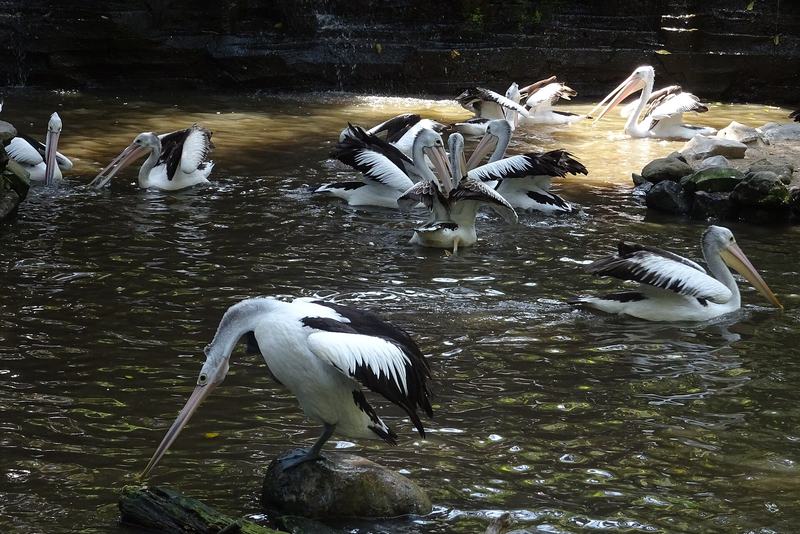
Singapadu, on the southbound road to Batubulan, is home to Bali's bird park. Visitors walk through large aviaries, catch a timetable of shows and feeding sessions, and can learn about its work breeding endangered species. For families based in Ubud it is a good half-day when rain cancels waterfall plans, and the craft villages on the same route make an easy add-on.

Tip: Look up the daily show schedule on the park's website and time your visit to match.

28 · Food & Drink

Coffee plantation stops

📍 Roads north of Ubud towards Tegallalang and Kintamani

Driving north towards Tegallalang and Kintamani, you will pass agro-tourism stops offering free trays of coffee and tea samples, followed by a gift shop. Tasting is fine; the trouble lies with kopi luwak. Investigations have found civets confined in small cages and force-fed coffee cherries for its production. Where civets are on display in cages, choose ordinary Bali arabica and leave the luwak alone.

Tip: There is no way to verify kopi luwak labelled 'wild', so skip it if animal welfare concerns you.

Jungle swings
Photo by @jeffisy

29 · Adventure

Jungle swings

📍 Tegallalang and the valleys around Ubud

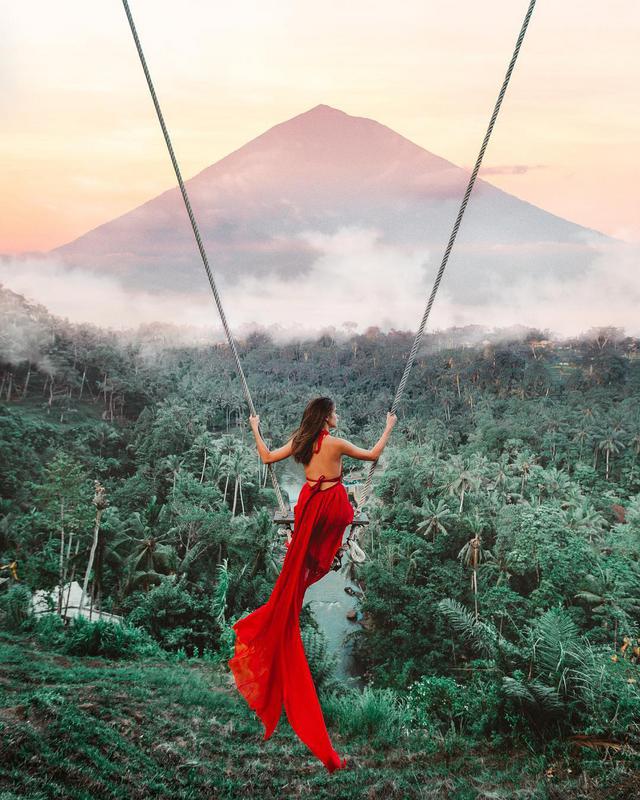
Around Tegallalang and the surrounding valleys, swing parks sell a single image: you in a flowing rented dress, soaring above the treetops. In practice you get a brief swing, a queue and a photo taken by staff, and the package can cost more than a good meal in town. If you decide to go, look for a full-body harness plus a back-up safety line, and pick a company with recent reviews.

Tip: Avoid it after rain, when ropes and platforms get slippery.

Itinerary

How to spend your days in Ubud

Ubud in a day

A walking day from central Ubud, about 12 km in total with generous breaks. If the heat gets too much, take a car for the 2 km between Campuhan and the Monkey Forest.

  1. 6:30

    Start at Pura Gunung Lebah and follow the Campuhan Ridge roughly 2 km north to Bangkiang Sidem, then eat at Karsa Kafe before walking back.

  2. 9:00

    Walk 30 minutes (about 2 km) via Ubud Main Road and Monkey Forest Road to the Monkey Forest, timing your arrival for opening, before the groups.

  3. 11:00

    Head uphill along Monkey Forest Road for about 1.2 km to the market, then visit the palace courtyards across the street.

  4. 12:30

    Eat at a local warung, then spend an hour in the shady gardens of Museum Puri Lukisan.

  5. 15:00

    Walk two minutes to Pura Taman Saraswati, then take the hour-long Juwuk Manis paddy loop that starts on Kajeng Road.

  6. 17:00

    Return to the hotel for a break during the worst of the traffic.

  7. 19:30

    Watch the dance at Ubud Palace, with a ticket bought at the gate and a seat claimed half an hour before the start.

Ubud in three days

Walk on the first day, hire a driver for temples on the second, and spend the third on waterfalls and a class.

  1. Day 1, 6:30

    Walk the Campuhan Ridge, cross over to Penestanan and circle back through its lanes.

  2. Day 1, 10:00

    Monkey Forest first, then the market and the palace.

  3. Day 1, 19:30

    Evening dance at Pura Taman Saraswati or the palace.

  4. Day 2, 7:00

    Beat the heat and the crowds at Tegallalang Rice Terrace.

  5. Day 2, 9:00

    Bathe or watch at Tirta Empul, then continue to nearby Gunung Kawi.

  6. Day 2, 14:00

    Stop at Goa Gajah in Bedulu on the way back.

  7. Day 2, 19:00

    On Mondays and Fridays, Kecak in a temple courtyard; any other night, another dance.

  8. Day 3, 8:00

    Kanto Lampo ahead of the queue (confirm it is open first), then Tibumana for a swim.

  9. Day 3, 15:30

    Cooking class in the afternoon, or ARMA and then a Yoga Barn session.

Ubud on a rainy day

A plan for wet-season days, when the falls and paddy paths are best avoided.

  1. 8:30

    Cooking class, starting with a trip to the market.

  2. 13:30

    Galleries and gardens at Museum Puri Lukisan.

  3. 15:00

    ARMA in Pengosekan, plus any workshop on that afternoon.

  4. 17:00

    Book a Balinese massage at a spa in the centre.

  5. 19:30

    Ask whether the night's dance is still on before walking over.

Longer trip? Plan up to seven days from Ubud or browse our Bali itineraries.

Where to stay

Hotels and villas in Ubud

All stays in Ubud →

Where to eat

Restaurants and cafés in Ubud

All restaurants in Ubud →

Seasons

Best time to visit Ubud

Expect more rain than on the coast: around 2,240 mm a year falls on Ubud. August is the driest month with roughly 90 mm, January the wettest with about 325 mm. Temperatures barely move, with highs of 29–30°C and lows near 21°C. Walk the ridge, visit the falls and climb Batur in the dry months of April to October. Between November and March, afternoon storms turn field paths to mud and waterfalls brown, and some become unsafe after a heavy downpour.

In every season the early hours are best, with gentle light, cooler air and few visitors at the main sights until mid-morning. The busiest periods are July, August, Christmas and New Year, when rooms in the centre cost the most and the roads are at their slowest. Two festivals also book out the centre: writers and readers in late October (21–25 October in 2026) and food in late May (28–31 May in 2026).

Religious holidays alter daily life. For Galungan, next falling on 13 January and 11 August 2027, families pack the temples and penjor bamboo poles arch over every street; Kuningan comes ten days on. On Nyepi, 8 March 2027, Bali goes silent from 6 am to 6 am: the airport closes, streets empty and hotels ask guests to stay in. The night before, ogoh-ogoh effigies parade through town and many restaurants shut early.

Getting there

How to get to Ubud

  • Ngurah Rai airport (DPS)75 to 120 minutes

    Roughly 38 km. Arrange a private transfer in advance or book a ride-hailing car at the arrivals pickup point; evening flights land into the worst traffic.

  • Kuta, Legian or Seminyak75 to 120 minutes

    A 34–36 km drive with a car or driver. From Kuta, the Kura-Kura tourist bus makes four runs a day and must be reserved.

  • Canggu75 to 120 minutes

    Some 30 km by scooter or car; no shuttle runs direct, and Denpasar traffic sets the pace.

  • Sanur45 to 60 minutes

    Around 25 km by road. Fast boats to Nusa Penida and Nusa Lembongan leave from Sanur's harbour.

  • Nusa Dua or Uluwatu1.5 to 3 hours

    A 45–60 km drive and, at rush hour, the slowest of the usual island transfers, so leave in good time.

  • Padang Bai port (Lombok and Gili boats)Around 1.5 hours

    Roughly 37 km east by road.

  • Mount Batur and KintamaniAround 1 hour to Penelokan

    Roughly 37 km north to the caldera rim at Penelokan, and about 1.5 hours to the trailheads near the lake. Trek pickups in Ubud are around 2 am.

Getting around Ubud

Within the centre, walking is easiest: most cafés, the market, the palace, Saraswati temple and the Monkey Forest are no more than about 1.5 km apart. Expect narrow, uneven pavements, frequent parked scooters and the odd open drain, so go single file. Penestanan, Nyuh Kuning and the Campuhan ridge are also within walking range.

For anything further, arrange transport. Hiring a car and driver for the day lets you string together Tegallalang, Tirta Empul, Gunung Kawi and Goa Gajah. A scooter is faster but means heavy traffic and steep valley roads. The one-way scheme introduced on 8 September 2026 sends Ubud Main Road traffic east, from the Monkey Forest junction to the Arjuna statue, and Pengosekan Road traffic north. Coaches are no longer allowed into the centre and set down at Dalem Puri. Build in extra time until things settle. Ubud Central Parking near the market is the place to leave a car; kerbside parking is what gridlocks the core between 1 and 3 pm and again between 5 and 7 pm.

Grab and Gojek drivers can drop off anywhere, but pickups are another matter: local transport groups still oppose them in parts of the centre, notably near the palace and the Monkey Forest. Expect cancellations or a request to meet on a side street a few hundred metres away. Hotel drivers and pre-booked transfers sidestep this, and a driver hired for the day is easier than booking app rides one after another.

Know before you go

Ubud tips that save time

  1. 01Monkey Forest rules: leave food and plastic bags behind and wear nothing loose on your head. Do not stare at or touch the monkeys; the clinic inside handles any scratches or bites.
  2. 02Every temple asks for a sarong and sash. They come with the ticket at Tirta Empul and Goa Gajah, but smaller temples expect you to bring your own.
  3. 03Gate prices and street-seller prices for dance tickets are identical; sellers on Ubud Main Road start in late afternoon, and seating is unreserved.
  4. 04Get going early: Tegallalang, Tirta Empul and the waterfalls are quiet until about 9–10 am and packed from late morning to early afternoon.
  5. 05Cash in small denominations is essential for waterfall entry, parking and the Tegallalang donation points.
  6. 06If it is raining or has rained hard, skip waterfalls and steep paddy paths; rivers rise fast and steps become slick.
  7. 07Keep cars out of the centre from 1 to 3 pm and from 5 to 7 pm, when parking and traffic lock the main roads.
  8. 08Ceremonies close temples to visitors, and full and new moon days crowd Tirta Empul, so keep a second option ready.
  9. 09Match your base to your transport: without a scooter, stay central; choose Sayan or Tegallalang only if being driven everywhere suits you.

FAQ

Ubud questions, answered

Should I include Ubud in my Bali trip?

+

If temples, rice fields and Balinese culture matter more to you than the sea, yes. Dance is staged every evening, the Monkey Forest and Campuhan ridge are in town, and Tirta Empul and Mount Batur make easy day trips. Beach-only travellers and anyone who hates traffic may be disappointed, since the centre is busy and gridlocked on most afternoons.

How long should I stay in Ubud?

+

Plan on three days to see the centre, drive a temple loop via Tegallalang, Tirta Empul and Gunung Kawi, and spend a morning at the waterfalls. A fourth or fifth day leaves room for the Batur sunrise trek, a cooking class or an outing to Sidemen. With just one day, stick to the ridge walk, the Monkey Forest, the market and a dance in the evening.

When is the best season for Ubud?

+

Walking, waterfalls and the Batur climb are most enjoyable in the dry season from April to October, with August the driest month of all. From November to March, afternoon rain is heavy, but the fields are greener and visitor numbers fall. Crowd-averse travellers should avoid July, August and Christmas, and note when Nyepi falls, as the island shuts for a full day.

What is the easiest way from the airport to Ubud?

+

Go by road. The 38 km journey takes between 75 minutes and two hours, depending on traffic. The simplest choice is a transfer booked in advance or a driver sent by your hotel. Ride-hailing apps such as Grab and Gojek operate from the airport pickup area, and from Kuta the Kura-Kura tourist bus makes four trips a day.

Which area of Ubud is best to stay in?

+

To walk everywhere, pick central Ubud near Monkey Forest Road, Hanoman Road or Goutama Road. For more peace without losing walkability, look at Penestanan or Nyuh Kuning. Sayan and Kedewatan are home to the valley-view resorts, while Tegallalang and Keliki offer villas above the paddies; in both you will depend on a driver. The stays on this page include each type.

Can I get around Ubud on foot?

+

In the centre, yes. The palace, the market, Saraswati temple and the Monkey Forest are all within about 1.5 km of each other, and the Campuhan ridge begins at the edge of town. Pavements are uneven and narrow, and some roads have none. For Tegallalang, Tirta Empul, the waterfalls and other outlying sights, you will need a scooter or a driver.

Do ride-hailing apps work in Ubud?

+

Drop-offs are fine; pickups are less dependable. In parts of central Ubud, notably near the palace and the Monkey Forest, local transport groups still oppose app pickups, so a driver may cancel or ask you to meet a few hundred metres away on a side street. For full-day sightseeing, hiring one driver for the day works better than booking app rides.

Is there a beach in Ubud?

+

No, Ubud is in the hills of Gianyar, well away from the sea. Sanur has the nearest calm beach for swimming, a 45 to 60-minute drive. If you want both temples and beach time, divide your nights between Ubud and the coast rather than making the round trip every day.

What does the Monkey Forest cost to enter?

+

Tickets are IDR 130,000 for adults and IDR 100,000 for children. Gates open at 9 am and close at 6 pm, with the last entry at 5 pm. The monkeys are calmer and the paths emptier at opening time. Leave food and plastic bags behind, and keep your phone and sunglasses secure.

Is the Tegallalang rice terrace still worth it?

+

Yes, but only at the start of the day. At 7 am the light is soft and the paths are empty; a few hours later swings, cafés and donation points line the walk. For paddies without the crowds, try the Juwuk Manis or Sok Wayah paths in town, or make the longer trip to Jatiluwih in Tabanan.

Should I choose Ubud or Canggu?

+

It depends on the trip you want. Canggu means surf, beach clubs and cafés. Ubud means temples, dance, yoga and rice-field walks, with quiet evenings and no coastline. A popular first-time plan is a week split between them: three or four nights inland, then the coast. Allow 75 minutes to two hours for the drive.

Nearby

Where to go after Ubud

Read next

More Ubud guides on the Blog