Baligasm
Baligasm

Destination guide · West Bali

Tabanan Area Guide

Bali's rice bowl: UNESCO terraces, a mountain temple and a black-sand surf coast.

By the Baligasm editors · Updated 29 October 2026

Area brief

What Tabanan is really like

Tabanan is the green, rural regency that starts just west of Canggu and climbs from a black-sand coast to the Jatiluwih rice terraces under Mount Batukaru. Driving from the airport, allow up to 1.5 hours for Tanah Lot and up to 2.5 hours for Jatiluwih. It rewards walkers, temple visitors and beginner surfers, and has almost no nightlife. Most people come for one long day; two or three nights let you slow down.

Roughly 480,000 people live in Tabanan, spread between about 35 km of dark-sand shoreline and the forested slopes of Mount Batukaru, which at 2,276 m is the second-highest volcano on the island. Paddy covers more than a quarter of the regency, earning it the nickname of Bali's rice bowl. In 2012 UNESCO added the Batukaru terraces around Jatiluwih to its World Heritage list for the subak, the island's cooperative irrigation system. Two names bring nearly every visitor: Jatiluwih up in the hills, and the sea temple of Tanah Lot on the coast.

Be ready for long drives and empty roads. Whether you start in Canggu, Seminyak or Ubud, Jatiluwih is a drive of up to two hours, and the valley is so wide that even on a busy morning the trails feel deserted. The village has been through a difficult year. Provincial councillors inspecting the protected rice land on 2 December 2025 sealed 13 buildings there, most of them warungs run by farmers, for breaching farmland rules; in protest, farmers screened the view with zinc sheeting and black plastic. Daily visitors dropped from around 1,000 to 500 or 600. Tempers have since cooled, and the Jatiluwih Festival was back in June 2026.

Tanah Lot is the exception to Tabanan's calm. It logged more than 1.4 million visits in 2025, and its sunset brings a crush and a slow road home. Elsewhere the regency is quiet by Bali standards. Beyond Tanah Lot a chain of village beaches runs west through Kedungu, Yeh Gangga, Pasut and Soka to Balian. You will find surf camps and a handful of beach bars there, but next to no nightlife. Villas are creeping into the paddies around Kedungu, and research published in 2023 named Kediri district as the part of Tabanan losing farmland fastest.

Against Tegallalang, Jatiluwih wins on scale and calm: Ubud's terrace is a narrow valley of cafés and swings and sits outside the UNESCO listing, while Jatiluwih is still worked by its subak and has marked trails rather than photo platforms. The cost is the journey. Against Canggu, Tabanan trades cafés, gyms and beach clubs for space. Many visitors base themselves in Canggu and come over for the day, yet sleeping over, whether with a farming family in Jatiluwih or at a Kedungu surf camp, reveals a slower Bali that the south has largely lost.

Best for
Rice-terrace walks, mountain temples and uncrowded surf
Vibe
Rural, green and unhurried, with one very busy temple
From the airport
1–1.5 hours to Tanah Lot; 1.75–2.5 hours to Jatiluwih
Days needed
One long day trip; two or three days to slow down
Best time
April to October; be at Jatiluwih before 10 am
Getting around
Car with a driver; a scooter only on the flat coast

Tabanan suits you if…

  • ✓Walking UNESCO-listed terraces without the crowds you meet at Tegallalang
  • ✓Forest temples and hikes on the slopes of Mount Batukaru
  • ✓Gentle, quiet surf at Kedungu and a punchier river-mouth wave at Balian
  • ✓Homestays, eco-lodges and farming villages with no traffic outside the door
  • ✓A day out from Canggu that finishes with sunset at Tanah Lot

Skip it if…

  • ✕You want nightlife: once it is dark there is very little to do
  • ✕You want calm swimming: the black-sand beaches face the open ocean and its currents
  • ✕Long journeys wear you out: Jatiluwih is 1.5–2 hours each way from the south and Ubud
  • ✕Rain would ruin your day: cloud covers the hills by midday and the paths get slippery
  • ✕You like walking to dinner: the main sights lie 10–40 km apart

Neighbourhoods

Which part of Tabanan to stay in

01

Jatiluwih and Penebel

Penebel district takes in Batukaru's lower slopes: the terraces at Jatiluwih, roughly 700 m up, the mountain temple above Wongaya Gede and the warm springs of Penatahan. Evenings are cool and silent. Villagers rent out about 70 homestay rooms in Jatiluwih, and eco-lodges hide in the forest further up. Kitchens close early and there is nothing to do once night falls, which is exactly why people come. The roads are steep and narrow, so bring a driver or solid scooter skills.

Best for: Walkers and photographers who want the terraces at first light

02

Tanah Lot, Beraban and Kedungu

Tabanan's busiest pocket lies in Kediri district, right on Canggu's doorstep. Beraban village contains Tanah Lot and Nyanyi Beach, and neighbouring Belalang has Kedungu's surf. Spilling over from Pererenan, a wave of villas, eco-retreats, surf camps and cafés has arrived, and the paddies here are disappearing under buildings faster than anywhere else in the regency. With Canggu's restaurants 25 to 45 minutes away, plenty of guests sleep here and go there to eat.

Best for: Learner surfers, and couples who like having Canggu within reach

03

The west coast: Yeh Gangga to Balian

Past Kedungu, the shoreline becomes a series of sleepy village beaches, Yeh Gangga, Pasut, Soka and Balian, that ends at the Yeh Let river on the Jembrana border. Sand is dark, waves are heavy and safe swimming is rare. Balian is the one place with a proper knot of losmen, warungs and surf shops; the rest of the coast has only the odd isolated retreat. Lorries heading for the Java ferry use the main road west, so drive it before dark.

Best for: Surfers, yoga retreats and anyone who wants empty beaches

04

Tabanan town and Kerambitan

The regency capital, up to an hour's drive from Canggu, is a working market town on the western highway. Visitors rarely sleep here, but it is the junction for everything inland. Coming in from the east you pass the Subak Museum at Sanggulan; Kerambitan, west of town, has two royal palaces, and the Butterfly Park is on the road north towards Penebel and Batukaru. Expect local markets and warungs rather than cafés.

Best for: Culture-minded day-trippers heading for Jatiluwih

05

Marga

North-east of Tabanan town, towards Badung, Marga district is farmland with two reasons to pull over. One is the 1946 battlefield memorial at Margarana; the other, some 5 km away at Kukuh, is the monkey forest of Alas Kedaton. Because Marga lies between Mengwi and Penebel, both fit neatly into a day at Jatiluwih or Taman Ayun. Accommodation is scarce, and most visitors simply drive through.

Best for: History lovers and families on a day out

06

The highlands: Baturiti and Pupuan

Tabanan reaches far north into the mountains. Baturiti district includes Bedugul and Lake Beratan with its celebrated lake temple, which has a guide of its own. Pupuan, out in the north-west, is a region of plantations, twisting roads to the north coast and the Blehmantung falls. Both are cooler and rainier than the south, and since Canggu is up to two and a half hours away, both deserve a night rather than a day trip.

Best for: Cool-climate stays and slow drives between the south and the north coast

Top sights · 24 picks

Things to do in Tabanan

Jatiluwih Rice Terraces
Photo: Jorge Franganillo / Wikimedia Commons (CC BY 2.0)

01 · Nature

Jatiluwih Rice Terraces

📍 Jatiluwih village, Penebel; up to 2 hours' drive north of Canggu

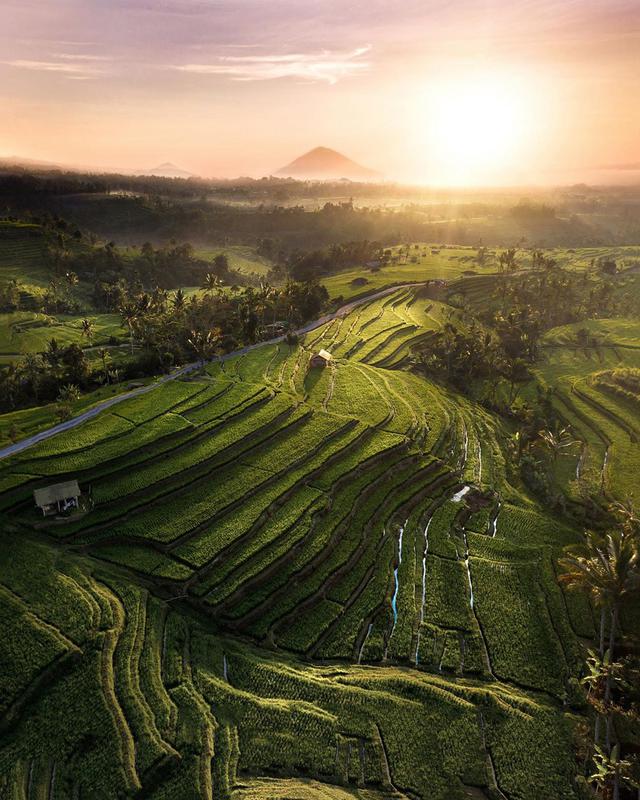
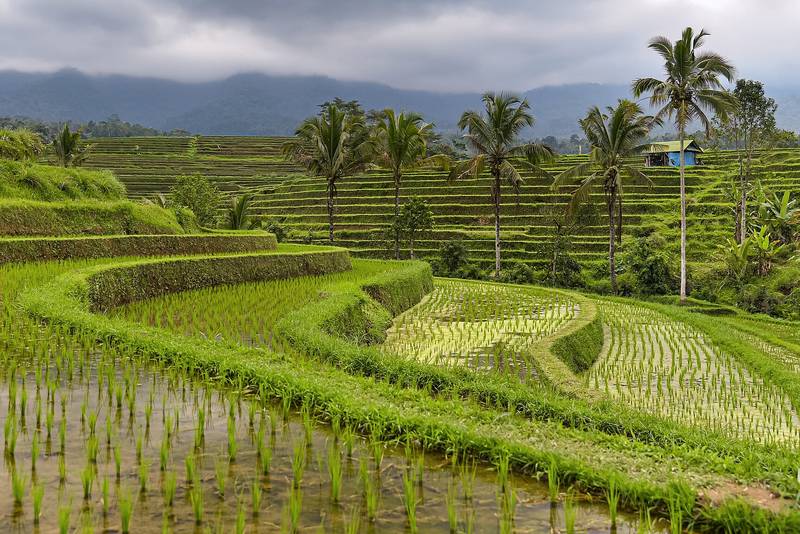
Jatiluwih is why most people make the drive. Its paddies step up a broad valley about 700 m above sea level on Mount Batukaru's flank, and they form part of the Catur Angga Batukaru zone in Bali's 2012 UNESCO subak listing. These are productive fields of local red rice, not a theme park, and they spread far wider than Tegallalang. UN Tourism picked Jatiluwih as one of its Best Tourism Villages in 2024. Arrive before 10 am, while Batukaru is visible and the tour vans are still on the road.

Tip: Foreign adults pay IDR 75,000 and children IDR 50,000 at the official counter; carry extra, as some visitors report IDR 100,000 at the gate.

Walking the Jatiluwih trails
Photo by @merrwatson

02 · Adventure

Walking the Jatiluwih trails

📍 Trailheads near the main viewpoint, Jatiluwih

A set of colour-coded loops leaves from close to the main viewpoint and ticket area, and the entrance fee covers all of them. The shortest is roughly 1.5 km and takes 30 to 45 minutes. The longest stretch to 6 or 7 km, descend into the valley and climb out again, and take three or four hours. Underfoot you get packed earth, concrete farm tracks and grassy dykes between the paddies. Colours and distances vary between descriptions, so take a photo of the map board before setting off.

Tip: Begin a long loop before 9 am with water and grippy shoes; the dykes get slick after rain, and the fields have no shade or shops.

03 · Temple

Pura Luhur Batukaru

📍 Wongaya Gede, Penebel, 25–35 minutes west of Jatiluwih

Counted among the sad kahyangan jagat, the six most sacred temples in Bali, Batukaru guards the west of the island from a patch of damp forest at about 820 m, where the road above Wongaya Gede runs out. Worship here goes back to the 11th century, and it later served as the state temple of Tabanan's rajas. Destroyed in 1604, it was rebuilt in 1959. The principal shrine is a seven-roofed meru for Mahadewa, lord of the mountain, and subak groups still collect holy water here.

Tip: Wear a sarong and sash, lent for a small fee or donation at the entrance; during ceremonies the inner courtyards are off limits.

Tanah Lot
Photo: Jakub Hałun / Wikimedia Commons (CC BY-SA 4.0)

04 · Temple

Tanah Lot

📍 Beraban, Kediri, 25–45 minutes north-west of Canggu

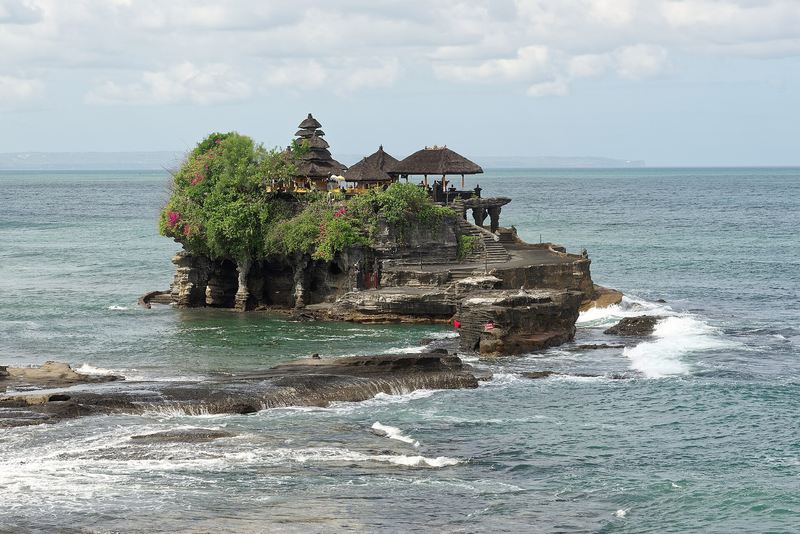
Tabanan's best-known sight is a sea temple perched on a rock in the waves at Beraban, a few minutes from Kedungu. The shrine itself is closed to visitors, and you can only walk across to the base and its holy spring when the tide is out, so check the tide table before you think about sunset. Nowhere else in the regency draws real crowds. Our visitor guide covers tickets, tides, the Kecak dance and getting away after dark.

Tip: Foreign adults IDR 75,000, children IDR 40,000. Read the visitor guide before you go.

05 · Adventure

Surf lessons at Kedungu

📍 Kedungu Beach, Belalang, 5–10 minutes from Tanah Lot

Surf schools bring their beginners to Kedungu, in Belalang village just beyond Tanah Lot, to escape the crowds at Batu Bolong. The middle peak is forgiving and peels both left and right. By the headland, a steeper left breaks over rocks, and the western peak offers rights. Mid tide on a windless morning is ideal. Experienced surfers tend to find it sluggish, which is precisely what learners want.

Tip: Go at mid tide before the breeze arrives, and watch for submerged rocks near the headland; boards and lessons are sold on the sand.

06 · Culture

Planting rice with Jatiluwih farmers

📍 Jatiluwih, booked through the village tourism office

Besides entry tickets, the Jatiluwih tourism office now offers time in the fields. You wade into a flooded paddy and press seedlings into the mud by hand, or help cut red rice at harvest time, while a farmer explains how the subak divides water between plots. Nothing else shows so clearly that Jatiluwih is farmland first and scenery second. At the June 2026 festival, visitors also took part in the harvest.

Tip: Book two or more days ahead with the DTW Jatiluwih office, whose contacts are on jatiluwih.id, and wear clothes that can get muddy up to the knee.

Pura Taman Ayun, on the way in Mengwi
Photo: Johannnindito Adisuryo / Wikimedia Commons (CC BY-SA 4.0)

07 · Temple

Pura Taman Ayun, on the way in Mengwi

📍 Mengwi, Badung, 35–50 minutes from Tanah Lot

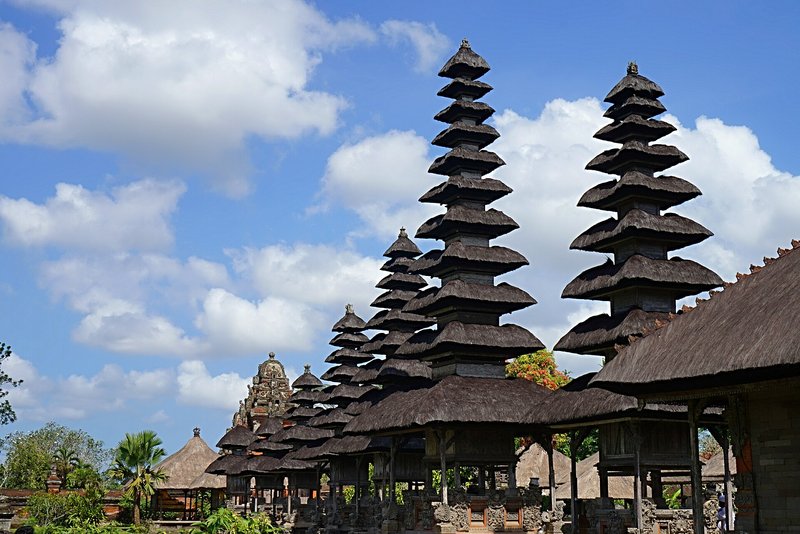
Strictly speaking Taman Ayun is in Badung, not Tabanan, but Mengwi lies on the road north to Jatiluwih and the temple pairs well with Tanah Lot. Badung's records date it to 1634, when Mengwi's king founded it as a family temple; UNESCO's advisers prefer the early 18th century. A moat encloses the 6.9-hectare grounds, and tiered meru shrines rise from the inner court. It belongs to the same 2012 subak listing as Jatiluwih, so seeing both on one day makes sense.

Tip: Only worshippers enter the inner sanctuary; you view its shrines from the path along the wall. Come early or late afternoon for softer light.

E-bike through the Jatiluwih back lanes
Photo: Imacim / Wikimedia Commons (CC BY-SA 4.0)

08 · Adventure

E-bike through the Jatiluwih back lanes

📍 Jatiluwih village, with rentals near the main viewpoint

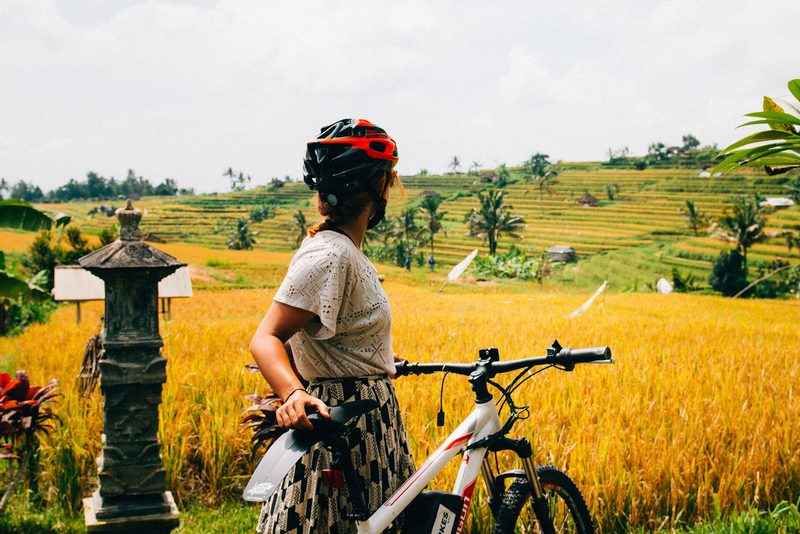
On an electric bike you can go beyond the walking loops, following farm tracks along irrigation channels, past temple gates and through the hamlets behind the terraces while the motor handles the hills. Villagers have been running e-bike tours since 2017. Guided rides last one or two hours and start in the village, and stands near the viewpoint rent bikes to anyone who prefers to explore alone.

Tip: Guided cycling packages start at about IDR 470,000. Motor vehicles are not allowed on the walking trails.

Show all 24 things to do ↓
Ulun Danu Beratan and Bedugul
Photo by @harry.travel

09 · Temple

Ulun Danu Beratan and Bedugul

📍 Candikuning, Baturiti, 45–60 minutes north-east of Jatiluwih

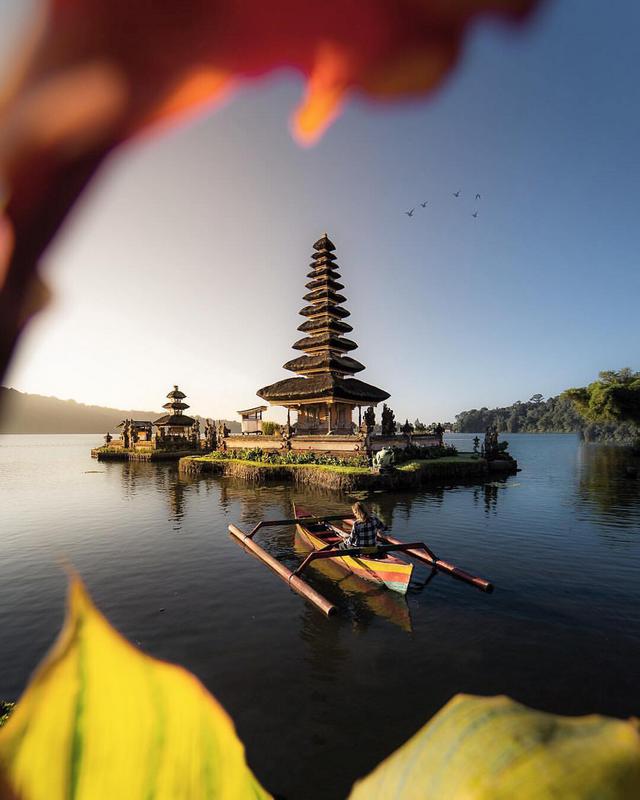
The highland corner of Tabanan holds Bali's most photographed lake temple. Pura Ulun Danu Beratan dates from 1634 (some accounts say 1633) and honours Dewi Danu, goddess of the lake whose water feeds central Bali's fields. When the lake is full, its 11-roofed meru at Candikuning appears to float. Bedugul has its own area guide; at 45 to 60 minutes from Jatiluwih, the lake and the terraces make one cool-weather day.

Tip: Get there early for mist on the water and fewer coaches, and pack a jacket, as the lake is much higher than Jatiluwih.

10 · Adventure

Balian river-mouth surf

📍 Lalanglinggah, Selemadeg Barat; up to 2 hours' drive from Canggu

Towards the western end of the Tabanan coast, the Balian River spills into the sea at a black-sand beach, creating a strong river-mouth peak that breaks both ways. It suits intermediate surfers and above, works best from mid to high tide, and the easy-going line-up swells when Canggu and Medewi go flat. Balian has grown into a small village of losmen, villas, surf and yoga, and kitesurfers turn up in breezy August.

Tip: Skip the session if rain has turned the river muddy, and leave the car at a warung where you order a drink.

11 · Food & Drink

Red rice lunch above the terraces

📍 Warungs along the terrace road, Jatiluwih

Bali's native red rice grows in Jatiluwih's fields, has carried organic certification since 2010 and is sold as far as Jakarta, with some exported to the Philippines. Along the terrace road, everything from family warungs to big restaurants serving tour groups serves it alongside sambal and Balinese dishes, mostly at tables looking straight out over the paddies. Treat lunch here as part of the visit rather than a pit stop.

Tip: Ask for nasi merah, the local red rice, instead of white; it is the crop you drove up to see.

12 · Culture

Kerambitan palaces and the tektekan

📍 Kerambitan village, west of Tabanan town

Kerambitan keeps two royal households, Puri Agung and Puri Anyar. Puri Anyar dates from the 17th century, retains its original courtyard plan and has Dutch Delftware plates pressed into its walls; from 1967 its royal banquets with dance attracted guests including David Bowie and Mick Jagger. Kerambitan is known too for tektekan, a rattling bamboo orchestra of 30 to 40 men first played to drive away evil spirits on the eve of Nyepi.

Tip: The puri are lived-in family homes, so ask at the gate before entering, and get in touch in advance if you want to see tektekan.

13 · Culture

Subak Museum

📍 Gatot Subroto Road, Sanggulan, Kediri

No regency has more subak associations or more paddy than Tabanan, so it was the natural home for Bali's museum of the system. The Sanggulan site, managed by the regency culture office, shows how farmers divide water using canals, weirs and water temples, and displays farm tools ranging from ploughs to sickles. An outdoor section rebuilds a working subak. Stop here before Jatiluwih and the terraces will make much more sense.

Tip: Entry costs a small fee, and the museum sits on the main road from Denpasar, so it slots into the drive up to Jatiluwih.

14 · Culture

Margarana memorial

📍 Kelaci, Marga, 20–30 minutes north-east of Tabanan town

Rather than surrender to Dutch forces, I Gusti Ngurah Rai led 95 fighters to their deaths in the fields of Marga on 20 November 1946. That puputan made him a national hero, and Bali's airport carries his name. The Taman Pujaan Bangsa Margarana now covers the site: a monument stands among 1,372 stone markers honouring those killed here and elsewhere in the independence war.

Tip: It is a burial ground, so dress with respect; the Alas Kedaton monkey forest is a short 5 km drive on.

15 · Beach

Yeh Gangga Beach

📍 Sudimara, south-west of Tabanan town

This remote dark-sand village beach at Sudimara is divided by a low cliff into two coves, Yeh Gangga 1 and 2. Rice fields run down to the back of the sand, and a little temple stands on the rocks just offshore. Sunset brings out local families, and a handful of beach bars has appeared lately. With surf commonly running at 4 to 8 feet, it is a beach for surfers and evening walks, not for swimming.

Tip: Think of it as a sunset stroll rather than a swim; currents run hard when the surf is up.

16 · Beach

Nyanyi Beach

📍 Beraban village, Kediri, just east of Tanah Lot

The Tabanan coast begins at Nyanyi, in Beraban, just east of Tanah Lot. Expect black sand and heavy surf, with paddies and coconut palms behind the beach that pull in photographers at sunset. A few small cafés serve coffee near the sand, horse-riding and quad-bike operators work close by, and the lanes inland now hold villas and eco-retreats, so it is no longer deserted.

Tip: Swim only close to shore in small waves, if at all, and arrive an hour before sunset to walk the beach.

17 · Beach

Pasut Beach

📍 Tibubiyu, Kerambitan, 35–50 minutes west of Tanah Lot

A long, palm-backed stretch of black sand at Tibubiyu village, Pasut is a beach where on most afternoons your only company is village children playing football and the odd walker. Facilities stop at parking, toilets and a few warungs. A 2024 village study warned that litter and environmental damage are putting the beach at risk, so expect some rubbish, especially in the wet season.

Tip: Combine it with Yeh Gangga in one afternoon; carry drinking water and change for the warungs.

18 · Wellness

Yeh Panas hot springs, Penatahan

📍 Penatahan, Penebel, 30–40 minutes south of Jatiluwih

On the way up to Batukaru, a spring next to the riverside temple Pura Yeh Panes feeds warm water into a public pool and several smaller private ones at Penatahan. Nowhere in Tabanan is better for tired legs after a morning of trail walking. Local families are the main users, especially at weekends, and there is often a wait for the private pools.

Tip: Visit on a weekday with a towel and modest swimwear, and expect foreigners to pay more than locals.

19 · Culture

Nyambu village walk

📍 Nyambu village, Kediri, about 15 minutes from Tanah Lot

Backed by the British Council and the Wisnu Foundation, Nyambu was set up as an eco-tourism village in 2016. It has 67 temples, some dating from the Majapahit era, along with 22 springs, and about 61 percent of its 380 hectares is still rice field. Walks through the paddies, bike rides and temple tours of two to five hours are run by the village tourism group, with villagers rather than tour companies as guides.

Tip: Give the village tourism group a day or two of notice to line up a guide, and wear clothes suitable for temples.

20 · Adventure

Climbing Gunung Batukaru

📍 Trail starts at Pura Luhur Batukaru, Wongaya Gede

Bali's second-highest volcano, 2,276 m, is a jungle slog rather than a sunrise spectacle. The standard route begins at Pura Luhur Batukaru, about 820 m up, and climbs through thick, wet forest to a grassy top dotted with pilgrims' shrines. Budget four to five hours going up and about three and a half coming down. The path is steep and muddy, and leeches are common.

Tip: Aim for the drier stretch from about May to September. A guide is compulsory in the eyes of temple staff, so settle the fee first.

21 · Nature

Blehmantung Waterfall

📍 Pujungan, Pupuan, 2–2.5 hours from Canggu

Far into Pupuan's plantation hills, Blehmantung (sometimes written Blahmantung) is often described as one of Bali's tallest waterfalls, falling into thick jungle below Pujungan. From the village road a narrow concrete path drops with steep sections down and back up, and a small temple and pavilion stand near the falls. This is the most remote trip on the list, so combine it with a night in the hills.

Tip: Wear shoes with grip, and give it a miss after heavy rain, when the path is slippery and the water turns brown.

22 · Nature

Alas Kedaton

📍 Kukuh, Marga, 15–20 minutes north-east of Tabanan town

Around an old temple in Kukuh village, 12 hectares of forest shelter roughly 2,000 long-tailed macaques plus a colony of big fruit bats. You walk with a local guide, and for a small fee some of the tamer bats will perch on visitors for a photo. It is calmer than Ubud's Monkey Forest but shabbier, so treat it as a stop on the way rather than a destination.

Tip: Keep food, sunglasses and anything loose zipped away, as at every monkey forest.

23 · Beach

Soka Beach

📍 Antap, Selemadeg, on the main road west

Soka is a roadside pause on the Denpasar to Gilimanuk highway at Antap, on the way to Balian. It looks south over open sea, with rock stacks in the shallows and cliffs where swiftlets nest; on clear days the Batukaru hills rise to the north and Mount Agung appears far to the east. Most visitors stay about half an hour to stretch their legs and watch the waves. Swimming is not an option.

Tip: Stop in late-afternoon light, and watch for lorries as you pull off and back onto the highway.

24 · Family

Bali Butterfly Park

📍 Batukaru Road, Sesandan, about 7 km north of Tabanan town

On the road from Tabanan town towards Penebel, this small park keeps butterflies in an enclosed garden, with the common birdwing among them. Other displays show the life cycle from egg to caterpillar to pupa, and glass cases hold spiders, scorpions and beetles. Children can easily spend an hour here en route to the mountain or the terraces. Mornings are best, when the butterflies fly most.

Tip: Opening hours vary between listings, so phone ahead, and expect a modest entry fee.

Itinerary

How to spend your days in Tabanan

Tabanan in a day

A driver day out of Canggu covering roughly 105 km by road and 4–5 km on foot. You need the car for every move between stops.

  1. 6:30

    Set off from Canggu with a driver for the 50 km run north to Jatiluwih, which takes 1.5–2 hours.

  2. 8:30

    Buy tickets, then spend about an hour on one of the short marked loops that start by the viewpoint (up to 2 km).

  3. 10:00

    Brunch on red rice at a warung on the terrace road, facing the fields.

  4. 11:15

    Drive about 10 km (25–35 minutes) to Pura Luhur Batukaru; the gate lends sarongs, and the forest grounds are yours to wander.

  5. 12:45

    Head 8 km downhill (20–30 minutes) to Penatahan and soak in the Yeh Panas springs.

  6. 14:30

    Drive roughly an hour south to Tanah Lot, timing it to the afternoon low tide; the visitor guide explains how to read the tide table.

  7. 15:45

    Leave the car, cut through the market stalls and follow the clifftop path to Pura Batu Bolong and back, around 2 km in all.

  8. Sunset

    Watch the sun go down behind the temple rock, then drive back to Canggu, which takes under 45 minutes if traffic allows.

Tabanan over three days

One night near Kedungu, one in a Jatiluwih homestay, with a car and driver for every transfer.

  1. Day 1, 7:00

    A mid-tide surf lesson on Kedungu's gentle middle peak, followed by a beachside breakfast.

  2. Day 1, 13:00

    Visit the Subak Museum at Sanggulan, then continue west to Kerambitan's palaces.

  3. Day 1, sunset

    Tanah Lot on a falling tide, or Nyanyi Beach for a quieter sunset.

  4. Day 2, 7:00

    Drive about 36 km (1.25–1.75 hours) up to Jatiluwih and start a long trail of 6–7 km before the cloud rolls in.

  5. Day 2, 14:00

    Plant rice alongside a farmer, or take a guided e-bike tour of the farm tracks behind the terraces.

  6. Day 2, evening

    Overnight with a village family; expect a simple supper served early.

  7. Day 3, 6:00

    Watch dawn break over the paddies, when the light is at its finest.

  8. Day 3, 9:00

    Spend the morning at the Batukaru temple, followed by a soak at Penatahan.

  9. Day 3, 13:00

    Drive south via Marga for the Margarana memorial and Alas Kedaton before continuing to Canggu or Ubud.

A rainy day in Tabanan

For a wet-season day when cloud hides Batukaru and the terrace paths are slick. Every stop has a roof or warm water, and the driving stays on the main roads below the hills.

  1. 8:30

    Start at the Subak Museum in Sanggulan, where the indoor galleries explain the irrigation system before you see it.

  2. 10:00

    Drive north to the Bali Butterfly Park on Batukaru Road for an hour among the butterflies and insect displays.

  3. 11:30

    Continue to Penatahan and sit out the rain in the warm Yeh Panas pools.

  4. 13:30

    Lunch on red rice at a Jatiluwih warung with a covered terrace; if the cloud lifts, walk the short loop.

  5. 15:30

    Drive down to Mengwi for Pura Taman Ayun and the Ogoh-Ogoh and Yadnya museums beside it.

  6. 17:30

    Return towards Canggu, or stop at Tanah Lot if the sky clears for sunset.

Longer trip? Plan up to seven days from Tabanan or browse our Bali itineraries.

Where to stay

Hotels and villas in Tabanan

All stays in Tabanan →

Seasons

Best time to visit Tabanan

Tabanan shares Bali's dry and wet seasons, though the mountain catches more rain. Between April and October mornings are usually dry, and Batukaru stays visible above Jatiluwih until clouds gather around midday; July and August are driest, coolest and most crowded. From November to March heavy afternoon storms are routine, the paddies are at their most vivid, and trails, temple steps and forest paths grow slippery. At roughly 700 m, Jatiluwih sees daytime temperatures of about 22–27°C, so pack a layer for early starts.

Jatiluwih's subak plants in staggered blocks, which means part of the valley is usually green: water-filled paddies just after planting, bright young shoots a month or two later, then gold ahead of the harvest. The 2026 Jatiluwih Festival, held on 20–21 June, coincided with harvest time. On the coast, Kedungu is at its best on still mornings at mid tide, dry-season swells bring bigger sets, and roughly November to March the west monsoon washes litter up on the beaches.

On Monday 8 March 2027, Nyepi shuts the whole island, airport and all, for 24 hours; the night before is when Kerambitan's tektekan groups traditionally play. At Galungan, on 13 January and again on 11 August 2027, Pura Luhur Batukaru fills with worshippers, and Tanah Lot's own festival begins on 27 January 2027. Both welcome visitors who keep clear of the prayer areas. Expect Indonesian holidaymakers in force at Tanah Lot and Bedugul on public holidays.

Getting there

How to get to Tabanan

  • Ngurah Rai airport (DPS)1–1.5 hours to Tanah Lot; 1.75–2.5 hours to Jatiluwih

    Book a car in advance: Tanah Lot is roughly 26 km, Jatiluwih between 55 and 65 km. Landing in the late afternoon means the worst of the Canggu traffic.

  • Canggu25–45 minutes to Tanah Lot; 1.5–2 hours to Jatiluwih

    Tanah Lot and Kedungu are about 13 km west through Pererenan, fine by car or scooter. Jatiluwih, some 50 km north, is best done with a driver.

  • Seminyak45–75 minutes to Tanah Lot; 1.75–2.5 hours to Jatiluwih

    Tanah Lot is about 18 km away through Kerobokan and Canggu; Jatiluwih is between 50 and 58 km. Use a driver or a ride-hailing car for Tanah Lot.

  • Ubud1.5–2 hours to Jatiluwih; 1–1.5 hours to Tanah Lot

    With a driver, Jatiluwih is around 45 km west and Tanah Lot about 35 km. Taman Ayun in Mengwi makes a natural break.

  • Uluwatu2–2.5 hours to Tanah Lot; 2.5–3 hours to Jatiluwih

    About 45 km to Tanah Lot and 75–80 km to Jatiluwih, passing the airport. Worth it only as a full day with a driver.

  • Sanur1–1.5 hours to Tanah Lot; 1.75–2.25 hours to Jatiluwih

    Using Denpasar's ring roads, Tanah Lot is about 30 km and Jatiluwih between 50 and 60 km; avoid travelling between 4 and 7 pm.

  • Bedugul45–60 minutes to Jatiluwih

    Roughly 25 km south-west by car through Baturiti, so the lake temple and the terraces fit one day.

Getting around Tabanan

You cannot walk between Tabanan's sights. Narrow, hilly roads separate the terraces, the mountain temple, the springs and the beaches by anything from 10 to 40 km, so most visitors hire a car and driver for the day. A driver is also the simplest way home after sunset at Tanah Lot, when hundreds of cars squeeze onto the same exit road. The walking happens once you arrive: on the Jatiluwih trails, the Tanah Lot clifftops and the beaches.

On the flat coastal stretch linking Canggu with Tanah Lot and Kedungu, a scooter works well. The climb to Jatiluwih and Batukaru is another matter, with hairpins, farm lorries and slippery patches after rain; attempt it only with plenty of riding experience, a helmet and a licence backed by an International Driving Permit. The western highway to Soka and Balian carries heavy lorries bound for the Gilimanuk ferry to Java.

A ride-hailing car can bring you out from the south to Kedungu or Tanah Lot, but return pickups at Tanah Lot after dark are unreliable and in the hills around Jatiluwih almost non-existent, as drivers often turn down the long return. Arrange the trip back with your driver before leaving, and keep cash on you for tickets, parking and village warungs.

Know before you go

Tabanan tips that save time

  1. 01Reach Jatiluwih before 10 am, when the mountain is usually visible, the light is soft and the coach tours have yet to arrive.
  2. 02Keep small notes handy: ticket booths, car parks, warungs and temple donation boxes all want cash.
  3. 03Look up the Tanah Lot tide table before planning the day; only a low tide gets you to the holy spring.
  4. 04Wear shoes with grip and carry a rain jacket; an afternoon shower makes paddy dykes, trails and temple stairs slippery.
  5. 05Leeches are common on Batukaru's forest trails, particularly in the wet season, so tuck your trousers into your socks and check yourself often.
  6. 06At Jatiluwih keep to the paths and leave the rice and fruit alone; motorbikes are banned from the walking trails.
  7. 07Drones at Jatiluwih need permission and an extra fee of IDR 300,000.
  8. 08Pack a sarong and sash: Batukaru requires them, and so does any village ceremony you stumble upon.
  9. 09Treat the black-sand beaches as surf beaches with strong currents, and swim only close to shore in small waves.
  10. 10Arrange rice planting or a guided cycle ride with the DTW Jatiluwih office two or more days in advance; in October 2026 its online booking system was not working.

FAQ

Tabanan questions, answered

Is Tabanan worth a visit?

+

Yes, if rice terraces, mountain temples and empty beaches appeal more than bars. No other spot in Bali lets you walk so far through farmed paddies with UNESCO status, Pura Luhur Batukaru ranks among the island's holiest temples, and Kedungu offers gentle surf without Canggu's crowds. It is a poor fit if long drives, rain or quiet evenings would spoil your holiday.

How do I reach Jatiluwih from Canggu, Seminyak or Ubud?

+

Hire a car with a driver. Canggu is the closest start, roughly 50 km away, and the drive takes up to two hours; Ubud is similar, while Seminyak can take as long as 2.5 hours. Public transport is no help, and ride-hailing drivers seldom take the return journey from the hills, so fix the fare for both legs before you leave.

What does Jatiluwih cost to enter?

+

The official rate is IDR 75,000 for a foreign adult and IDR 50,000 for a foreign child, with Indonesians paying IDR 25,000 and IDR 15,000. Some visitors in 2026 have been charged IDR 100,000 at the gate, so carry a little extra cash. All the walking trails are included; flying a drone costs IDR 300,000 on top.

Should I choose Jatiluwih or Tegallalang?

+

With a whole day to spare, choose Jatiluwih: it is UNESCO-listed, far larger and much quieter, and its marked trails lead deep into the fields. Tegallalang, 20 to 30 minutes from Ubud, is small and lined with swings and cafés. It suits a quick stop on an Ubud day, while Jatiluwih is for a proper walk through farmland.

Can Jatiluwih and Tanah Lot be done in one day?

+

Yes, and it is the classic Tabanan outing. Spend the morning on the terraces, add Pura Luhur Batukaru or the Penatahan springs, then descend about 36 km to the coast, which takes up to 1.75 hours, to reach Tanah Lot in time for a late-afternoon low tide and the sunset. Look up the tide first, and be on the road from Canggu by 6:30 am to catch the terraces while they are cool and clear.

How much time do I need at Jatiluwih?

+

Allow two hours for the viewpoint and a short loop. Half a day covers a long trail of 6 to 7 km plus lunch above the paddies. For sunrise, when the valley is emptiest and the light at its best, stay the night in one of the village homestays.

Which part of Tabanan should I stay in?

+

It depends on your plans. Kedungu and Nyanyi suit surfers and anyone wanting Tanah Lot and Canggu close by. A Jatiluwih homestay or an eco-lodge on Batukaru suits walkers who like cool nights. Pick Balian for yoga and its river-mouth wave. The regency capital offers visitors very little.

Can beginners surf at Kedungu?

+

Yes, at the right stage of the tide. Kedungu's middle peak is soft and breaks in both directions, which is why surf schools move learners here when Batu Bolong is packed. Go at mid tide on a still morning. Near the headland the wave steepens over rocks, and seasoned surfers generally find Kedungu too gentle.

Is Tanah Lot in Tabanan?

+

Yes. The temple stands on a rock off Beraban village in Tabanan's Kediri district, less than an hour's drive from Canggu, and no other sight in the regency comes close for visitor numbers. Our Tanah Lot visitor guide covers ticket prices, the tide times that decide whether you reach the holy spring, the Kecak dance and ways to avoid the worst of the sunset crowd.

Is it safe to swim at Tabanan's beaches?

+

Seldom. From Nyanyi to Balian the coast faces the open Indian Ocean, with dark sand, big waves and powerful currents, and the Balian river mouth turns muddy after rain. Paddle only in small surf near the shore and save proper swimming for a pool. For calm sea water, head to Sanur or Nusa Dua.

Does Taman Ayun belong to Tabanan?

+

No. The royal temple lies in Mengwi, in Badung regency, but it features on many Tabanan tours because it lies on the Jatiluwih road and under an hour from Tanah Lot. Along with Jatiluwih, it belongs to the five-site UNESCO listing for Bali's subak system inscribed in 2012.

Nearby

Where to go after Tabanan

Read next

More Tabanan guides on the Blog