Baligasm
Baligasm

Destination guide · South Bali

Sanur Area Guide

Sunrise swims, a seafront path and the quickest boats to the Nusa islands.

By the Baligasm editors · Updated 29 October 2026

Area brief

What Sanur is really like

Sanur lines the east coast just beyond Denpasar, roughly 15 km from Ngurah Rai airport, which means a 30 to 60-minute drive. Bali's first beach resort is still low-rise, with a reef-sheltered lagoon, a car-free seafront path of about 5 km and the harbour for the Nusa islands. Families, older couples and island-hoppers fit in best. Two or three days is plenty, plus a night on Penida or Lembongan.

Tourism in Bali began on this shore. Adrien-Jean Le Mayeur, a Belgian painter, settled here in 1932; the ten-storey Bali Beach Hotel went up at the northern end in 1966; and a rule from 1971 limiting new buildings to 15 metres, roughly the height of a coconut palm, has kept everything since then low. The result is a long, flat line of hotels, warungs and family compounds on the eastern side of Denpasar, stitched together by a paved promenade that runs some 5 km from Matahari Terbit down to Mertasari.

Water is both the draw and the drawback. Around 500 metres out, a reef absorbs the swell, leaving a flat lagoon that small children can paddle in safely. When the tide drops, though, much of that lagoon empties to seagrass, sand and coral barely covering your ankles, and there is no swimming until it refills. Time beach sessions to the hours around high tide and pack reef shoes. Surf only appears out on the reef, and mostly in the wet months.

The north end looks very different from a few years ago. President Jokowi opened a new harbour terminal at Matahari Terbit on 9 November 2022, replacing the beach landing, and dozens of operators now sail from it to Nusa Penida, Lembongan and the Gilis. In June 2025 the former Bali Beach Hotel site was declared a health-tourism economic zone, now home to Bali International Hospital, a pair of hotels and a convention venue. Morning queues for the harbour reach back to the bypass, so in February 2026 Denpasar began trialling a second departure pier at Mertasari. Midway down the coast, the ICON Bali mall arrived on Danau Tamblingan Road in June 2024, complete with Bali's first IMAX screen.

Expect an older, unhurried crowd: retirees wintering for months, parents with toddlers, divers and people on their way to the islands. A few bars have live music, there are no clubs, and most streets are quiet by ten. Dinner might cost IDR 20,000–30,000 for a plate of satay among the night-market stalls in Sindhu, or many times that at a resort table on the sand. Seminyak has the sunsets and the late nights; Nusa Dua matches the calm water but sits behind security gates. Sanur is a proper town with public beaches, and it makes the handiest coastal base for Ubud, the east coast and an early boat.

Best for
Calm-water swims, families, cycling and Nusa island boats
Vibe
Low-rise and unhurried, facing the sunrise; skews older
From the airport
About 15 km, 30 to 60 minutes by car
Days needed
Two or three, plus a night on Penida or Lembongan
Best time
April to October; swim around high tide
Getting around
Walk or cycle the seafront path; ride-hailing beyond it

Sanur suits you if…

  • ✓Young families who need flat, shallow water and a stroller-friendly path
  • ✓Catching an early fast boat to Nusa Penida, Lembongan or the Gilis
  • ✓Cycling and walking along about 5 km of car-free seafront
  • ✓Long, quiet stays and travellers who like early nights
  • ✓Kite flying and kitesurfing at Mertasari between June and August
  • ✓A coastal base within reach of Ubud and the east coast

Skip it if…

  • ✕You want the sun to set over the sea: Sanur looks east
  • ✕You expect deep water all day: the lagoon empties at low tide
  • ✕Beach clubs, nightclubs and late bars are the plan
  • ✕Rush-hour jams on the bypass and harbour road would spoil your trip

Neighbourhoods

Which part of Sanur to stay in

01

North Sanur: Matahari Terbit and Sanur Kaja

Matahari Terbit, the 'sunrise' beach, is now dominated by the harbour terminal, and the strip runs south from it past the Le Mayeur Museum and the Bali Beach Hotel on Hang Tuah Road. Early mornings bring boat passengers, minibuses and queues at operator desks, and traffic on the harbour approach builds before the first sailings. A long stretch of shore belongs to the health-tourism zone with its hospital, hotels and convention centre. Beyond the harbour, Padang Galak has rough water, an open kite field and the shell of Taman Festival.

Best for: Early-boat island-hoppers and visitors in town for medical treatment

02

Central Sanur: Sindhu and Danau Tamblingan Road

A block inland and parallel to the sand, Danau Tamblingan Road carries most of Sanur's restaurants, spas, minimarts and small shops, and side lanes drop down to Sindhu and Segara Ayu beaches. The night market is a short walk inland, and ICON Bali connects the main road with the seafront path. Nowhere else in Sanur is easier without a scooter. At high tide, Segara Ayu and Sindhu rank among the better places to swim.

Best for: First visits and families who want to reach the beach and dinner on foot

03

Semawang and Cemara Road

Further south the promenade reaches Semawang, where Cemara Road ends at the beach and brightly painted jukung outriggers rest on the sand. Restaurants thin out and the pace on the path slows. Rip Curl School of Surf is based at Prama Sanur Beach on Cemara Road and teaches surfing, paddleboarding, foiling and kiting. Walking north to Sindhu along the shore takes 25 to 30 minutes.

Best for: Couples and long-stayers after quiet evenings close to the sea

04

Mertasari

The path finishes at Mertasari, a broad, shallow beach with simple warungs and a big car park. Dry-season weekends bring Balinese families with kites, and kitesurfers launch here from June to August; the Rare Angon kite festival used the beach in July 2026. In February 2026 a pier here started trial fast-boat runs to Nusa Penida. The waterside park, Taman Inspirasi Muntig Siokan, hosted the 2025 Sanur Village Festival, and Serangan island is a short drive west.

Best for: Kitesurfers, kite-flying families and anyone curious about local weekend life

05

Sanur Kauh and Danau Poso Road

Inland and west of the beach strip, Sanur Kauh is where residents live: Danau Poso Road, Banjar Blanjong and side streets of villas, guesthouses, cafés and padel courts popular with long-stay expats. The Blanjong pillar, inscribed in 914 AD, stands in a small temple here. Expect villas and guesthouses rather than seafront hotels, with Semawang and Mertasari 5 to 15 minutes away by bicycle. Daily life is simpler with a scooter.

Best for: Remote workers, long stays and villa groups who can live without beachfront

06

The bypass side

Sanur's western edge is the Ngurah Rai Bypass, the main highway from the airport towards Ubud, the east coast and the harbour turn. Lining it are Bali International Hospital, indoor play centres and climbing walls, chain hotels and villa complexes. Rooms here tend to be cheaper, but the beach is 1 to 2 km away, the road is noisy and difficult to cross on foot, and it jams at both rush hours.

Best for: Families with a car or driver who want more space for the money

Top sights · 23 picks

Things to do in Sanur

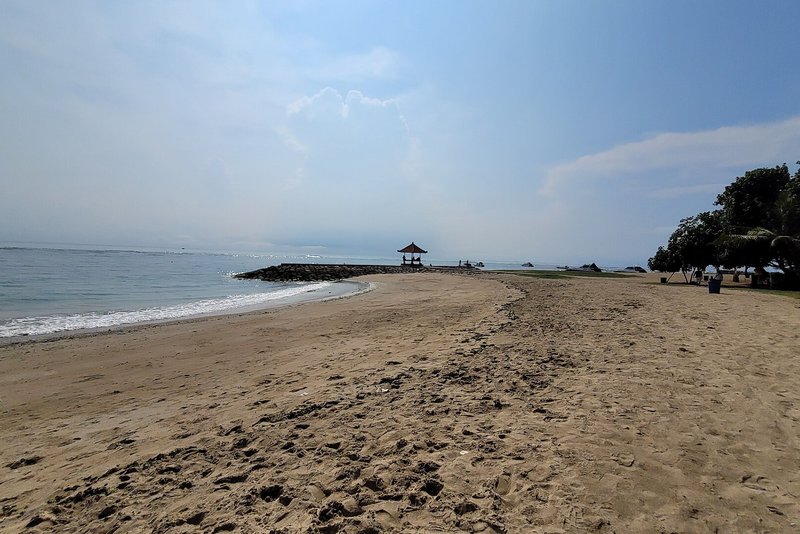
Sunrise on the Sanur beach path
Photo: Aspere / Wikimedia Commons (CC0)

01 · Beach

Sunrise on the Sanur beach path

📍 Full length of the coast, Matahari Terbit to Mertasari

Cars and motorbikes are banned from the paved seafront path, which stretches roughly 5 km between Matahari Terbit and Mertasari past hotels, warungs and little shrines. Because the coast faces east, dawn arrives straight over the water, at around 5:45 am in November and 6:35 am in July. Nusa Penida sits off to the south-east and, when the air is clear, Mount Agung rises to the north-east. Fishermen haul in their jukung, residents swim and stroll, and the small pavilions on the stone groynes are the first things to catch the light.

Tip: Arrive by 5:45 am; Matahari Terbit and Karang beaches are the traditional sunrise spots.

Fast boats to Nusa Penida and Lembongan

02 · Adventure

Fast boats to Nusa Penida and Lembongan

📍 Matahari Terbit Road, Sanur Kaja (north end)

Since 9 November 2022 the Nusa islands have been reached from Sanur Harbour at Matahari Terbit, whose terminal, designed by Balinese architect Popo Danes, takes the shape of a jukung. Penida is a 30 to 45-minute ride and Lembongan slightly closer at 30 to 40 minutes, while certain operators carry on to the Gilis and Lombok, a trip of 2.5 to 4 hours. Day trips are the norm, yet a night or two on either island is far more relaxed.

Tip: Report to your operator's desk 60 to 90 minutes before sailing with cash for the harbour fee; Scoot sells Lembongan one-way tickets at IDR 225,000.

03 · Beach

High-tide swimming in the lagoon

📍 Segara Ayu, Sindhu and Karang beaches, central Sanur

With a reef roughly 500 metres out flattening the sea, Sanur's lagoon is among the gentlest places on the island for children to swim. The tide decides everything. Around high water, Segara Ayu, Sindhu and Karang have enough depth over sand for real swimming. As it falls, the lagoon shrinks to seagrass, coral and sea urchins, and you end up wading rather than swimming. Look up a tide table and aim for the two hours on either side of the high.

Tip: Reef shoes are essential. Dry-season highs are shorter, and heavy wet-season rain washes debris in.

04 · Culture

Le Mayeur Museum

📍 Hang Tuah Road, Sanur Kaja, on the beach

Adrien-Jean Le Mayeur reached Bali from Belgium in 1932, wed the Legong dancer Ni Nyoman Pollok in 1935 and built a home and studio right on the sand. The house became a museum in 1957, a year before his death, and Ni Pollok looked after it from then on. Roughly 88 works fill the carved rooms. Many show her, and some were painted on sacking during the Second World War when canvas ran short. Only about 100 people come each month, so there is often no one else inside.

Tip: Open about 8 am to 3:30 pm (8:30 am to 12:30 pm on Fridays), closed on public holidays; the entry fee is small.

05 · Food & Drink

Sindhu night market

📍 Off Danau Tamblingan Road, central Sanur

In daylight Pasar Sindu sells vegetables and fruit to the neighbourhood. Around 5 pm the cooks move in, and the lot, a few minutes inland from Sindhu Beach, fills with smoke from sate ayam, grilled chicken, bakso, soto ayam, nasi campur and roti bakar. Seating is plastic stools at communal tables. No dinner in Sanur costs less, and none shows you more clearly how local families eat out.

Tip: Come between 6 and 7 pm, when the stalls are running but seats are easy; satay is around IDR 20,000–30,000, paid in small notes.

06 · Family

Cycling the beach path

📍 Seafront path, Mertasari to Matahari Terbit

Sanur has no hills, which makes its promenade the simplest long ride in the south. Shops and hotels rent cruiser bikes, and the round trip from Mertasari up to Matahari Terbit takes about an hour once you allow for coffee and photo stops. ICON Bali has bike racks and showers on its seafront terrace. Walkers, dogs and toddlers share the path, so treat it as a gentle pedal rather than a workout.

Tip: Ride before 9 am or after 4 pm to avoid the heat; motorbikes are not permitted on the path.

07 · Nature

Reef snorkelling by jukung

📍 Leaves from Sindhu, Semawang and other beaches

The painted outriggers pulled up on the sand double as snorkel boats. Fishermen and dive shops run them out to the edge of the reef, about ten minutes from shore, for trips of roughly 1.5 to 2 hours. The coral and fish are better than the beach would lead you to expect, though rain clouds the water. Settle the price, duration, group size and whether mask and fins come with it before you push off.

Tip: Go in the morning on a mid-to-high tide so the boat can get out and back without scraping.

08 · Family

Turtle Conservation and Education Centre, Serangan

📍 Serangan island, about 11 km south-west (20–30 min)

Serangan used to be notorious for trading turtles, and this centre opened on 20 January 2006 to give the village a different income. Across 2.4 hectares are rescue pools for sick or stranded animals, a hatchery for eggs moved from crowded beaches, and tanks where hatchlings spend about a month before release. Staff talk visitors through the species and the dangers they face, from plastic to use in ceremonies. It is compact; 45 minutes to an hour covers it.

Tip: Free to enter and open roughly 9 am to 4 pm; donations and shop sales pay for the work.

Show all 23 things to do ↓

09 · Culture

Prasasti Blanjong

📍 Danau Poso Road, Sanur Kauh (south Sanur)

Inside a small temple in Banjar Blanjong stands a 1.77-metre stone pillar bearing one of the oldest dated inscriptions found in Bali. It was raised in Saka 835, which is 914 AD, under King Sri Kesari Warmadewa, and carries Old Balinese on one face and Sanskrit on the other. The worn text refers to military campaigns and calls the island Walidwipa. Discovered in 1932, it remains on the spot where it was erected over 1,100 years ago.

Tip: Ten minutes is enough; wear a sarong and ask first if a ceremony is going on.

10 · Culture

Kite season and the Bali Kite Festival

📍 Padang Galak (north) and Mertasari (south)

Steady dry-season winds from June to August bring out the kites. Each village team, 70 to 80 strong and backed by its own gamelan, flies huge traditional designs of up to about 10 metres: the fish-shaped bebean, the bird-like janggan, whose tails can exceed 100 metres, and the leaf-shaped pecukan. Every one is an offering for a good harvest. Padang Galak is the festival's long-standing home, while the 2026 Rare Angon International Kite Festival took place at Mertasari from 23 to 26 July.

Tip: The Denpasar Kite Festival was scheduled for August 2026; dates are confirmed late, so look again nearer the time and arrive early.

11 · Adventure

Kitesurfing and wing foiling at Mertasari

📍 Mertasari Beach, south Sanur

No beach in Bali is better known among kiters. June and July deliver trade winds of 12 to 14 knots most days, while May, August and September are hit and miss. Because the lagoon dries out at low water, sessions follow the mid-to-high tide, although a deeper channel roughly 150 metres offshore can still be ridden. Several Sanur schools, Rip Curl School of Surf at Prama Sanur Beach among them, teach kiting, wing foiling, foiling and paddleboarding.

Tip: Book first lessons on a rising tide and stay well away from fishermen, jet skis and boat channels.

12 · Temple

Pura Sakenan

📍 Serangan island, about 10 km south-west (20–30 min)

Pura Dalem Sakenan, on Serangan's north-west shore, is among the most important sea temples in Bali, and tradition ties it to the priest Mpu Kuturan. Its oldest shrine is made of limestone and coral. Once every 210 days, on the Saturday of Kuningan, pilgrims from all over the south arrive for its festival. Until land reclamation and a bridge came in 1996, they waded through the mangroves at low tide or arrived by jukung. Kuningan next falls on 23 January and 21 August 2027.

Tip: A sarong and sash are required; on festival days, watch quietly from the edges.

13 · Market & Shopping

ICON Bali

📍 Danau Tamblingan Road 27, central Sanur

Opened on 7 June 2024, Sanur's beachfront mall stretches from Danau Tamblingan Road right through to the seafront path, so you can wander in off the sand. Around 200 shops, Marks & Spencer, Uniqlo and Sephora among them, share space with a Cinema XXI holding the island's first IMAX screen, plus a 'floating market' of local stalls selling Balinese snacks. When an afternoon turns wet, it is the simplest indoor fallback in town.

Tip: Open about 10 am to 10 pm; come in through the beach entrance, where there are showers and bike racks.

14 · Beach

Mertasari Beach

📍 Southern tip of Sanur, Sanur Kauh

Where the path runs out, Mertasari opens into a wide stretch of sand that local families claim on weekend afternoons. Simple warungs and stalls sell drinks and snacks, children launch kites, kitesurfers rig up in the dry season, and the seaside park, Taman Inspirasi Muntig Siokan, stages events. Inside the reef the water is calm and shallow, but no lifeguards are on duty. It feels rougher round the edges than the central beaches, and rain brings rubbish ashore.

Tip: Parking costs about IDR 2,000 per scooter and IDR 5,000 per car, paid on the way out; weekends after 4 pm are liveliest.

15 · Culture

Sanur Village Festival

📍 Venue varies; lately Mertasari and Matahari Terbit

Once a year this community festival fills the shore with food stalls, dance, art, beach yoga, sports and cook-offs between hotel chefs. Its 18th edition was held at Taman Inspirasi Muntig Siokan, close to Mertasari, on 7–9 November 2025, whereas earlier ones ran in August around Matahari Terbit and the Bali Beach Hotel. The provincial events calendar has it down for November 2026, so it may coincide with your trip.

Tip: Venue and dates shift each year; confirm on the festival's social media before planning around it.

16 · Culture

Melasti and beach ceremonies

📍 All along the Sanur shore

These beaches double as temple ground. A few days ahead of Nyepi, villages walk their temple effigies down to the sea for melasti, a purification rite; in 2026 it took place on 16 March, three days before the day of silence. Smaller rites mark temple anniversaries and holy days, when families dressed in white gather at the waterline with offerings and incense drifts across the path. Visitors are welcome to look on quietly.

Tip: Keep a respectful distance, never cross in front of people at prayer, and leave the drone packed.

17 · Adventure

Sanur Reef surf

📍 Outer reef off central Sanur

For most of the year Sanur has no surf to speak of. Between roughly November and April, though, westerly winds blow offshore and south swells bend in, waking up Sanur Reef, a right-hander far out on the reef. January is the most reliable month. The wave breaks over shallow rock well away from the beach, and local surfers take most of it on good days, so newcomers should mind their manners in the line-up.

Tip: For experienced surfers only; beginners should try Mertasari's small wave or book a surf school.

18 · Culture

Bajra Sandhi Monument, Renon

📍 Renon, Denpasar, 4 km west (15–20 min)

Renon, Denpasar's government district just inland, is home to this 45-metre monument to the struggles of the Balinese people, with 33 dioramas inside telling the island's story. President Megawati inaugurated it in June 2003. It links neatly to Sanur's own past: Dutch troops came ashore here in 1906 before marching on Denpasar and the puputan. From the top floor you look over Renon's park, which hosts a car-free day every Sunday morning.

Tip: Small fee. Doors open at 8 am on weekdays, a little later at weekends, and close at 6 pm.

19 · Market & Shopping

Pasar Badung and Kumbasari

📍 Central Denpasar, 9 km north-west (25–40 min)

Denpasar's main market lies beside the Badung River. Rebuilt after a major fire in 2016, it now fills four floors: fresh produce, spices and meat at ground level, snacks and household goods on the next, textiles, baskets and jewellery above that, and clothing at the top. Street-food vendors set up from about 6 pm. A footbridge crosses the river to Kumbasari, the art market, which is the better stop for sarongs and souvenirs.

Tip: Visit at 6–8 am, when the produce floor is busiest; haggle over cloth, not over food.

20 · Adventure

Taman Festival Bali

📍 Padang Galak, Kesiman, about 6 km north of Sindhu

Opened on the Padang Galak shore in 1997, this theme park shut within a few years, undone by the Asian financial crisis, thin crowds and, according to local lore, a lightning strike. Today it is a ruin of concrete pavilions, an open-air theatre and staircases swallowed by trees and graffiti. Villagers have cut back some of the growth, staff a ticket booth at the entrance and put on the occasional event or exhibition.

Tip: Pay a small fee at the gate; visit in daylight in closed shoes, as floors and stairs are crumbling and unlit.

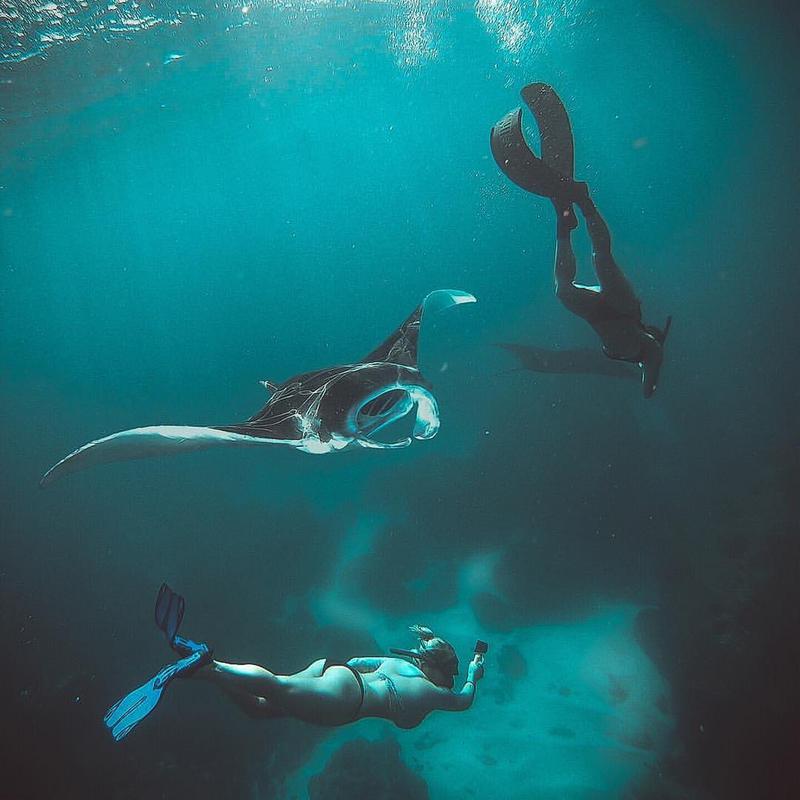
Manta and mola dive trips
Photo by @benswanderlust

21 · Adventure

Manta and mola dive trips

📍 Leaves from Sanur; dives around Nusa Penida

Most dive day trips to Nusa Penida start in Sanur. The prize there is manta rays and, in season, the giant ocean sunfish, or mola mola. Boats head out in the morning and cross in 30 to 45 minutes. Local dive centres also run days out to the USAT Liberty wreck at Tulamben and to Padang Bai. Penida's currents can be fierce, and many of its sites are open to certified divers only.

Tip: Choose a centre that runs its own boat and gives a thorough current briefing.

22 · Wellness

Beachfront yoga at Power of Now Oasis

📍 Seafront path, Sanur Kauh (south Sanur)

On the path in Sanur Kauh, a bamboo shala opens onto the lagoon and takes drop-ins daily, with four classes spread between 7:30 am and 6:30 pm. Styles include hatha, yin, vinyasa and Iyengar, and all levels are welcome. Bookings are not taken, so turn up 20 to 30 minutes early, particularly at weekends. Visitors staying longer can also join its 200-hour teacher trainings.

Tip: A drop-in class is about IDR 140,000; bring water, as the open-sided shala gets warm.

23 · Family

Stand-up paddle and canoes at high tide

📍 Karang, Sindhu and Semawang beaches

Once the tide is in, the lagoon behaves like a lake, ideal for paddleboards and sit-on-top canoes. Stands on beaches such as Karang rent them out, as does Rip Curl School of Surf at Prama Sanur Beach. Heading out towards the reef at sunrise gives the best view back to shore, with the volcanoes behind the shore and Nusa Penida off to one side. Keep within the reef line, as the swell and currents pick up fast beyond it.

Tip: Go with the tide; at low water you will be hauling the board across seagrass.

Itinerary

How to spend your days in Sanur

Sanur in a day

A flat, bicycle-based loop of roughly 20 km along the seafront path, with no driver needed. Without a bike, book a ride for the two 3.5 km hops between Sindhu and Sanur Kauh. Look up the tide first and shift the swim to suit it.

  1. 5:45

    Watch the sun come up at Matahari Terbit or Karang, then eat breakfast at a warung on the sand.

  2. 8:00

    Hire a cruiser bike for the day and pedal south to Mertasari and back, about 11 km, while it is still cool.

  3. 10:00

    Visit the Le Mayeur Museum on Hang Tuah Road; it shuts at 12:30 pm on Fridays.

  4. 12:00

    Have lunch around Sindhu, then swim at Segara Ayu if the water is high enough.

  5. 15:00

    Cycle about 3.5 km south to the Blanjong pillar, then join the late-afternoon class at Power of Now Oasis.

  6. 18:00

    Pedal the 3.5 km back north and stroll the ICON Bali promenade as dusk settles on the lagoon.

  7. 19:00

    Finish with satay and nasi campur at the Sindhu night market.

Sanur in three days

The beach on day one, the Nusa islands on day two, and Serangan with a slice of Denpasar on day three.

  1. Day 1, 5:45

    Dawn stroll on the seafront, then Le Mayeur's house and paintings.

  2. Day 1, 10:00

    Head out by jukung for a snorkel on the reef while the morning tide is high.

  3. Day 1, 19:00

    Dinner at the Sindhu night market.

  4. Day 2, 7:00

    Take an early fast boat over to Penida or Lembongan, checking in at your operator's harbour desk first.

  5. Day 2, 16:30

    Sail back to Sanur, or stay over on the island, which is the better option.

  6. Day 3, 8:00

    By car to Serangan island: turtles first, then Pura Sakenan a short way along the shore.

  7. Day 3, 11:00

    On the return, call in at Renon's Bajra Sandhi Monument.

  8. Day 3, 16:00

    End at Mertasari Beach among the kites and kitesurfers as the light softens.

Sanur with children

Short distances, shade in the middle of the day and water time that follows the tide.

  1. 7:00

    Cycle the seafront path before the heat builds.

  2. 9:00

    Drive 20 to 30 minutes to the Serangan turtle centre.

  3. 11:00

    Paddleboard or canoe inside the reef if the tide is in; otherwise play on the sand at Segara Ayu.

  4. 13:00

    Lunch and a rest through the hottest hours, or a film at ICON Bali.

  5. 16:00

    Join Balinese families flying kites at Mertasari Beach.

  6. 18:30

    Satay and roti bakar at the Sindhu night market.

Longer trip? Plan up to seven days from Sanur or browse our Bali itineraries.

Where to stay

Hotels and villas in Sanur

All stays in Sanur →

Where to eat

Restaurants and cafés in Sanur

All restaurants in Sanur →

Seasons

Best time to visit Sanur

Sanur's weather tracks the airport station 15 km away: around 1,740 mm of rain a year, almost all of it between November and March. January is the wettest month at about 390 mm across 19 days, while August is the driest at roughly 16 mm. Daytime highs stay at 29–31°C all year. Beach days are most reliable from April to October, with clear mornings and a glassy lagoon, and from June to August steady trade winds arrive for the kite flyers and kitesurfers.

For swimmers, the tide matters more than the month. High tides in the dry season are lower and shorter-lived, so plan each swim with a tide table. The wet season brings bigger tides, but also rain-washed debris in the lagoon, cloudier water for snorkelling and surf on the outer reef. Boats to the islands sail all year; reserve a day ahead in July, August and over Christmas, when the final departures of the day often fill up.

Religious days reshape the town. Nyepi, on 8 March 2027, closes the airport and harbour for a full day from 6 am, with the whole island expected to stay inside. Beforehand, melasti processions crowd the beaches, and ogoh-ogoh effigies parade on the eve. Boat services can pause on Galungan and Kuningan too, and Pura Sakenan holds its temple festival on Kuningan, which next falls on 23 January and 21 August 2027. Kite festivals run through July and August, and the Sanur Village Festival is pencilled in for November 2026.

Getting there

How to get to Sanur

  • Ngurah Rai airport (DPS)30 to 60 minutes

    Roughly 15 km by road, using either the bypass or the Bali Mandara toll road. Book a transfer ahead or order a ride-hailing car from the airport pickup area.

  • Kuta, Legian or Seminyak30 to 75 minutes

    A 15–19 km drive by car or ride-hailing app. Kuta is the quick end; from Seminyak allow 45 minutes or more in rush hour.

  • Canggu60 to 90 minutes

    Some 22 km by car or scooter through Denpasar. For a morning boat, set off before 7 am.

  • Ubud45 to 90 minutes

    Around 22–24 km by car. Drivers heading for an early sailing usually allow 60 to 75 minutes.

  • Nusa Dua or Jimbaran30 to 45 minutes

    An 18–22 km drive up the bypass.

  • Uluwatu60 to 90 minutes

    About 33 km by car across the Bukit and north on the bypass.

  • Padang Bai (Lombok ferries)60 to 90 minutes

    Around 40 km by car on the east coast road.

  • Nusa Penida or Nusa Lembongan30 to 45 minutes

    Fast boat into Sanur Harbour at Matahari Terbit, with frequent sailings by many operators every day.

Getting around Sanur

Central Sanur is flat and easy to cover on foot. The seafront path is the most pleasant way to get between Sindhu, Segara Ayu, Karang, Semawang and Mertasari, while Danau Tamblingan Road, a block inland, holds the shops and restaurants. Locals cover the whole 5 km strip by bicycle, and motorbikes are kept off the path.

Beyond Sanur, Grab, Gojek and metered Bluebird taxis handle most journeys. The harbour is the exception: app drivers are not allowed to collect passengers there, so either walk about 15 minutes to the main junction near the Prime Plaza Hotel, ignoring the touts in pale blue shirts, or arrange a driver in advance if you are returning from the islands with bags. If you are based in Sanur Kauh or by the bypass, a scooter makes life easier.

The worst congestion is on the Ngurah Rai Bypass during the morning and late-afternoon peaks, on the harbour approach before the first sailings, and on the airport road. Beach car parks take cash: about IDR 2,000 for a scooter and IDR 5,000 for a car.

Know before you go

Sanur tips that save time

  1. 01Plan every swim with a tide table: the lagoon is only deep enough for a couple of hours either side of high water.
  2. 02Wear reef shoes in the sea; beyond the sand lie coral and sea urchins hidden in the seagrass.
  3. 03For boats, go to your operator's own desk, not the terminal, 60 to 90 minutes before departure, with cash for the harbour fee of IDR 10,000–25,000.
  4. 04Foreign visitors to Nusa Penida pay an arrival levy (adults IDR 25,000, children IDR 15,000), and attractions like Kelingking and Broken Beach each charge adults about IDR 25,000 more; all of it is paid cashless.
  5. 05In busy months book boats at least a day ahead, as the last sailings sell out even in low season.
  6. 06Coming from Ubud, Canggu or Seminyak for a boat, leave early: the bypass and harbour road clog before the first departures.
  7. 07Carry small notes: parking attendants, night-market cooks, jukung skippers and temple donation boxes rarely have change.
  8. 08Pack a sarong and sash for the Blanjong pillar, Pura Sakenan and any beach ceremony you pause to watch.
  9. 09Do not swim at Padang Galak, north of the harbour, where the sea is rough.

FAQ

Sanur questions, answered

Is Sanur a good choice for a Bali trip?

+

It is if you value calm water, a walkable seafront and an easy jumping-off point for Nusa Penida, Lembongan and Ubud. You get a 5 km car-free path, sunrise over the sea, reef-sheltered swimming and quiet evenings. Look elsewhere for surf beaches, beach clubs or nightlife, which Seminyak, Canggu and Uluwatu do far better. Plenty of visitors spend two or three nights here either side of an island stay.

Can you swim at Sanur beach?

+

Yes, as long as the tide is in. A reef roughly 500 metres offshore keeps the lagoon flat and safe for children, but when the water drops you are left wading over seagrass and coral. Segara Ayu, Sindhu and Karang are the best stretches in the two hours around high tide, and reef shoes help. Avoid Padang Galak, north of the harbour, where the sea is much rougher.

Should I stay in Sanur or Seminyak?

+

Choose Sanur for gentle swimming, children, cycling, sunrise and boats to the Nusa islands. Choose Seminyak for sunsets, boutiques, a big restaurant scene, beach clubs and late nights, bearing in mind its beach has surf and strong currents. Sanur winds down early while Seminyak keeps going. With 45 to 75 minutes of driving between them, it makes sense to split your trip rather than commute.

How many nights should I spend in Sanur?

+

Two or three days lets you walk the seafront, snorkel the reef, see Le Mayeur's paintings, eat at the night market and drive out to Serangan. Add another day for a trip to Nusa Penida or Lembongan, or better still, sleep on the islands for a night or two. Families and long-stay visitors often settle in for a week because daily life here is so easy.

How long is the transfer from Bali airport to Sanur?

+

Sanur is roughly 15 km from Ngurah Rai. Drivers take either the toll road over the bay or the bypass, and the journey runs from half an hour to an hour with traffic. A pre-booked transfer is simplest, though Grab and Gojek operate from the airport's ride-hailing pickup area. Arriving during the evening rush pushes the trip towards the hour mark.

What is the best way to reach Nusa Penida from Sanur?

+

Take a fast boat from Sanur Harbour at Matahari Terbit. Numerous operators sail from early morning, reaching Penida in 30 to 45 minutes and Lembongan in 30 to 40. Reserve a day ahead in peak months, arrive 60 to 90 minutes before departure and bring cash for the harbour fee. A second pier at Mertasari has been running trial sailings since February 2026.

Is Sanur suitable for young children?

+

Very much so; few parts of Bali suit small children better. At high tide the lagoon is calm, the flat seafront path works for buggies and bikes, and there is plenty for the afternoons: turtles on Serangan, kite flying on Mertasari's sand and a cinema inside ICON Bali. The drawbacks are coral underfoot at low tide and the absence of lifeguards on beaches such as Mertasari.

Which months are best for Sanur?

+

The dry season, from April to October, gives the most reliable beach weather, with August averaging only about 16 mm of rain, clear mornings and a flat sea. June to August also brings dependable wind for kites and kitesurfing. November to March is wetter, January most of all, but quieter, and the outer reef gets surf. If you need to travel, avoid Nyepi, when the airport and harbour close.

What is the nightlife like in Sanur?

+

Low-key. A handful of bars along Danau Tamblingan Road and the seafront path put on live music, and a few stay open until about 1 am, but Sanur has no clubs and most of it is asleep by 10 pm. Many visitors pick it precisely for that reason. For a big night out, drive 45 to 90 minutes to Seminyak or Canggu.

Are there waves for surfing in Sanur?

+

Only in certain months. Sanur Reef, a right-hander well out to sea, works in the wet season from about November to April, when westerly winds blow offshore, and it breaks over shallow rock, so it is for experienced surfers. Beginners are better off on Mertasari's small wave or with Rip Curl School of Surf, which also teaches kiting, wing foiling and paddleboarding.

Sanur or Nusa Dua for a calm-water holiday?

+

Both have reef-protected water. Nusa Dua is a gated enclave of large resorts and manicured beaches with little going on outside the gates. Sanur is a living town with public beaches, warungs, a night market and the harbour for the Nusa islands, and its accommodation ranges from simple guesthouses to beachfront resorts. Pick Nusa Dua for a classic resort break and Sanur for walking and day trips.

Nearby

Where to go after Sanur

Read next

More Sanur guides on the Blog