
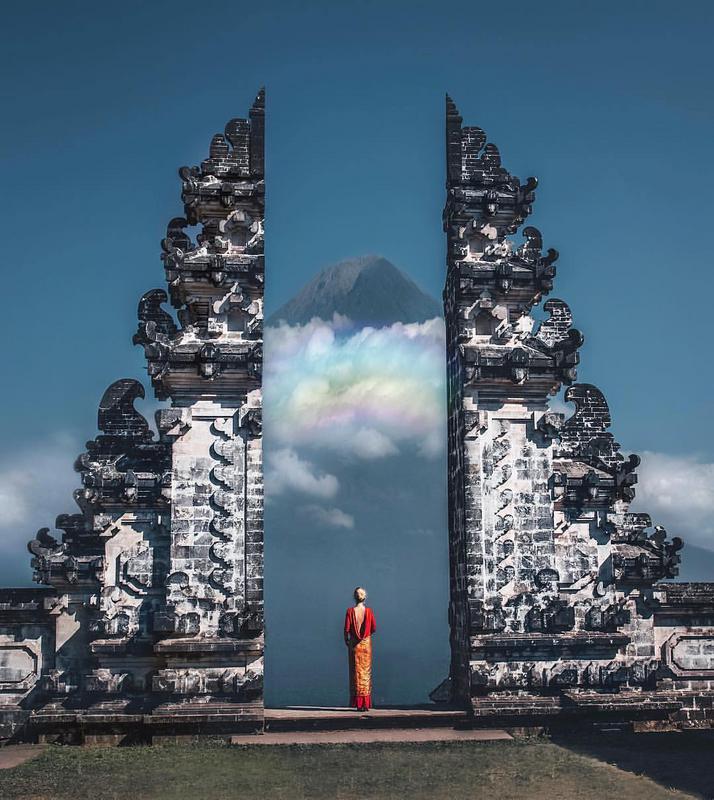
Bali is called the island of a thousand temples, and every village has at least three. A few are unforgettable: temples on rocks in the sea and on clifftops, a mother temple on the slopes of a volcano, and water temples where Balinese come to purify themselves.
Here are the 14 best temples in Bali, with tickets, opening hours and the rules to know. Staying in Ubud? Many are on our list of the best places to visit in Ubud.
Visiting Bali's temples in 2026
- Dress: a sarong and sash, with shoulders and knees covered. Most temples lend or rent them at the entrance.
- Rules: under Bali's 2025 rules for visitors (Governor Circular No. 7/2025), only enter the inner courtyards to pray, in traditional dress. Women who are menstruating shouldn't enter.
- Dates: Galungan is 13 January 2027 and Kuningan 23 January 2027, when temples fill with worshippers and some close to tourists. On Nyepi, 8 March 2027, everything in Bali closes.
- Before you go: every foreign visitor pays the IDR 150,000 Bali tourist levy on Love Bali, separate from temple tickets.
- Not a temple, but worth it: Tirta Gangga water palace near Amed (IDR 90,000) pairs well with Lempuyang.
1. Tanah Lot Temple
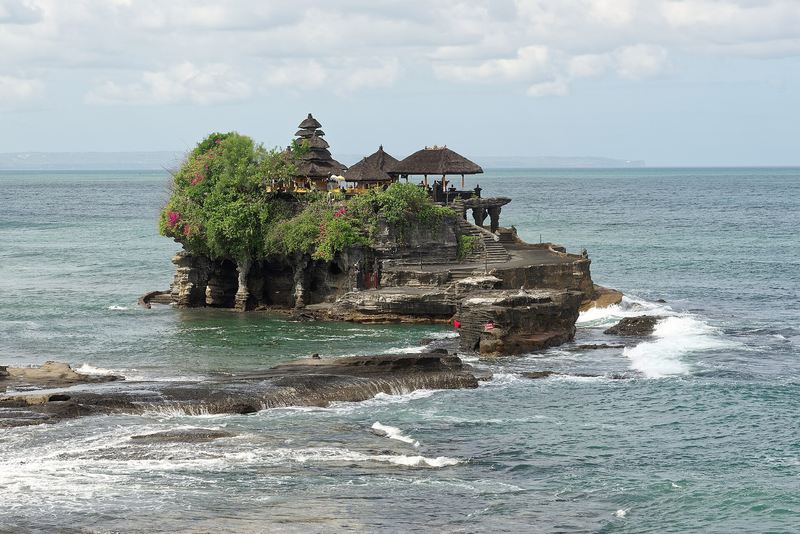
Bali's most photographed temple sits on a rock in the sea off the Tabanan coast. Legend says the 15th-century priest Dang Hyang Nirartha meditated here and founded the temple, dedicated to the sea god; at low tide you can walk across to the base of the rock.
Six more temples are spread across the clifftop grounds. Sunset is the classic time, but it's also the busiest; come at opening (6 AM) for calm and soft light. The shrine on the rock itself is for worshippers.
The Details
- Location
- Beraban, Kediri, TabananOpen in Maps
- Hours
- Daily 6 AM – 7 PM
- Entry
- IDR 75,000 foreign adults, IDR 40,000 children; parking IDR 3,000–5,000
Good to know
Drone flights and photo shoots must be reported to the management first.
2. Lempuyang Temple (Gates of Heaven)
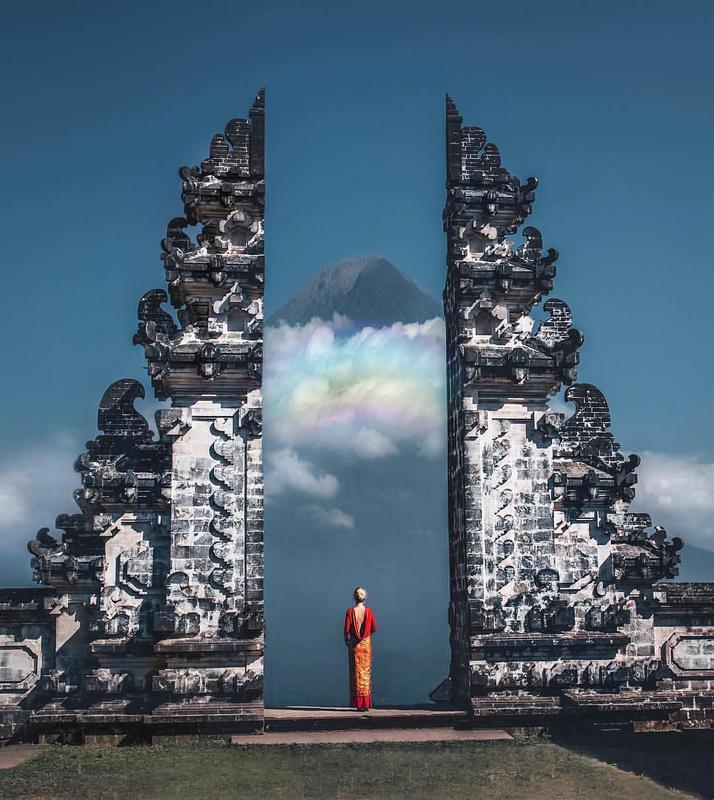
The white split gate of Pura Penataran Agung Lempuyang frames Mount Agung perfectly, which is why it's known as the Gates of Heaven. It's one of Bali's key directional temples, guarding the east, and seven temples climb the mountain: the summit temple is about 1,700 steps up.
Since 2022 a mandatory shuttle runs from the terminal below. For the famous gate photo there's a numbered queue that can mean a 2–4 hour wait; the 'water reflection' is created with a mirror held under the phone. The temple closes to tourists for about five days at each of its ceremonies.
The Details
- Location
- Jl. Pura Telaga Mas Lempuyang, Tri Buana, Abang, KarangasemOpen in Maps
- Hours
- Tourist hours about 7 AM – 5 PM
- Entry
- About IDR 150,000 (IDR 100,000 entry plus IDR 50,000 return shuttle); sarong included
Good to know
Arrive at the shuttle terminal by about 5:15 AM for a low queue number. Cover shoulders and knees; no pork food in the temple area.
3. Ulun Danu Beratan Temple
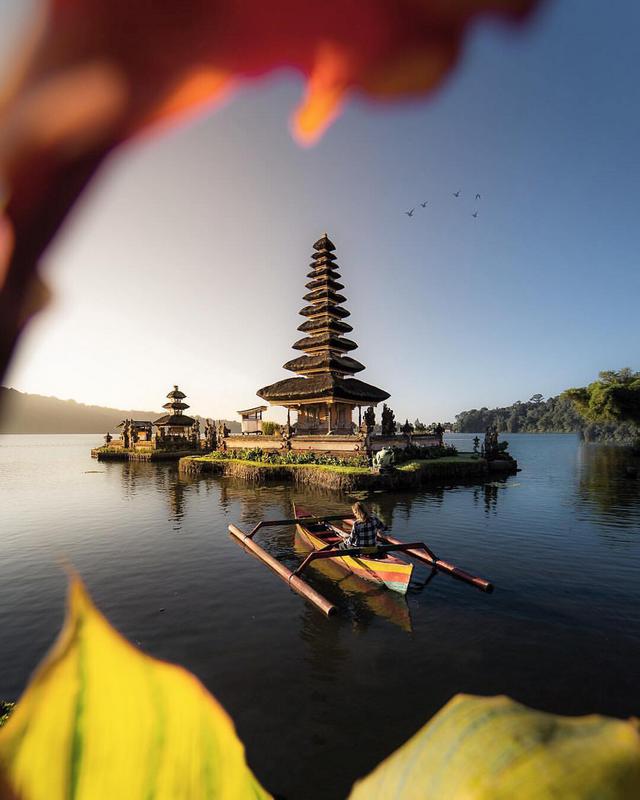
Floating on Lake Beratan in the cool Bedugul highlands, this water temple was built in 1633 for Dewi Danu, the goddess of the lake. Its 11-tiered meru, dedicated to Shiva and Parvati, seems to rise straight from the water.
Lake Beratan's water irrigates much of central Bali, and a Buddhist stupa stands in the same grounds. Mornings are clearest; mist and rain roll in by afternoon, especially from late November.
The Details
- Location
- Danau Beratan, Candikuning, Baturiti, TabananOpen in Maps
- Hours
- Daily 6 AM – 7 PM
- Entry
- About IDR 100,000 foreign adults, IDR 50,000 children (check at the gate)
Good to know
Busiest at weekends and on Indonesian holidays.
4. Uluwatu Temple (Pura Luhur Uluwatu)
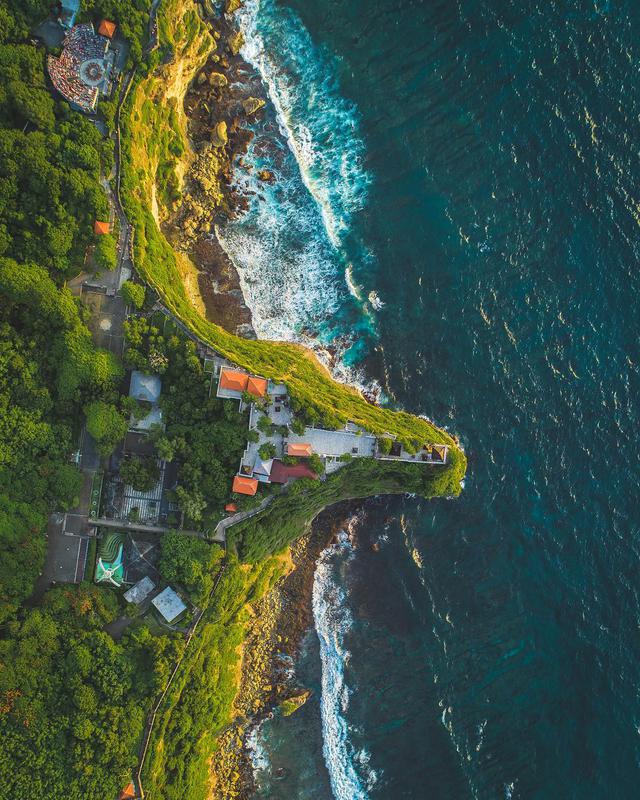
On the edge of a 70 m cliff at Bali's south-western tip, Pura Luhur Uluwatu is one of the island's key directional temples and the only sea temple among them, linked to the priest Dang Hyang Nirartha.
Visitors stay in the outer grounds, where the clifftop paths have some of Bali's best sunset views. Stay for the Kecak fire dance in the amphitheatre at 6 PM (IDR 150,000, separate ticket), and keep your sunglasses and phone away from the monkeys.
The Details
- Location
- Jl. Raya Uluwatu, Pecatu, South KutaOpen in Maps
- Hours
- Daily 7 AM – 7 PM
- Entry
- IDR 60,000 foreign adults, IDR 40,000 children (from 1 January 2026)
Good to know
Sarong and sash provided. Afternoon traffic is heavy; leave plenty of time to reach the Kecak.
5. Besakih, the Mother Temple
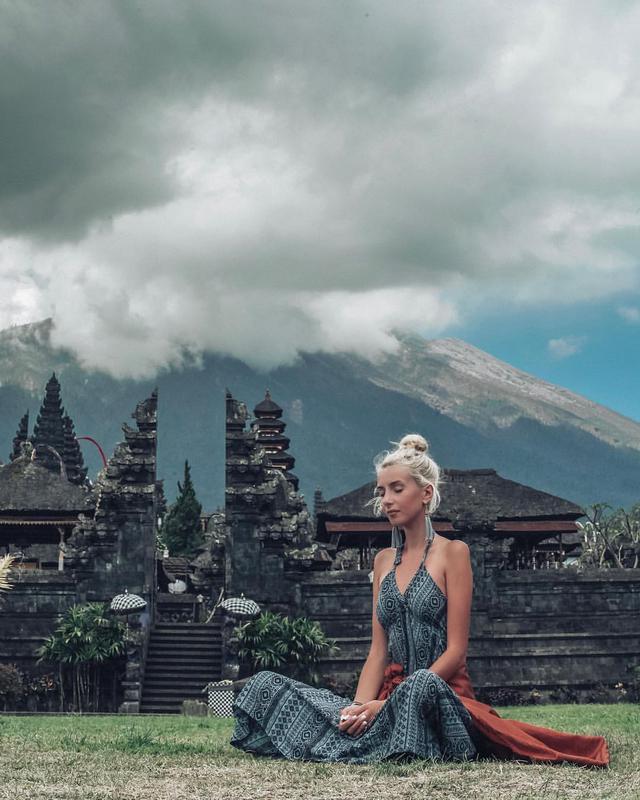
On the slopes of Mount Agung at about 1,000 m, Pura Agung Besakih is the largest and holiest temple in Bali: 26 temples on terraced levels around the central Pura Penataran Agung. The 1963 eruption of Agung narrowly missed it, which Balinese saw as a miracle.
The old problem of unofficial 'guides' demanding money has been fixed: your ticket now includes a licensed local guide, a sarong and an electric-car ride up. Ignore anyone insisting you must buy offerings to enter. The biggest festival, Bhatara Turun Kabeh, falls in March or April and draws huge crowds.
The Details
- Location
- Besakih, Rendang, KarangasemOpen in Maps
- Hours
- Daily 7 AM – 6 PM
- Entry
- IDR 150,000 foreign adults (licensed guide, sarong and one-way shuttle included)
Good to know
Menstruating visitors may not enter the inner temple area. The return ride is extra, or walk 10–15 minutes.
6. Tirta Empul Temple
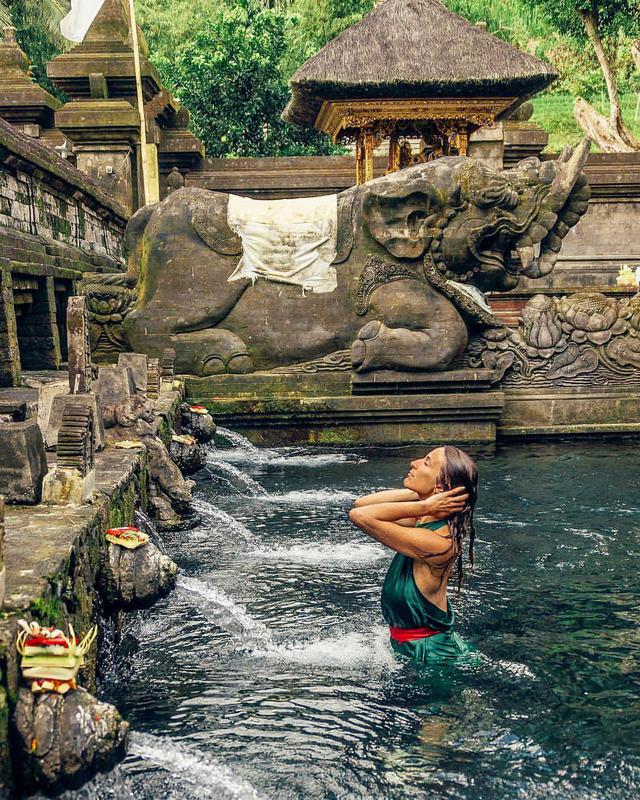
Founded around a holy spring in 962 AD, Tirta Empul in Tampaksiring is Bali's most famous water temple. Balinese come to purify themselves in the spring-fed pools, moving from spout to spout, and visitors of any faith can join the melukat ritual if they follow the customs.
Wear a sarong and sash (rentable at the entrance) and bring a change of clothes to bathe. Women who are menstruating may not join the ritual. Go at 8 AM, before the tour groups.
The Details
- Location
- Manukaya, Tampaksiring, GianyarOpen in Maps
- Hours
- Daily 8 AM – 6 PM
- Entry
- IDR 75,000 foreign adults, IDR 50,000 children (5–12)
Good to know
Gunung Kawi is about 1 km away.
7. Pura Taman Saraswati (Ubud Water Palace)
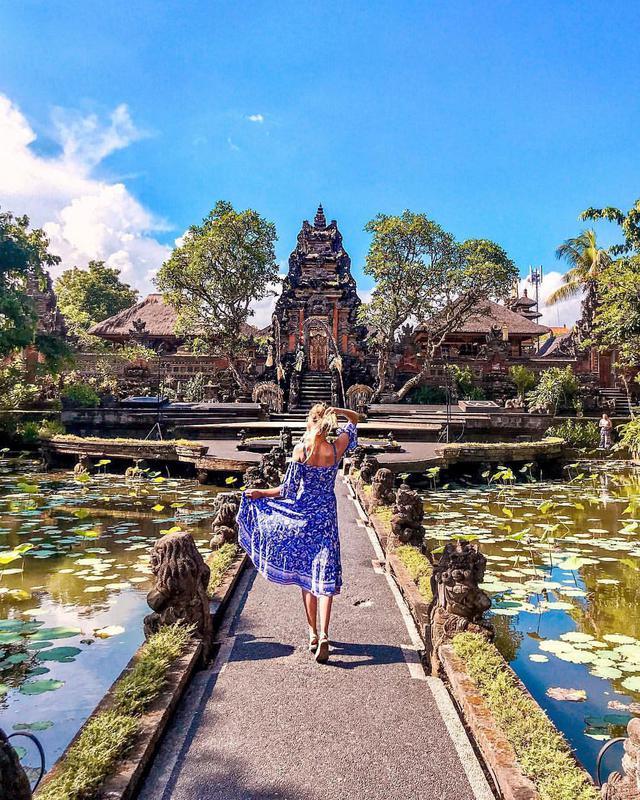
In the centre of Ubud, a walkway crosses a pond of lotus flowers to this temple to Saraswati, goddess of learning and the arts, designed by the artist I Gusti Nyoman Lempad for the Ubud royal family in the early 1950s.
It's no longer free: it's now run as the Ubud Water Palace, with limited visitor numbers, so book ahead in busy months. Balinese dance is staged in the forecourt in the evenings.
The Details
- Location
- Jl. Raya Ubud No.14, UbudOpen in Maps
- Hours
- Saturday – Thursday 8 AM – 7:30 PM; Friday 8 AM – 9:30 PM
- Entry
- IDR 65,000 foreign adults, IDR 50,000 children
Good to know
Closed on Nyepi and during private ceremonies. No wheelchair access.
8. Taman Ayun Temple
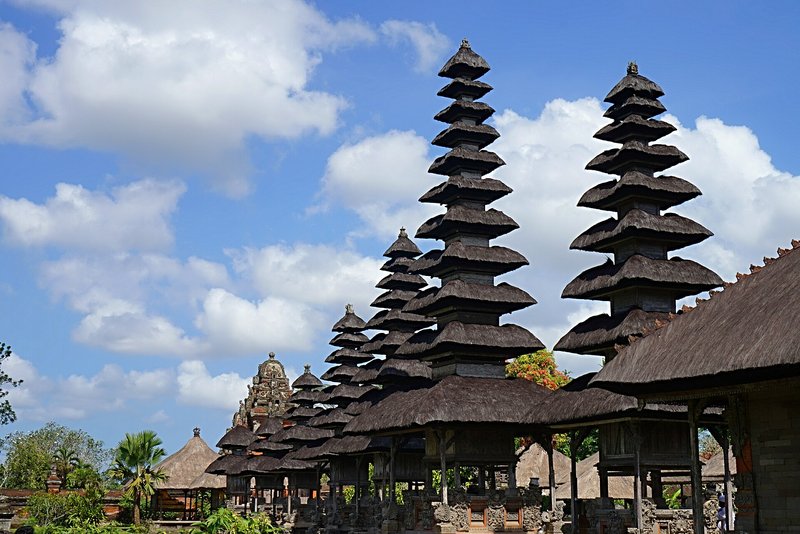
Built in 1634 as the royal temple of the Mengwi kingdom, Taman Ayun ('beautiful garden') is surrounded by a moat, with tiers of meru rising up to 11 roofs in its inner court. It's part of the UNESCO World Heritage listing for Bali's subak rice-irrigation system.
Visitors walk around the walled inner court rather than through it, which makes it a calm, easy visit on the way to Tanah Lot or Jatiluwih.
The Details
- Location
- Jl. Ayodya No.10, Mengwi, BadungOpen in Maps
- Hours
- Daily 8 AM – 6:15 PM
- Entry
- IDR 50,000 foreign adults, IDR 25,000 children (from 1 January 2026)
Good to know
A small ogoh-ogoh museum sits just outside the south-west corner.
9. Goa Gajah (Elephant Cave)
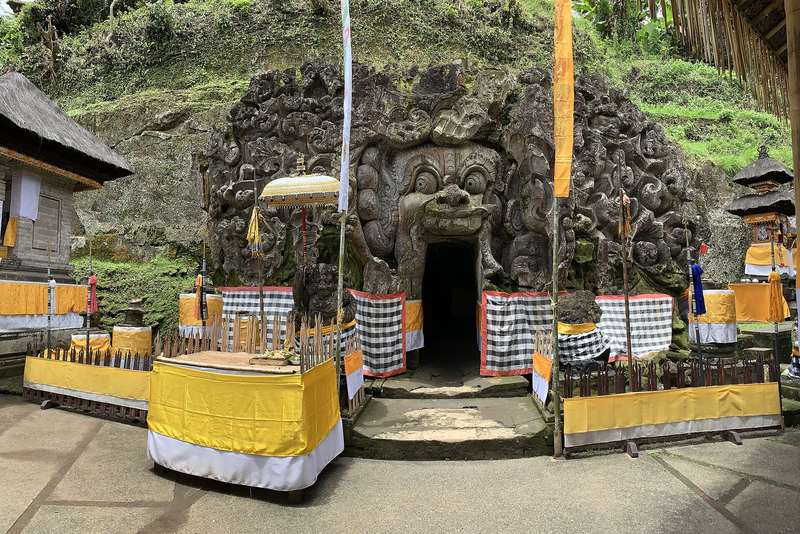
Near Ubud, the 11th-century Goa Gajah mixes Hindu and Buddhist history. You enter the cave through a demon's mouth carved in the rock to find a statue of Ganesha and lingga shrines; the bathing pools outside were only uncovered in 1954.
Walk down to the river valley for the remains of Buddhist stupas, and combine it with the Yeh Pulu rock reliefs, about 1 km away.
The Details
- Location
- Jl. Raya Goa Gajah, Bedulu, Blahbatuh, GianyarOpen in Maps
- Hours
- Daily 8 AM – 6 PM
- Entry
- IDR 50,000 foreign adults, IDR 25,000 children
Good to know
Sarong required, usually lent at the entrance.
10. Gunung Kawi Tampaksiring
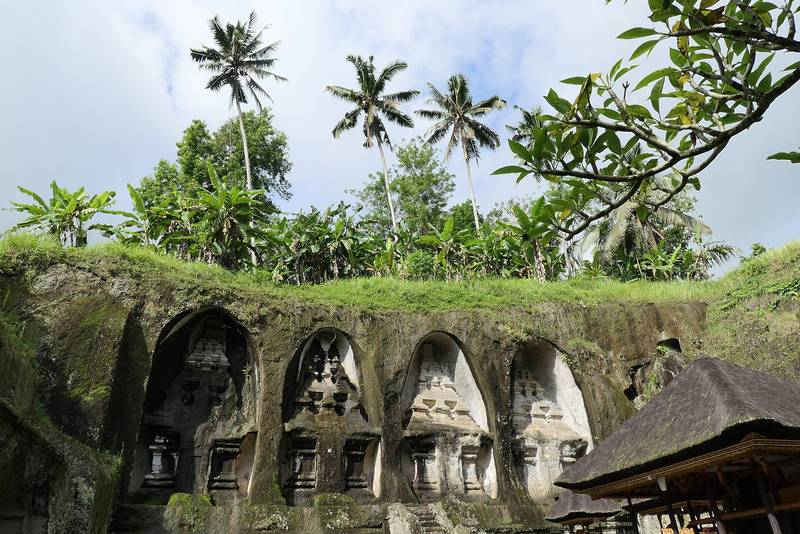
Bali's 'Valley of the Kings': ten 11th-century shrines carved into 7 m niches in the cliffs on both banks of the Pakerisan River, honouring King Anak Wungsu and his family.
About 300 steps lead down through rice terraces. Allow 1–2 hours and combine it with Tirta Empul next door; it's far quieter.
The Details
- Location
- Br. Penaka, Tampaksiring, GianyarOpen in Maps
- Hours
- Daily 8 AM – 6 PM
- Entry
- About IDR 50,000–75,000 foreign adults (sources differ; check at the gate)
Good to know
Sarong and sash required. Not suitable for limited mobility.
11. Pura Ulun Danu Batur
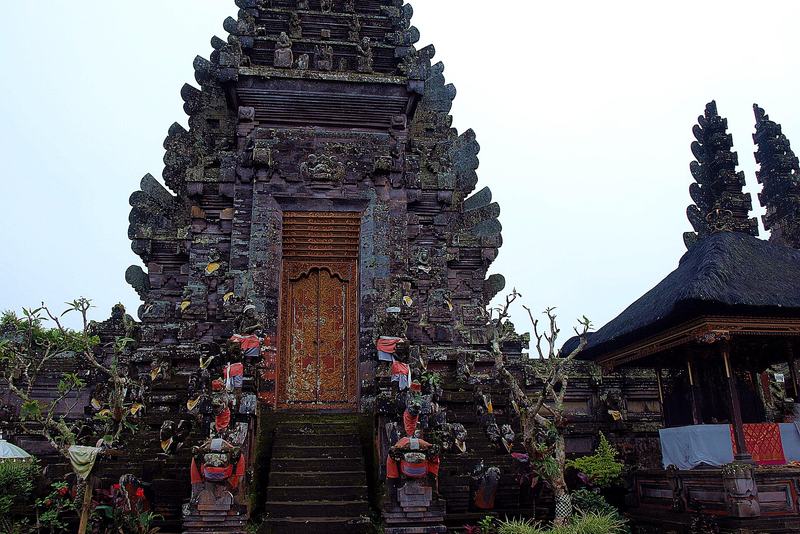
On the rim of the Batur caldera at Kintamani, this is the key temple of the north and the supreme water temple of Bali's subak system, dedicated to Vishnu and the goddess of Lake Batur. It's part of the UNESCO subak listing.
The original temple by the lake was destroyed by eruptions and rebuilt on the rim, completed in 1926: 2026 marks its centenary. Its main festival falls at the full moon of the tenth Balinese month, usually in late March or early April.
The Details
- Location
- Jl. Raya Kintamani, Batur Selatan, Kintamani, BangliOpen in Maps
- Hours
- Open daily
- Entry
- The Kintamani area levy is IDR 50,000 per foreign visitor
Good to know
Combine with a Mount Batur sunrise trek. Wear a sarong and sash.
12. Pura Gunung Kawi Sebatu
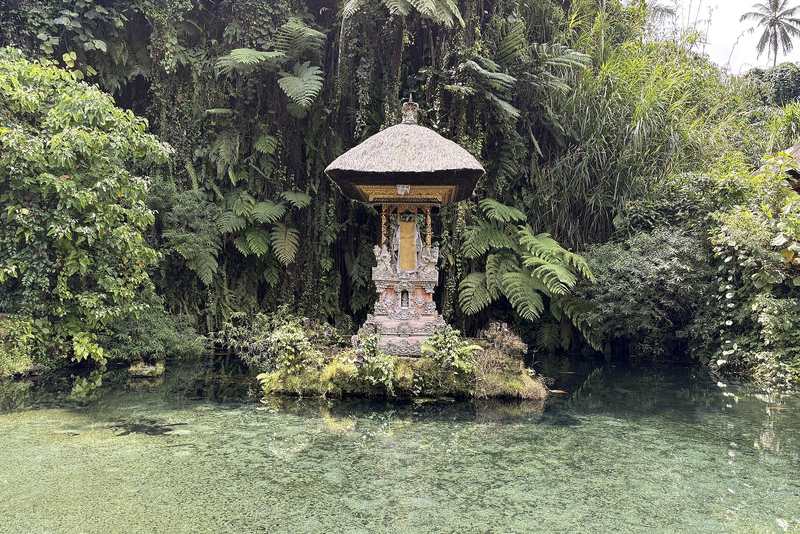
A quiet water temple in Tegallalang, about 20 minutes north of Ubud, with clear spring pools, a sacred koi pond and a shrine on an island, all wrapped in jungle. Locals come to its fountains for melukat purification.
It's much less crowded than Tirta Empul, so it's the one to choose if you want peace and photos without the queues.
The Details
- Location
- Jl. Kusuma Yudha, Sebatu, Tegallalang, GianyarOpen in Maps
- Hours
- Daily 8 AM – 6 PM
- Entry
- About IDR 30,000–50,000 foreign adults (sources differ; check at the gate)
Good to know
Ask before entering the purification pools.
13. Goa Lawah Temple (Bat Cave Temple)
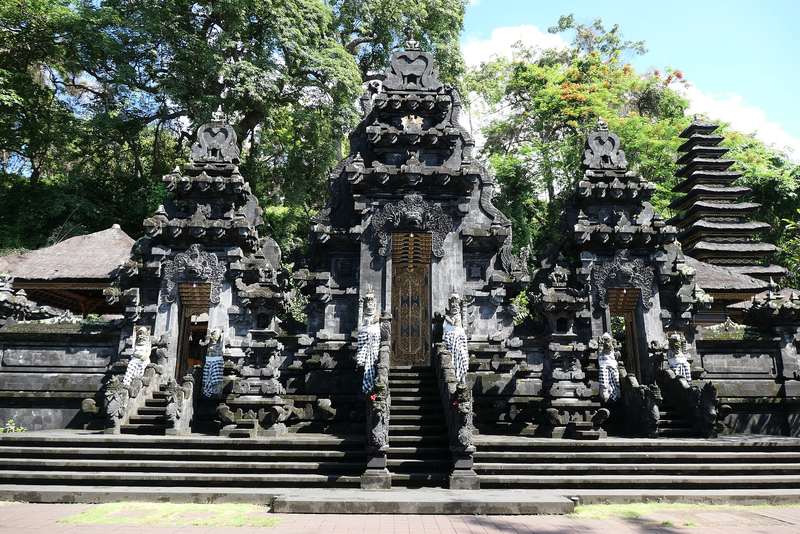
Founded in the 11th century on the Klungkung coast, Goa Lawah is built around the mouth of a cave where thousands of bats roost. Naga Basuki, the dragon believed to keep the cosmos in balance, decorates its steps.
Visitors watch the cave shrine from the courtyard; ceremonies are frequent. It's an easy stop on the coast road to Padang Bai, Candidasa or Amed.
The Details
- Location
- Jl. Raya Goa Lawah, Pesinggahan, Dawan, KlungkungOpen in Maps
- Hours
- Open daily
- Entry
- About IDR 30,000 foreign adults
Good to know
Sarong and sash compulsory; rentable at the gate.
14. Pura Puseh Batuan
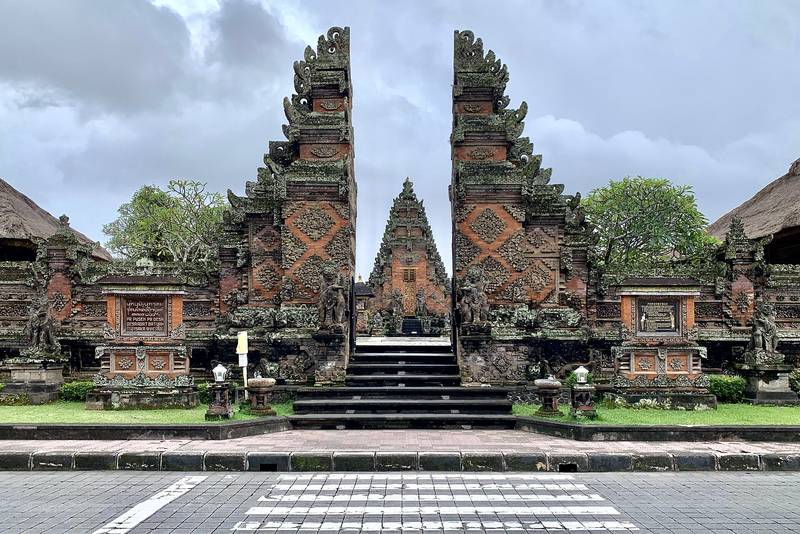
Just south of Ubud, the temple of Batuan village is a masterpiece of Balinese stone carving: a towering split gate, gold-leaf doors, demon heads and a koi water garden. An inscription dates the founding of the village to 1022 AD.
It's managed by the village and rarely crowded, and Batuan is known for its own school of fine, detailed painting.
The Details
- Location
- Jl. Raya Batuan, Batuan, Sukawati, GianyarOpen in Maps
- Hours
- Daytime
- Entry
- Check at the gate (village-managed)
Good to know
Wear a sarong and sash.
Frequently Asked Questions
What is the most famous temple in Bali?
Tanah Lot, on a rock in the sea in Tabanan, and Uluwatu Temple on its clifftop are the most visited. Besakih is the largest and holiest.
How much does it cost to visit temples in Bali?
Most cost IDR 50,000–150,000 for foreign adults in 2026: Tanah Lot IDR 75,000, Uluwatu IDR 60,000, Tirta Empul IDR 75,000 and Besakih IDR 150,000 including a guide.
What should I wear to a Bali temple?
A sarong and sash, with shoulders and knees covered. Most temples lend or rent them at the entrance.
Can you visit the Gates of Heaven at Lempuyang?
Yes. Entry plus the mandatory shuttle costs about IDR 150,000, and the queue for the gate photo can take 2–4 hours. The temple closes to tourists for about five days at each ceremony.
Can women visit temples during their period?
Balinese custom, written into the 2025 visitor rules, asks women who are menstruating not to enter the sacred areas of temples.