Baligasm
Baligasm

Destination guide · Highlands

Munduk Area Guide

Clove gardens, cold waterfalls and a sacred crater lake, best walked early before the cloud returns.

By the Baligasm editors · Updated 29 October 2026

Area brief

What Munduk is really like

Munduk is a farming village on a ridge about 800 m up in Bali's northern highlands, just below Lakes Tamblingan and Buyan. It sits roughly 83 km, or 2.5 to 3 hours by car, from Ngurah Rai airport and 45 to 60 minutes above Lovina. Waterfall walks, dawn canoe trips and coffee and clove farms are the draw. It suits walkers who can live with rain; stay two or three nights.

Around 7,400 people live along Munduk's ridge, which runs at roughly 800 m on the western lip of the ancient Bratan caldera in Buleleng regency. Higher up, at about 1,200 m, lie Lake Tamblingan and Lake Buyan. Downhill, more than 500 hectares of clove trees and some 300 hectares of coffee slope away towards the Bali Sea, and waterfalls drop through the valleys in between. Coming from the south, the change of air is the first thing you notice.

The village averages about 22.6°C, and dry-season nights cool to 17–19°C. Expect showers in most months, normally in the afternoon, and valleys full of cloud until breakfast. There are plenty of homestays on the ridge, yet few restaurants, ride-hailing apps do not operate here and cash machines are few. The three best-known falls now charge IDR 45,000–50,000 according to 2026 reports, and the Wanagiri viewpoint has filled with paid swings. Expect a slow, rural base rather than a resort town.

Lake Tamblingan is sacred to the Catur Desa, the four villages of Munduk, Gobleg, Gesing and Umejero, and it is kept quiet on purpose: dugout canoes, forest temples and no motorboats. The surrounding woods, which the villages call Alas Mertajati, gained protection as a nature tourism park in 1996; as of mid-2026 the communities were still pushing for recognition as customary forest. Neighbouring Lake Buyan is earmarked for busier tourism; a 47-day clean-up in June and July 2026 cleared water hyacinth from its surface.

Outsiders have come here for a long time. Around 1900, Dutch officials based in Singaraja, then the colonial capital, retreated to the hills for the cooler climate, and by about 1905 a rest house was taking foreign guests and tuberculosis patients. Munduk arabica went to Europe until cloves became more profitable, and a group of colonial buildings, mostly guesthouses today, survives midway along the ridge. Compared with Bedugul, 30 to 40 minutes east, Munduk trades the famous temple and coaches for trails and silence; compared with Ubud, it offers forest and cold pools but almost nothing after dark.

Best for
Waterfall walks, canoes on a sacred lake and cool nights
Vibe
Misty, rural and quiet; most places shut early
From the airport
About 83 km, 2.5 to 3 hours by car
Days needed
Two or three nights; a day trip feels rushed
Best time
April to October, and every morning before the cloud
Getting around
Car with driver or scooter; ride-hailing does not work

Munduk suits you if…

  • ✓Waterfall walking, from a 20-minute stroll to a six-hour trail
  • ✓Paddling a sacred, motorboat-free lake at sunrise
  • ✓Sleeping under a blanket at 17–19°C after the heat of the coast
  • ✓Guided walks through coffee and clove gardens with village guides
  • ✓A cool stop between the south and Lovina or Pemuteran

Skip it if…

  • ✕Wet weather spoils things for you: showers come most afternoons, in most months
  • ✕You want nightlife or a wide choice of restaurants
  • ✕Long staircases are hard for you: Melanting alone has about 500 steps
  • ✕You only have one day: five hours of it go on the drive from the south
  • ✕You depend on ride-hailing apps or card payments

Neighbourhoods

Which part of Munduk to stay in

01

Munduk village and the ridge road

The village stretches for several kilometres along a single road on a narrow ridge at about 800 m. Guesthouses, warungs, eco-lodges and a little market all face this road, and the paths down to Red Coral, Labuhan Kebo and Melanting start from it. There are few restaurants and they close early, so most guests eat where they sleep. Rooms facing north look over the valleys to the sea.

Best for: Walkers who want the waterfalls on their doorstep

02

Gobleg and Lake Tamblingan

Some 400 m above the village sits Tamblingan, the smallest lake in the caldera, its shore occupied only by the tiny hamlet of Gubug. Neighbouring Gobleg shares guardianship of the lake with Munduk and two other Catur Desa villages. Come here for canoes, forest temples and guided treks rather than hotels; there is almost nowhere to stay on the lake itself.

Best for: Early risers after mist, canoes and temples

03

Wanagiri and Lake Buyan

Driving east, you climb to Wanagiri on the rim of the old crater at roughly 1,220 m. Traffic picks up here: the lakes lookout with its swings for hire, three sets of falls (Banyumala, Banyu Wana Amertha and Pucak Manik) and roadside macaques hoping for snacks. Lake Buyan fills the valley below at Pancasari, on the way to Bedugul.

Best for: Waterfall swimmers and anyone driving through from Bedugul

04

Gesing, Banyuatis and the western farms

Heading west, the road passes Gesing, another Catur Desa village, and Banyuatis, where clove and coffee gardens cover every slope. Guesthouses are scattered and tourist traffic is almost nil. Umejero, the fourth Catur Desa village, lies south-west at about 700 m. It is the place for farm walks and long, quiet afternoons.

Best for: Return visitors who want quiet lodges and farm walks

05

The road down to Seririt and Lovina

West of the village the road descends through Banyuatis to meet the Seririt–Pupuan road, and meets the sea at Seririt after some 20 km, with Lovina a further 11 km east. Allow 45 to 60 minutes for the steep, twisting drive. Near the bottom, the Banjar hot springs are a short detour from the coast road.

Best for: Travellers moving on to Lovina, Pemuteran or Menjangan

Top sights · 17 picks

Things to do in Munduk

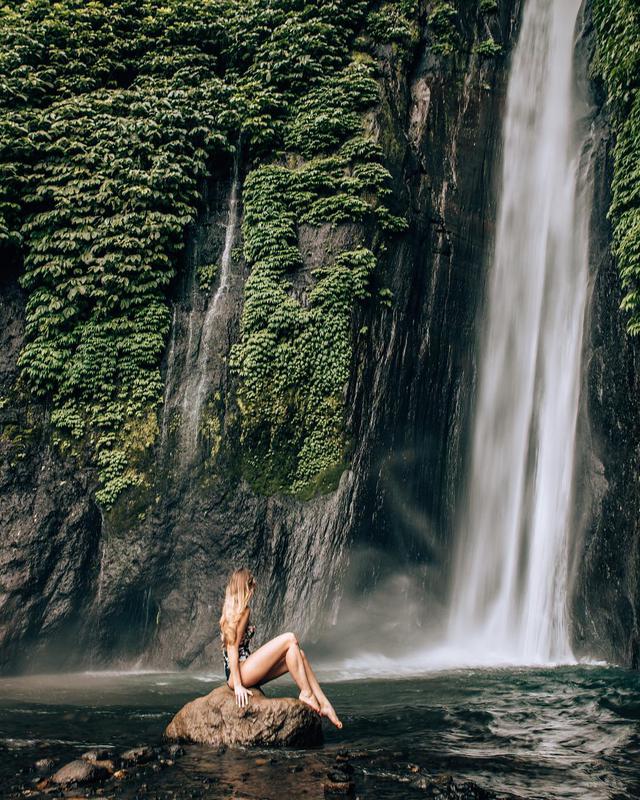
Munduk Waterfall (Red Coral)
Photo by @beckyvandijk

01 · Nature

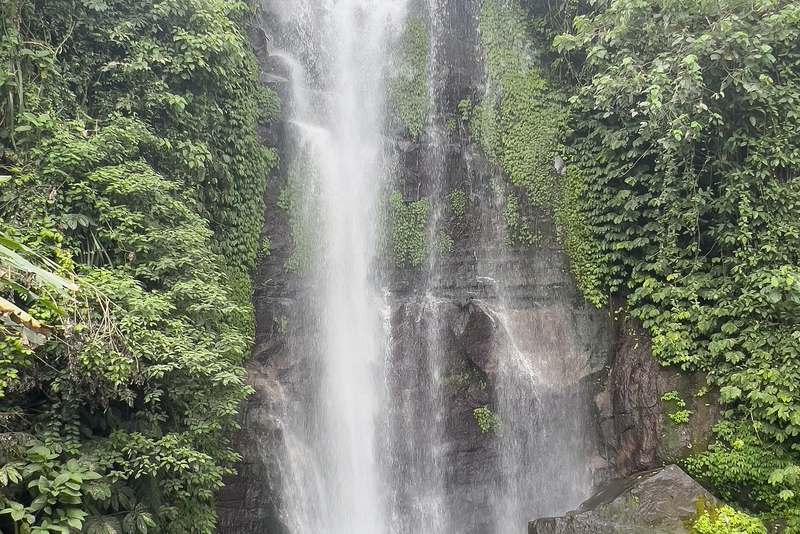
Munduk Waterfall (Red Coral)

📍 Car park on the main road through Munduk

When people say Munduk Waterfall, they usually mean Red Coral, a single tall stream falling beside a cliff draped in ferns. From the car park on the main road, a largely concrete path descends about 650 m, roughly 20 minutes each way. The rocky basin below is too shallow for a swim, so visitors cool off in a small built pool next to it. It is the easiest of the big falls to reach from the village.

Tip: Adults pay about IDR 45,000 (it was IDR 20,000 not long ago), plus a couple of thousand for parking.

02 · Adventure

Lake Tamblingan by dugout canoe

📍 Lake Tamblingan car park, 15–20 minutes east by road

Ringed by forest at about 1,200 m, Tamblingan is the smallest and least developed of the three caldera lakes. Boatmen from the villages take visitors out in canoes hollowed from single tree trunks, and unlike Lake Beratan, no motorboats are allowed. At sunrise the water is usually glassy and wrapped in mist, and the only sound is the paddle. A ride lasts about half an hour.

Tip: Around IDR 150,000–250,000 per boat for about 30 minutes; agree the price before setting off.

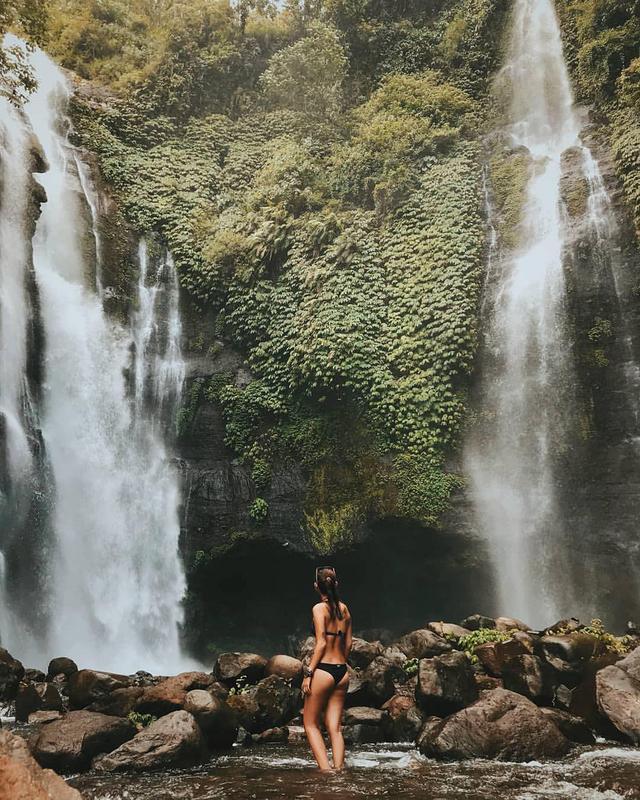
Banyumala Twin Waterfalls
Photo by @girlborntotravel

03 · Nature

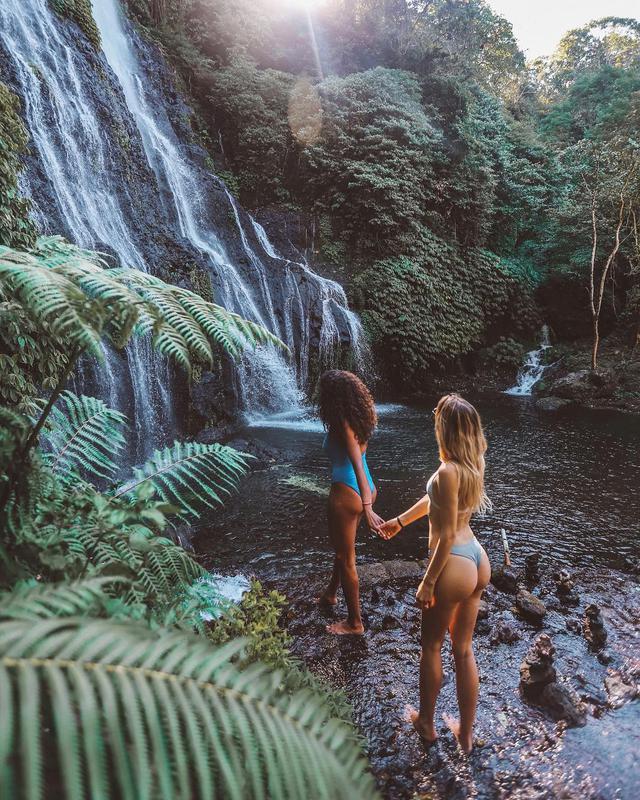
Banyumala Twin Waterfalls

📍 Wanagiri, 25–35 minutes east of Munduk

A pair of main cascades and dozens of fine ribbons pour over a mossy cliff into a cold pool that is waist to chest deep, the best place to swim in the area. Getting there involves a rough, pitted 3 km lane off the Wanagiri road and a walk of 10 to 15 minutes beyond the ticket hut. The water is chilly at any hour, and the cliff stays in shade for much of the morning.

Tip: IDR 50,000, cash only, under-10s free. Arrive before 10 am; it is busiest from noon to 2 pm.

The Munduk waterfall trail
Photo: Stefan Fussan / Wikimedia Commons (CC BY-SA 3.0)

04 · Adventure

The Munduk waterfall trail

📍 Golden Valley to Melanting, below the ridge road

Signed village paths join four falls in sequence: Golden Valley, Red Coral, Labuhan Kebo and Melanting. Walking the full route takes three to six hours, with long flights of steps on the way. Because it runs point to point, you need a driver to drop you at one end and meet you at the other. Golden Valley, 250 m below the road, charges nothing beyond a donation and has a small café.

Tip: Some sections are missing from Google Maps; save an offline map and wear shoes with grip.

05 · Nature

Melanting and Labuhan Kebo waterfalls

📍 Trailhead near Melanting Cottages, on the Munduk–Gobleg border

The two largest falls on the trail start from the same point, close to Melanting Cottages where Munduk meets Gobleg. Labuhan Kebo lies about 200 steps down from the path, while Melanting, the most forceful, waits at the foot of around 500 steep steps. Give yourself two and a half hours to see both. Confusingly, Melanting is sometimes also signed as Munduk Waterfall.

Tip: IDR 20,000 each, cash only; Melanting's ticket is sold at a shop at the top of the stairs.

06 · Temple

Pura Ulun Danu Tamblingan and the lake temples

📍 Shore of Lake Tamblingan, below the Munduk–Wanagiri road

Copper-plate inscriptions found in Gobleg show that a community lived beside Tamblingan by the 10th century. Its descendants went on to found the four Catur Desa villages, which still look after 11 temples around the shore. Pura Ulun Danu Tamblingan stands at the water's edge behind moss-covered gates, and in the wet season shrines such as Pura Gubug end up standing in the lake.

Tip: Lake ticket IDR 20,000–30,000. Dress modestly, stay out of inner courtyards and do not swim.

07 · Adventure

Twin-lakes forest trek

📍 From the Lake Tamblingan entrance

Alas Mertajati, as the Catur Desa call it, covers some 1,300 hectares of old forest, orchids and macaques beneath Gunung Lesung. Guides waiting at the lake entrance lead treks of two to six hours, usually climbing towards Lake Buyan. A favourite three-hour route finishes with a 30-minute canoe crossing of Tamblingan. Parts of the longer circuit are unmarked, so going alone is unwise.

Tip: Agree the guide's fee first, tuck trousers into socks against leeches and take nothing from the forest.

Banyu Wana Amertha waterfalls
Photo by @ferdiantiojs

08 · Nature

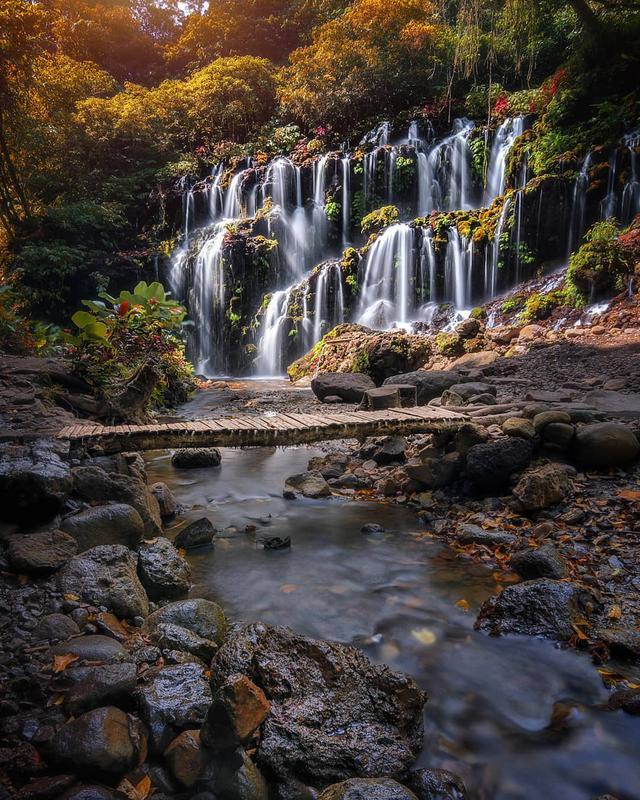
Banyu Wana Amertha waterfalls

📍 Bhuana Sari, Wanagiri, 25–35 minutes east of Munduk

In the Bhuana Sari hamlet of Wanagiri, roughly 3 km off the main road, four falls share a single trail. The star is Bhuana Sari, a broad curtain of fine streams across a mossy rock face; the Single, Spray and Twin falls are a few minutes apart. The path drops about 1 km, mostly on concrete, and the round trip takes about two hours with stops.

Tip: IDR 50,000, cash only; a motorbike shuttle down and back adds about IDR 50,000.

Show all 17 things to do ↓

09 · Food & Drink

Coffee and clove plantation walk

📍 Gardens below the Munduk ridge road

Under Dutch rule, Munduk arabica travelled by ox cart down to the coast and then on to Europe, until cloves began to pay better. Guides from the homestays now lead two to three-hour walks through the gardens, explaining how coffee cherries are picked, dried and roasted, and how cloves are harvested and laid out to dry. Most walks end with a cup in a farmer's kitchen.

Tip: Roughly IDR 100,000–200,000 per person; Munduk Moding Plantation also sells coffee tours.

10 · Viewpoint

Wanagiri twin-lakes viewpoint

📍 Wanagiri ridge road, about 20 minutes east of Munduk

From the ridge road at around 1,200 m, Buyan and Tamblingan lie side by side in their caldera below you. Paid decks and oversized swings, including Wanagiri Hidden Hill, now line the verge. Yet the view is identical from the free lay-bys and roadside warungs, which serve coffee too, so paying is only worth it if you want the staged picture.

Tip: Platforms ask roughly IDR 50,000–100,000; check what swings, photos and tips cost before starting.

11 · Viewpoint

The Munduk ridge at dawn and dusk

📍 Ridge road through Munduk village

The views are the strongest argument for sleeping in Munduk instead of visiting for the day. Clear dawns bring a layer of cloud lying in the valleys below you until about 8, and to the north the hills fall away to the Bali Sea near Lovina. Most homestays and warungs on the ridge road are built to face this outlook, so breakfast often comes with it.

Tip: Cloud tends to close in after midday; the clearest views are before 8 am.

12 · Nature

Lake Buyan

📍 Pancasari, Sukasada, 25–30 minutes east of Munduk

The middle of the three lakes lies at Pancasari, separated from Tamblingan by about a kilometre of forest, with vegetable and strawberry farms along its edge. Silt has pushed the water level up more than once: in April 2012 rising water forced 36 families out, and five years later fields along the shore went under. A 47-day effort in mid-2026 cleared water hyacinth from the surface.

Tip: Reach the shore from Pancasari and combine it with the twin-lakes viewpoint above.

13 · Food & Drink

Balinese cooking class in a village home

📍 Family homes and lodges along the ridge road

A handful of homes and guesthouses in the village run Balinese cooking lessons of two to three hours. Classes usually begin by grinding the spice paste that underpins most local dishes, then move on to cooking a village meal that you sit down to eat together. It is the best use of a wet afternoon, when the trails are slippery and the falls are best left alone.

Tip: Reserve the day before; prices vary, with lodges like Puri Lumbung at the higher end, so ask about the menu too.

14 · Nature

Pucak Manik Waterfall

📍 Wanagiri, Sukasada, about 30 minutes east of Munduk

Less visited than its Wanagiri neighbours, Pucak Manik has three falls dropping side by side, the tallest a single ribbon of about 40 m. Expect a 15 to 30-minute descent from the parking area over steep stairs and timber footbridges. Villagers manage the site, and the access road is badly potholed, so a scooter or a patient driver is needed for the last stretch.

Tip: Reported fees vary from IDR 20,000 to 50,000; bring cash and consider a local guide.

15 · Adventure

Camping by Lake Buyan

📍 Bumi Perkemahan Danau Buyan, Pancasari

Lake Buyan is among the most popular camping spots in Bali, with cold, clear nights and mist on the water at first light. Tents go up along the shore and among the trees of the Basong forest, and villagers hire out tents, bedding, stoves and firewood to anyone who arrives without kit. Nights here are colder than in Munduk, so bring proper warm layers.

Tip: Fees change, so check with the site keepers on arrival, and take every scrap of litter home.

Pura Ulun Danu Beratan, on the way
Photo by @harry.travel

16 · Temple

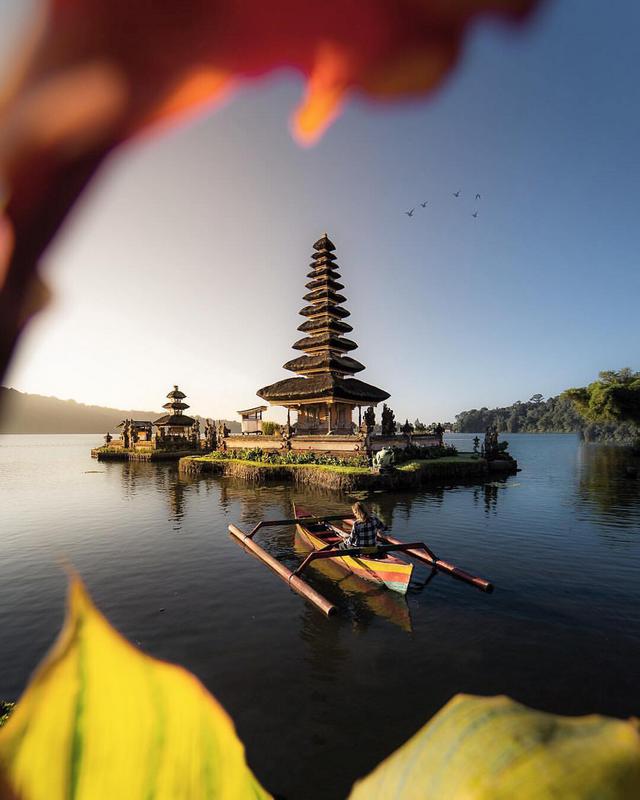
Pura Ulun Danu Beratan, on the way

📍 Candikuning, Bedugul, 30–40 minutes east

Bali's most famous lake temple stands on Lake Beratan in Tabanan, half an hour or so east of Munduk. Founded in 1634 (some say 1633) for Dewi Danu, goddess of the lake, its 11-tier meru looks as if it is floating whenever the lake is full. It is best seen as you pass on the way up; the Bedugul guide covers it in detail.

Tip: Arrive when the gates open at 7 or after the coaches leave in the late afternoon.

Sekumpul and Gitgit, on the north coast
Photo by @tukris_

17 · Nature

Sekumpul and Gitgit, on the north coast

📍 Sekumpul, Sawan, about 1 hour east of Munduk

The north coast's big waterfalls make an easy extension. About an hour away, Sekumpul gathers six or seven falls in a bamboo-filled valley, reached on a steep path with a village guide. Gitgit, 35 to 40 m high beside the Bedugul–Singaraja road, is a quicker stop for anyone short of time. Both run fullest, and are most slippery, in the wet season.

Tip: Sekumpul takes around four hours in all; aim to be out before the afternoon showers.

Itinerary

How to spend your days in Munduk

Munduk in a day

A full day from a Munduk base by car or scooter: about 40 km of driving and 7 km on foot, with the vehicle needed between every stop.

  1. 5:45

    Leave in the dark for Tamblingan, 15 to 20 minutes by road, to reach the shore while it is still shrouded in mist.

  2. 6:15

    Take a half-hour canoe ride, then follow the shore path to Pura Ulun Danu Tamblingan and back, about 1 km.

  3. 8:00

    Climb 15 minutes by road to the twin-lakes viewpoint and have coffee at a roadside warung.

  4. 9:00

    Continue to Banyumala, the final 3 km on a rough lane, walk about 1 km down and swim.

  5. 11:30

    Drive roughly 7 km to Banyu Wana Amertha and walk down to its four falls.

  6. 14:00

    Return to the ridge, about 30 minutes away, for a late lunch.

  7. 15:30

    Walk the 650 m path to Red Coral and back, about 20 minutes each way.

  8. Sunset

    Watch the light fade over the north coast from a ridge terrace, then eat early.

Munduk in three days

Two nights in the village. Book a driver for arrival, departure and trail drop-offs, and a local guide for the forest walk.

  1. Day 1, 8:00

    Drive up from the south, two to three hours, breaking the journey at the Beratan lake temple and the Wanagiri lookout.

  2. Day 1, 15:00

    Join a two to three-hour guided walk through the coffee and clove gardens below the ridge.

  3. Day 2, 7:30

    Start at Golden Valley and follow the signed paths past Red Coral and Labuhan Kebo to Melanting, three to six hours; your driver meets you at the end.

  4. Day 2, 16:00

    Cook a Balinese meal in a family home, booked the previous day.

  5. Day 3, 6:00

    Trek for three hours through the Tamblingan forest with a guide, finishing with a canoe crossing.

  6. Day 3, 10:30

    A last cold swim at Banyumala, 25 minutes away, before heading down to Lovina or back to the south.

Munduk on a rainy day

Rain usually arrives after lunch, so make the most of the morning and keep the afternoon for indoor plans.

  1. 6:00

    Canoe on Lake Tamblingan; light drizzle does little harm on the water.

  2. 8:30

    Walk the short, mostly concrete path to Red Coral rather than the long stair descents.

  3. 11:00

    Take a coffee tasting at a plantation or a homestay kitchen.

  4. 14:00

    Spend the wet afternoon at a cooking class, booked the day before.

  5. Evening

    Dinner at your lodge; stay off the roads after dark when fog settles.

Longer trip? Plan up to seven days from Munduk or browse our Bali itineraries.

Where to stay

Hotels and villas in Munduk

All stays in Munduk →

Seasons

Best time to visit Munduk

Munduk is cooler and wetter than the south throughout the year. The wet season lasts from about November to March, peaking in December and January: the falls are at full strength and Tamblingan's shrines stand in water, but trails and stairs become slippery and leeches come out on forest paths. From April to October mornings are drier and nights drop to 17–19°C, colder still in July and August.

In any month, start early. Cloud often sits in the valleys until around 8 am and gathers again after midday. The Wanagiri lookouts and Bedugul get busiest in July and August and over Indonesian holidays. The island closes completely for Nyepi on Monday 8 March 2027, and on Galungan, 13 January and 11 August 2027, village temples fill with worshippers.

Getting there

How to get to Munduk

  • Ngurah Rai airport (DPS)2.5 to 3 hours

    About 83 km through Denpasar and Bedugul in a pre-booked car; try to cover the mountain section in daylight.

  • Seminyak or Canggu2 to 3 hours

    Roughly 71–79 km via Mengwi and Bedugul. A driver for the day costs about IDR 700,000–900,000.

  • Ubud2 to 2.5 hours

    Roughly 64 km, heading north via Bedugul.

  • Lovina45 to 60 minutes

    About 31 km, west along the coast to Seririt, then uphill through Banyuatis.

  • Bedugul (Lake Beratan)30 to 40 minutes

    Roughly 20 km through Pancasari and along the Wanagiri ridge.

  • Pemuteran1.25 to 1.75 hours

    About 54 km east along the coast road to Seririt, then up into the hills.

Getting around Munduk

On foot you can cover the village and the chain of four falls below it. Beyond that you need wheels: Tamblingan is 15 to 20 minutes by road, the Wanagiri viewpoint about 20, and Banyumala and Banyu Wana Amertha 25 to 35. Roads are narrow, steep and often foggy, which is why most visitors hire a car with a driver.

Scooters rent for about IDR 100,000 a day and suit experienced riders only; wet hairpins and potholed lanes catch out beginners. Ride-hailing apps do not operate in the area and there are no taxis. Cash machines are limited to a petrol station and Bedugul, and both can run out at weekends, so bring enough cash from the south.

Know before you go

Munduk tips that save time

  1. 01Carry small notes: most ticket booths and warungs accept cash only.
  2. 02Start early, because cloud usually clears around 8 am and returns after midday.
  3. 03Trainers with a good tread are essential, as rain leaves the stairs and rocks treacherous.
  4. 04From November to March, tuck long trousers into your socks on forest trails to keep leeches off.
  5. 05Pack a fleece and a rain jacket for evenings of 17–19°C.
  6. 06Swimming in Tamblingan is forbidden, as is walking into the lake temples' inner courtyards.
  7. 07Never feed the macaques along the Wanagiri road.
  8. 08Download offline maps, as phone signal disappears in the valleys.
  9. 09Arrange your onward transport through your homestay before you need it.

FAQ

Munduk questions, answered

Is Munduk worth the trip?

+

Yes, if walking, cool air and waterfalls appeal more than nightlife. Over two or three days you can paddle Tamblingan at dawn, walk between the falls, swim at Banyumala and still fit in a coffee walk. Give it a miss if rain, steep staircases or quiet evenings would spoil your holiday.

How long should I stay in Munduk?

+

Two or three nights works best. One full day covers Tamblingan, Banyumala and Red Coral, and a second allows the long waterfall trail or the forest trek, while the drive up takes much of another. A day trip from Ubud or Seminyak means at least five hours in the car for a few hours on the ground.

What is the best way to reach Munduk from Ubud or the airport?

+

Hire a car with a driver. Every route from the south climbs through Bedugul. Ubud is the closest start at two hours or a little more; Seminyak and Canggu take up to three, and the airport around three. Public transport is impractical, and ride-hailing apps do not cover the area, so arrange a driver for the return as well.

Which Munduk waterfall should I choose?

+

For most visitors, Red Coral: a high single drop a few minutes from the village along a gentle 650 m walk. Swimmers should head to Banyumala, Melanting thunders hardest but costs you about 500 steps each way, and Banyu Wana Amertha strings four falls along one quiet trail. Fit in two or three in a day.

What do the waterfalls charge?

+

Recent prices are around IDR 45,000 for Red Coral, IDR 20,000 each for Melanting and Labuhan Kebo, and IDR 50,000 each for Banyumala and Banyu Wana Amertha, while Golden Valley asks only for a donation. Parking adds IDR 2,000–5,000. Payment is in cash almost everywhere, so carry small notes.

Which falls are good for swimming?

+

Banyumala is the best, with a cold pool that is waist to chest deep, and Banyu Wana Amertha has shallow pools for a dip. The natural basin at Red Coral is too shallow, so people use a built pool alongside. After heavy rain, stay out of the water everywhere, since levels and currents rise quickly.

How does a visit to Lake Tamblingan work?

+

Drive 15 to 20 minutes from Munduk to the car park above the lake, pay the small ticket of IDR 20,000–30,000 and walk down to the shore. Boatmen offer canoe trips and guides run forest treks. Sunrise is the best time. Dress modestly near the temples, and remember that swimming is not allowed.

Which part of Munduk should I stay in?

+

The ridge road in the village itself, if you want to walk to the waterfalls and warungs. Budget homestays there cost about IDR 200,000–400,000 a night. Eco-lodges and plantation stays further out, in Kayuputih, Gesing or Banyuatis, have bigger views and more space but mean a drive for every meal out.

Does it get cold in Munduk?

+

It is cool rather than cold. The village averages about 22.6°C, and in the dry season nights fall to 17–19°C, lower in July and August. The lakes, around 400 m higher, are noticeably chillier at sunrise. Bring a fleece, long trousers and a rain jacket, and check that your room has hot water.

Should I visit Munduk in the rainy season?

+

It can work if you plan around the weather. Between November and March the falls are at their fullest, but trails turn muddy, leeches appear and afternoons are often wet. Walk in the early morning, save afternoons for a coffee tasting or cooking class, and avoid long staircase descents after heavy rain.

Nearby

Where to go after Munduk

Read next

More Munduk guides on the Blog