Baligasm
Baligasm

Destination guide · North Bali

Lovina Area Guide

Dawn dolphin boats, calm grey-sand bays and waterfalls an hour inland.

By the Baligasm editors · Updated 29 October 2026

Area brief

What Lovina is really like

Lovina is a row of quiet black-sand villages stretching about 10 km along Bali's north coast, just west of Singaraja. Expect a 2.5 to 3.5-hour drive from the airport, about 100 km over the mountains via Bedugul. Sunrise dolphin boats, calm water and low prices draw slow travellers, divers and waterfall hunters rather than a party crowd. Two to four nights is the right length; a day trip from the south spends most of the day in the car.

Seven coastal villages share the Lovina name: Temukus and Kaliasem in the west, then Kalibukbuk, Banyualit, Anturan, Tukad Mungga and finally Pemaron on the edge of Singaraja. Kalibukbuk, home of the dolphin statue, acts as the centre. The name is younger than it sounds. In 1953 Anak Agung Pandji Tisna, a novelist who had once ruled Buleleng, opened a three-room guesthouse on his land in today's Kaliasem and called it Lovina, and the resort strip grew outwards from there.

Dolphins made the town. Local fishermen started carrying visitors out to the wild spinner pods in the late 1980s, and the day still runs to that timetable: on the water at first light, a slow midday, everyone on the sand for sunset, then an early night. Visitors tend to be older than in Canggu or Seminyak, rooms cost less, and the nightlife amounts to a handful of bars with live bands. There are no beach clubs.

Set your beach expectations low. The sand is narrow and grey to black, the sea is calm but seldom clear, and rubbish drifts onto the central stretch. Every lane in Kalibukbuk has someone selling a dolphin trip, and the boats crowd together once they find a pod; research in 2007–2009 logged as many as 100 out on busy mornings. In 2021 around 250 villagers lowered 1,000 concrete coral frames onto the reef, so the snorkelling should slowly improve.

The location is the real asset. Singaraja, which served as the Dutch capital for Bali and the Lesser Sunda Islands from 1849 to 1960, lies 15 to 25 minutes east. Ten kilometres west are the Banjar hot springs and the island's biggest Buddhist monastery, while three major waterfalls, Sekumpul, Aling-Aling and Gitgit, lie 30 to 60 minutes inland. Pemuteran, an hour or more west, has better snorkelling and the boats to Menjangan; Lovina has more restaurants and is nearer the falls. Cool, misty Munduk sits up the hill, and plenty of travellers combine the two.

Best for
Dolphin boats, north-coast waterfalls and long, inexpensive beach stays
Vibe
Low-rise, unhurried and a little old-fashioned; early nights
From the airport
About 100 km via Bedugul, 2.5–3.5 hours by car
Days needed
Two to four nights; not worth it as a day trip
Best time
April to October; dolphin boats run year-round
Getting around
Scooter or a car with driver; ride-hailing apps rarely work

Lovina suits you if…

  • ✓Watching wild spinner dolphins at sunrise for roughly the cost of a meal
  • ✓Waterfall days: Sekumpul, Aling-Aling and Gitgit all lie 30–60 minutes inland
  • ✓Long, low-cost stays with a calm sea and quiet evenings
  • ✓Divers who want one base for Menjangan, Puri Jati and Tulamben
  • ✓History: Singaraja's colonial harbour, the palm-leaf library and the carved temples of the north

Skip it if…

  • ✕You want white sand and clear water: the beach is grey-black and litter washes in
  • ✕Nightlife matters: beyond a few live-music bars there is nothing
  • ✕Your trip is short: 2.5 to 3.5 hours each way eats into it
  • ✕Sales pitches wear you down: dolphin-trip sellers work every lane in Kalibukbuk
  • ✕You picture a pod to yourself: dozens of boats follow the same dolphins

Neighbourhoods

Which part of Lovina to stay in

01

Kalibukbuk

When people say Lovina they usually mean Kalibukbuk. Bina Ria Road and Mawar Road lead from the coast road down to the sand and the dolphin statue, and between them you find most of the restaurants, bands, dive shops, tour desks and cheap rooms. Plenty of dolphin boats launch from this beach. It is the only pocket where dinner is a stroll away, and also where the touts are thickest.

Best for: First-time visitors who want the beach, the boats and dinner on foot

02

Banyualit, Anturan and Tukad Mungga

Heading east, the shore passes a string of fishing villages where outrigger jukung lie on the sand between homestays and a few bigger beachfront resorts. Kalibukbuk is 2 to 4 km back west and Singaraja another 10 to 15 minutes east. At the far end, Pemaron's Penimbangan beach is lined with seafood warungs that local families favour.

Best for: Couples and long-stay guests who want a quieter beachfront close to Singaraja

03

Kaliasem, Temukus and Banjar

This western end is where the story began: Pandji Tisna's 1953 guesthouse stood in Kaliasem, and the Lovina Beach Hotel still carries the name. Further west through Temukus the coast holds more resorts and villas but fewer places to eat. A short drive inland, Banjar village has the hot springs and the Brahmavihara-Arama monastery, around 10 km from Kalibukbuk.

Best for: Resort stays close to the hot springs, the monastery and the road to Pemuteran

04

The hills above the coast

South of the main road the ground rises steeply into farmland. Villas and small lodges on the slopes above Kalibukbuk, Kayu Putih and Temukus look down over the sea and catch slightly cooler nights. Higher still are Pedawa, one of Bali's old Bali Aga villages, and the waterfall villages of Sambangan and Gitgit. Nothing up here is walkable, so plan on a car or scooter.

Best for: Villa groups and couples with transport who want views and room to spread out

05

Singaraja

The capital of Buleleng is a working city of about 95,000 people, 10 km east of Kalibukbuk. It governed Bali and the Lesser Sunda Islands for the Dutch from 1849 to 1960, and the old harbour, a Chinese temple, colonial shophouses and the Gedong Kirtya library all survive. The north's hospitals, banks and big markets are here, but very few visitors sleep in town.

Best for: History lovers, and anyone who needs a hospital, bank or market

Top sights · 16 picks

Things to do in Lovina

Sunrise dolphin boat trip
Photo by @sufru

01 · Adventure

Sunrise dolphin boat trip

📍 Binaria beach, Kalibukbuk, and other Lovina beaches

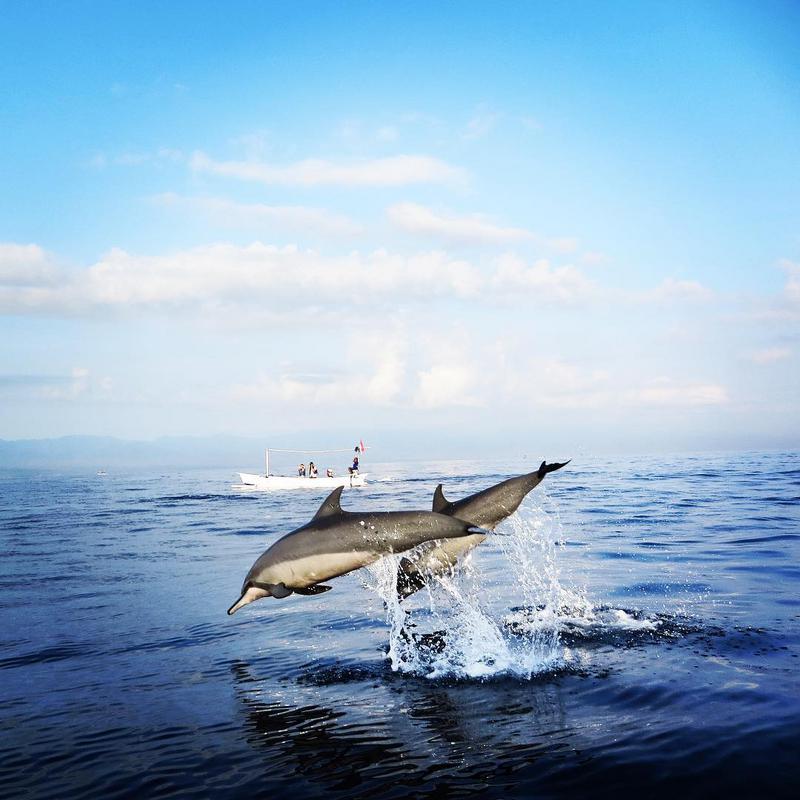
Wild spinner dolphins feed 3 to 4 km offshore, and fishermen have taken visitors out to them since the late 1980s. Boats push off at about 6 am and are back within two hours. You will not be alone: research between 2007 and 2009 logged as many as 100 boats on the busiest mornings, with 83 circling one school. Each sighting lasts seconds rather than minutes, and swimming with them is not part of the trip. Choose a boatman who switches off the engine near a pod and holds back.

Tip: A shared seat costs about IDR 75,000–100,000; a private boat about IDR 400,000–500,000.

Sekumpul and Fiji waterfalls
Photo by @tukris_

02 · Nature

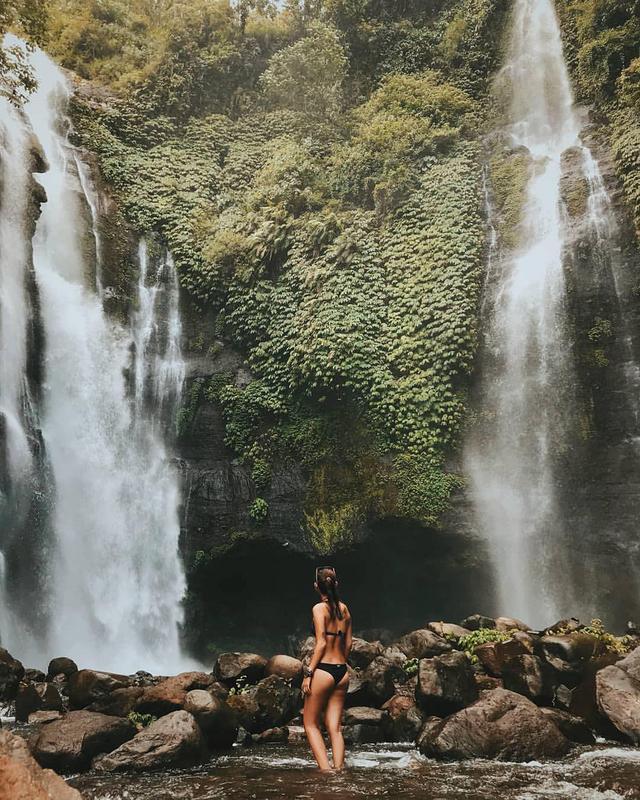
Sekumpul and Fiji waterfalls

📍 Sekumpul, Sawan, about 27 km south-east (45–60 min)

In one bamboo-fringed valley in Sawan, six or seven falls come down within sight of each other, with the Hidden Waterfall tucked beside Sekumpul's main pair. A village lane leads to the rim, then roughly 320 to 365 steep concrete steps drop to the river, and beyond the viewpoint a village guide is expected. Budget two to four hours, or four to five if you add the three Fiji falls on the Lemukih side of the valley.

Tip: The rim alone is about IDR 20,000; guided treks cost IDR 125,000–150,000, rising to IDR 200,000–250,000 when Fiji is included. Hours roughly 8 am–5 pm.

03 · Wellness

Banjar hot springs (Air Panas Banjar)

📍 Banjar village, about 10 km south-west (15–20 min)

Carved naga heads spout warm, sulphur-scented spring water into three stepped pools set in a garden. The highest pool is the hottest and shallow enough for small children. The middle one, the largest, goes from waist height to around 2 metres, and the bottom pool is the coolest. Changing rooms are simple, and the restaurant above the pools only takes cash. Mornings are calmest, before tour vans stop on their way along the coast.

Tip: Foreign adults pay about IDR 45,000, plus small parking and locker fees. Open about 8:30 am–5:30 pm.

04 · Temple

Brahmavihara-Arama Buddhist monastery

📍 Hillside above Banjar village, about 10 km south-west (15–20 min)

The largest Buddhist monastery in Bali steps up a slope above Banjar, mixing orange roofs and golden Buddha figures with Balinese gateways and stone carving. It belongs to the Theravada tradition and is still used for meditation, so keep voices low in the halls. A climb past a lotus pond brings you to a small copy of Borobudur, and from the top terraces the view runs down the valley to the sea.

Tip: Leave a donation of about IDR 25,000, which includes a sarong. Open about 8 am–6 pm.

Aling-Aling and Kroya: slides and cliff jumps
Photo by @meryldenis

05 · Adventure

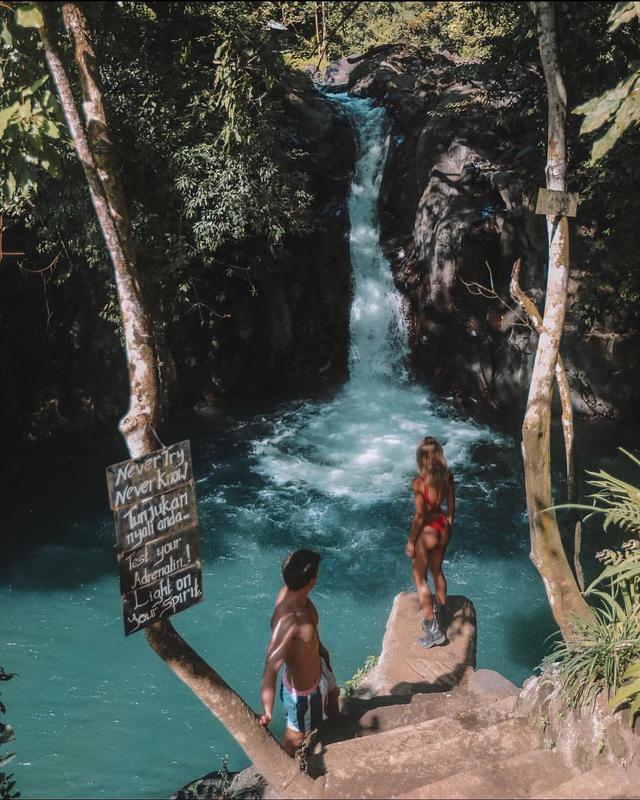
Aling-Aling and Kroya: slides and cliff jumps

📍 Sambangan, Sukasada, about 16 km south-east (25–35 min)

The river at Sambangan drops over four falls inside a gorge, reached by a trail of about 400 steps. Aling-Aling itself, 35 metres high, is sacred and closed to swimmers. Further down, guides take groups over a 12-metre natural rock slide at Kroya and off ledges of about 5, 10 and 15 metres. Without a guide you may still walk the trail and watch the jumpers.

Tip: Trail entry IDR 20,000; guides from IDR 125,000. Follow their lead: a visitor lost a leg to rockfall at the nearby Blue Lagoon in 2022.

Gitgit Waterfall
Photo: Thomas Fuhrmann / Wikimedia Commons (CC BY-SA 4.0)

06 · Nature

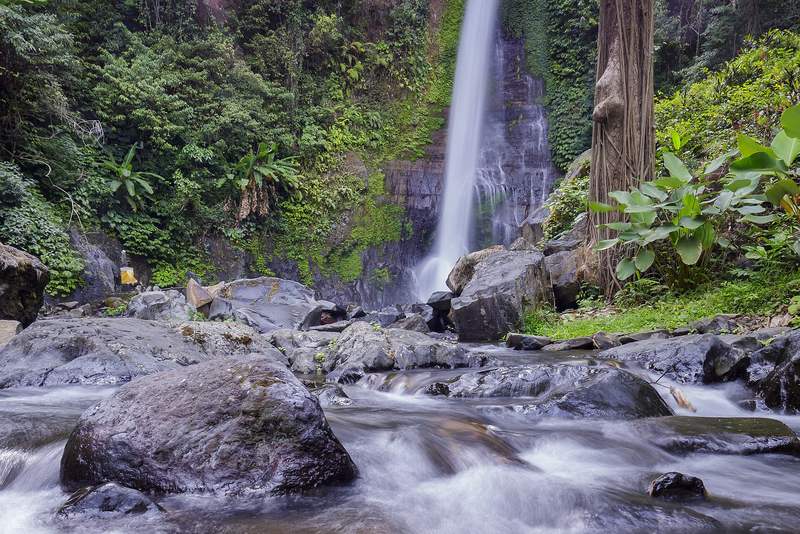
Gitgit Waterfall

📍 Gitgit, Sukasada, about 20 km south-east (30–45 min)

Gitgit is the least demanding of the big northern falls: a 35 to 40-metre drop into a leafy gorge, about 500 metres on foot from a car park beside the Bedugul to Singaraja road, 11 km short of Singaraja. Monkeys hang around the path. Because it sits on the main route between the south and the north coast, tour vans pull in through the day, so arrive early or late.

Tip: Entry is about IDR 20,000, and the path is easy enough without a guide.

07 · Beach

Lovina Beach at sunset

📍 Binaria beach, at the end of Bina Ria Road, Kalibukbuk

Evenings bring Lovina to the bottom of Bina Ria Road. Local children splash in the flat bay, fishermen prepare their jukung for the morning, and visitors line up photos of the dolphin statue, a cheerfully kitsch nod to the trade that built the town. The sand is dark and litter is common, but the bay is still and pleasant as the light fades.

Tip: For quieter sand walk east towards Banyualit, and settle the price of any beach massage before it starts.

08 · Nature

Snorkelling, diving and the Puri Jati muck dive

📍 House reef off Kalibukbuk and Tukad Mungga; Puri Jati about 15 km west

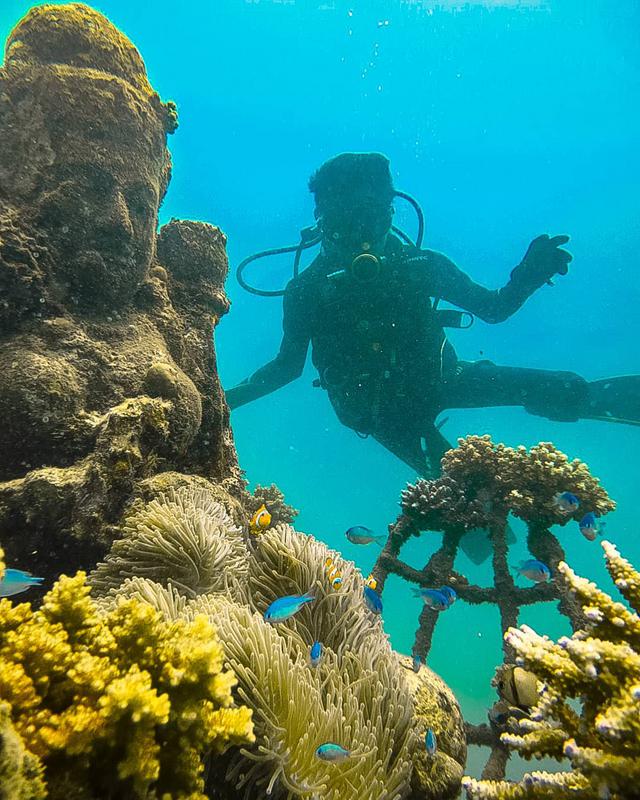
Close to shore runs a fringing reef, and most dolphin boats offer a snorkel stop on the way back in. Under a national programme in 2021, about 250 villagers placed 1,000 concrete coral frames on it. Visibility is only fair, so divers mostly use Lovina as a base for day trips to Menjangan, Tulamben and Puri Jati near Seririt, a black-sand muck site famous for the mimic octopus.

Tip: Ask for a snorkel stop when you book the dolphin boat, and check the mask fits before leaving the beach.

Show all 16 things to do ↓

09 · Culture

Singaraja old harbour and Ling Gwan Kiong

📍 Former Buleleng harbour, Singaraja, about 10 km east (15–25 min)

For more than a century Singaraja was Bali's main port and, between 1849 and 1960, the Dutch seat of government for Bali and the Lesser Sunda Islands. The old harbour now holds seafood restaurants on the pier and the Yudha Mandala Tama monument to independence. Beside it stands Ling Gwan Kiong, a red, yellow and green Chinese temple from 1873 decorated with Three Kingdoms murals, and colonial shophouses fill the streets behind.

Tip: The temple welcomes visitors of every faith; cover shoulders and knees.

10 · Culture

Gedong Kirtya lontar library and Museum Buleleng

📍 Veteran Road 20, Singaraja, about 11 km east (20–25 min)

Dutch officials set up Gedong Kirtya in 1928 to gather lontar, manuscripts inscribed on dried palm leaves, and the library now holds over 1,700 titles in the old palace grounds. Next door, Museum Buleleng tells the story of the regency's kings, Pandji Tisna among them, and the royal palace, Puri Agung, is a short walk away. Allow about an hour for the library and the museum together.

Tip: Visit on a weekday morning: it is shut at weekends and closes early on Fridays.

11 · Temple

Pura Meduwe Karang

📍 Kubutambahan, about 20 km east (35–45 min)

Dating from 1890, this large Kubutambahan temple honours the deity who protects the fertility of dry farmland. Thirty-six figures from the Ramayana stand along the entrance stairs. Look for the relief on the main shrine of a Westerner pedalling a bicycle with flower-shaped wheels, usually linked to the Dutch artist W.O.J. Nieuwenkamp, who cycled around Bali in 1904. It makes a short detour off the coast road that continues east towards Tulamben and Amed.

Tip: Bring a sarong and sash and leave a small donation.

12 · Temple

Pura Beji Sangsit

📍 Sangsit, Sawan, about 16 km east (25–35 min)

Built for the rice farmers' irrigation society and dedicated to Dewi Sri, goddess of rice, Sangsit's temple is said locally to date from the 15th century. It shows the northern carving style at its most exuberant: every wall is crowded with vines, blossoms, demons and naga serpents. On the inner gate, look for two Dutchmen playing a guitar and a violin.

Tip: Combine it with Jagaraga, 3 km inland, and Meduwe Karang in a single morning.

13 · Temple

Pura Dalem Jagaraga

📍 Jagaraga, Sawan, about 20 km east (30–40 min)

In 1849 this village resisted Dutch troops in the Puputan Jagaraga, and its temple of the dead carries some of the strangest reliefs on the island: a vintage car stopped by an armed robber, an aeroplane plunging into the sea, Dutchmen drinking beer. Across the road a 15-metre monument, built in 2016, honours the leaders of that war. The reliefs run along the outer walls, so you can study them without going inside.

Tip: Dress respectfully, and wait outside if a ceremony is under way.

14 · Food & Drink

Seafood at Penimbangan beach

📍 Penimbangan beach, Pemaron, about 7 km east (10–15 min)

Halfway between Lovina and Singaraja, Penimbangan beach in Pemaron is where local families go for a meal out. Warungs and open-sided restaurants along the shore grill fish, squid and prawns and serve Indonesian staples at tables looking out to sea. It feels more local than the tourist strip in Kalibukbuk and usually costs less. It is busiest in the evening, especially at weekends.

Tip: Come before sunset to get a table by the water, and confirm the price before choosing fish sold by weight.

Munduk lakes and waterfalls
Photo by @beckyvandijk

15 · Nature

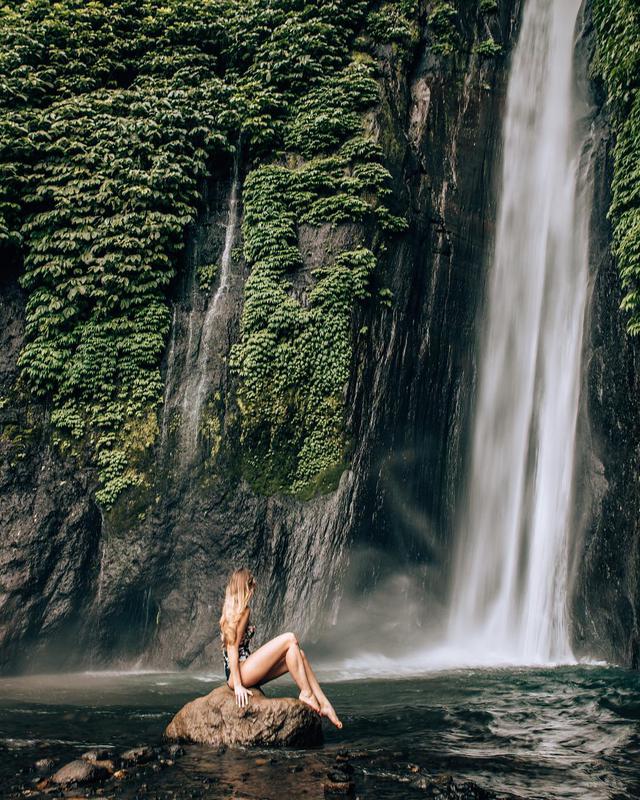
Munduk lakes and waterfalls

📍 Munduk, about 31 km south (45–60 min)

Up the hill from Seririt, Munduk has cool mornings, wooden canoes on Lake Tamblingan and a trail that strings four waterfalls together. It is better as a stay of its own, but a long day from Lovina can cover a sunrise paddle and the Red Coral waterfall before driving back down for dinner by the sea. Clove and coffee gardens line the road on the way up.

Tip: Drive the climb from Seririt in daylight and pack a warm layer.

Pemuteran and Menjangan Island
Photo by @billy_sumacer

16 · Adventure

Pemuteran and Menjangan Island

📍 Pemuteran, about 47 km west (1–1.5 hours)

Following the coast road west brings you to Pemuteran, a calm bay with coral restoration projects and boats to Menjangan Island in West Bali National Park, where reef walls give some of the best snorkelling in Bali. Dive centres in Lovina sell Menjangan day trips, but for more than one day on the reefs, Pemuteran makes the better base. The drive takes 1 to 1.5 hours along the coast through Seririt.

Tip: Use a licensed dive centre and budget for the national park fee on top of the trip price.

Itinerary

How to spend your days in Lovina

Lovina in a day

A day from Kalibukbuk with a car and driver: roughly 55 km on the road and 5 km on foot. The car covers the legs to the monastery, the hot springs, Aling-Aling and back; everything else is walking.

  1. 5:45

    Walk to the bottom of Bina Ria Road and find your boatman beside the dolphin statue.

  2. 6:00

    Two hours on the water looking for spinner dolphins, with a snorkel stop if you arranged one.

  3. 8:30

    Breakfast back in Kalibukbuk.

  4. 9:30

    Brahmavihara-Arama is a 20-minute, 10 km drive west; climb up to the Borobudur copy.

  5. 10:45

    A 10-minute, 3 km hop to the Banjar hot springs for a soak; eat at the restaurant overlooking the pools.

  6. 13:30

    Head south-east to Aling-Aling, 40–50 minutes and roughly 26 km away, for the gorge trail of some 400 steps, about 2 km return. Slide or jump only with a guide.

  7. 16:30

    Return about 16 km (25–35 minutes) to Kalibukbuk.

  8. Sunset

    Stroll about 1 km east along the sand towards Banyualit, then eat on Bina Ria Road.

Three days in Lovina

Three nights in Kalibukbuk. Use a driver for the journey north and for day 3; day 2 is easy by scooter.

  1. Day 1, 8:00

    Drive up over the Bedugul highlands from Ubud (2–3 hours) or Seminyak (2.5–3.5 hours), breaking the journey at Gitgit Waterfall, 20 km before the coast.

  2. Day 1, sunset

    Watch the sun go down from the sand, then eat in Kalibukbuk.

  3. Day 2, 6:00

    Out with the dolphin boats, ashore again by about 8 am.

  4. Day 2, 9:30

    Head 10 km west for Brahmavihara-Arama and the Banjar hot springs.

  5. Day 2, 14:00

    After lunch, head 35–45 minutes east to the Gedong Kirtya library in Singaraja (shut at weekends and on Friday afternoons), then on to the old harbour and Ling Gwan Kiong, 2 km away.

  6. Day 2, 18:00

    Grilled seafood at Penimbangan beach on the way home.

  7. Day 3, 7:00

    Leave for Sekumpul, 45–60 minutes away, to reach the counter as it opens at 8 am; the guided walk to the falls takes three to four hours.

  8. Day 3, 13:00

    Carved temples of the north: Pura Beji Sangsit is around 14 km from the falls, with Jagaraga and Meduwe Karang a short drive beyond.

  9. Day 3, 16:30

    Drive about 20 km (35–45 minutes) back for a final sunset.

Lovina on a rainy day

Wet-season storms usually arrive in the afternoon, so keep the morning for the outdoors and save the covered stops for later. A driver makes the day simple.

  1. 6:00

    Take the dolphin boat if the sea is calm; boats run all year and the mornings are usually dry.

  2. 9:30

    Soak in the Banjar hot springs, which are pleasant even in light rain.

  3. 11:00

    Climb the covered halls and terraces of Brahmavihara-Arama, a few minutes uphill.

  4. 13:00

    Drive east to Singaraja for lunch at the old harbour, then Ling Gwan Kiong next door.

  5. 14:30

    Browse the palm-leaf manuscripts at Gedong Kirtya and Museum Buleleng on a weekday.

  6. 17:00

    Return to Kalibukbuk for a massage and an early dinner. Skip the waterfalls after heavy rain, when stairs and river crossings turn slippery.

Longer trip? Plan up to seven days from Lovina or browse our Bali itineraries.

Where to stay

Hotels and villas in Lovina

All stays in Lovina →

Seasons

Best time to visit Lovina

The north coast is one of Bali's drier corners. Singaraja receives about 1,400 mm of rain a year, with barely any between June and October (8–30 mm a month) and the most in January, around 318 mm. Days stay hot at 30–32°C and nights cool to 20–22°C. From April to October mornings are clear, the sea is flat and the waterfall paths are dry.

Between December and March, afternoon storms are frequent and the falls run at full force. Sekumpul looks its best in March and April, though stairs and river crossings are slick. Dolphin boats go out in every month. July, August and Indonesian school holidays are the busiest periods, and the Lovina Festival, now on the national events calendar, took over the beach from 24 to 29 July in 2026.

Nyepi, the day of silence, shuts the whole island for 24 hours on Monday 8 March 2027: no boats, no driving and no going out. Galungan falls on 13 January and 11 August 2027, with Kuningan on 23 January and 21 August, and temples across Buleleng fill with worshippers on those days.

Getting there

How to get to Lovina

  • Ngurah Rai airport (DPS)2.5 to 3.5 hours

    About 100 km by pre-booked car through Denpasar, Bedugul and Gitgit. Aim to cross the mountain section in daylight.

  • Ubud2 to 3 hours

    About 80 km by car over Bedugul. Perama's shared shuttle also runs Ubud to Lovina via Bedugul and Munduk.

  • Seminyak or Canggu2.5 to 3.5 hours

    About 85–90 km by car through Mengwi and Bedugul.

  • Sanur2.5 to 3.5 hours

    About 95 km by car through Denpasar and Bedugul.

  • Munduk45 to 60 minutes

    About 31 km downhill through Banyuatis to Seririt, then east on the coast road.

  • Pemuteran1 to 1.5 hours

    About 47 km east on the north-coast road through Seririt.

  • Gilimanuk (ferry from Java)2 to 2.5 hours

    About 77 km along the coast road past West Bali National Park.

  • Amed2.5 to 3 hours

    About 90 km by car west along the coast through Tulamben and Singaraja.

Getting around Lovina

Lovina is strung out for about 10 km along the loud, busy Singaraja to Seririt road. Kalibukbuk itself is easy on foot, and at low tide you can walk the sand from one village to the next. A bicycle works on the flat coastal strip but not on the steep roads inland.

Scooters rent for roughly IDR 50,000–150,000 a day, while a car with driver is the easiest way to string together waterfalls and temples. App-based motorbike rides operate in Singaraja but are hard to find in Lovina, so never rely on one for a 6 am boat. Bemos run to Banyuasri terminal in Singaraja in about 20 minutes, and the Perama shuttle stops outside Pepito Market.

Village lanes up to Sekumpul and Sambangan are narrow and steep. Navigation apps sometimes route cars over the old hill road through Temukus; in a car, keep to the main roads even if the app suggests a shortcut.

Know before you go

Lovina tips that save time

  1. 01Arrange the dolphin boat the evening before, and settle the price, departure time and whether snorkel gear is included.
  2. 02Ask the boatman to cut the engine near the pod, keep his distance and avoid chasing or cutting across the dolphins.
  3. 03Carry cash for the waterfalls, hot springs and warungs; ATMs are spread along the main road.
  4. 04At Sekumpul, pay only at the village's official counter. Roadside 'registration' posts on the way in are not part of the system.
  5. 05Wear shoes with real grip: waterfall stairs and river rocks stay slippery all year.
  6. 06Pack a sarong and sash for temples; Brahmavihara-Arama provides one with your donation.
  7. 07Pay Bali's IDR 150,000 tourist levy online through the official Love Bali portal before you fly.
  8. 08Hospitals are about 20 minutes from Kalibukbuk, with the larger ones in Singaraja.
  9. 09Watch the sunset from the beach east of the dolphin statue, where there are fewer sellers.

FAQ

Lovina questions, answered

Is Lovina worth the long drive north?

+

It is if you want an inexpensive, quiet coastal base with dolphins at dawn, waterfalls 30 to 60 minutes inland and Singaraja's colonial history close by. It is not worth the trip for the beach alone, since the sand is grey-black and the calm water is rarely clear. Most visitors stay two to four nights, often on a loop that includes Munduk.

Are Lovina's dolphin trips ethical?

+

That depends on the boat you choose. The spinner dolphins are wild, but boats crowd them, and researchers once counted 83 around a single school. Pick a boatman who turns off the engine nearby, stays back and never cuts across the pod's path, which local boatmen have agreed to in principle. Do not swim towards the dolphins or try to feed them.

What does a dolphin boat cost?

+

A seat on a shared jukung is roughly IDR 75,000–100,000, and chartering a whole boat runs about IDR 400,000–500,000. Hotel packages that include transfers cost more. Boats depart around 6 am and return near 8 am. Settle the price, start time and snorkel equipment with the boatman the evening before so there are no surprises at the beach.

How long is the trip from the airport or Ubud?

+

From Ngurah Rai airport the road crosses the central mountains at Bedugul: about 100 km, taking 2.5 to 3.5 hours. From Ubud it is around 80 km and 2 to 3 hours. Most travellers book a private car with driver; Perama also runs a shared shuttle on the Bedugul route for those on a tighter budget.

Can I visit Sekumpul Waterfall from Lovina?

+

Yes, it is one of the best reasons to stay here. Drive about 27 km, or 45 to 60 minutes, to the official car park in Sekumpul village. Beyond the viewpoint you need a village guide. The medium trek costs about IDR 125,000–150,000, and adding the Fiji falls raises it to IDR 200,000–250,000. Expect a long, steep staircase and a visit of two to five hours.

How much are the Banjar hot springs?

+

Foreign adults pay around IDR 45,000, with parking and a locker adding about IDR 5,000 each. The pools are open from roughly 8:30 am to 5:30 pm, and there is no time limit once you are in. Mornings are quieter, before tour vans arrive. Bring cash, because the restaurant above the pools does not take cards.

Which part of Lovina is best to stay in?

+

Kalibukbuk if you want to walk to the beach, the dolphin boats and dinner. The eastern villages towards Singaraja and the western end around Kaliasem and Temukus are calmer, and often either cheaper or more resort-like. Villas in the hills behind the coast offer views and space, but you will need a car or scooter every day.

How many nights should I spend in Lovina?

+

Two to four. One full day handles the dolphins, Brahmavihara-Arama and the hot springs. A second can cover Sekumpul and the carved temples east of Singaraja, and a third suits Aling-Aling or a trip up to Munduk. Visiting as a day trip from the south means five to seven hours in a car for a few hours on the coast.

When should I go to Lovina?

+

April to October is best. The north coast is among Bali's driest areas, with January bringing Singaraja about 318 mm of rain while each month from June to October sees less than 35 mm. Falls run strongest early in the year, from January to April, though trails are slippery then. Dolphin boats operate year-round, and July and August draw the biggest crowds.

Is Lovina or Pemuteran better?

+

They suit different trips. Pemuteran, an hour or more west, is smaller and quieter, with clearer water and boats to the Menjangan reef walls. Lovina has many more restaurants and sits closer to Sekumpul, Aling-Aling and Gitgit. Snorkellers and divers lean towards Pemuteran; waterfall walkers and anyone wanting a little more evening life choose Lovina.

Nearby

Where to go after Lovina

Read next

More Lovina guides on the Blog