
Tabanan · Temple
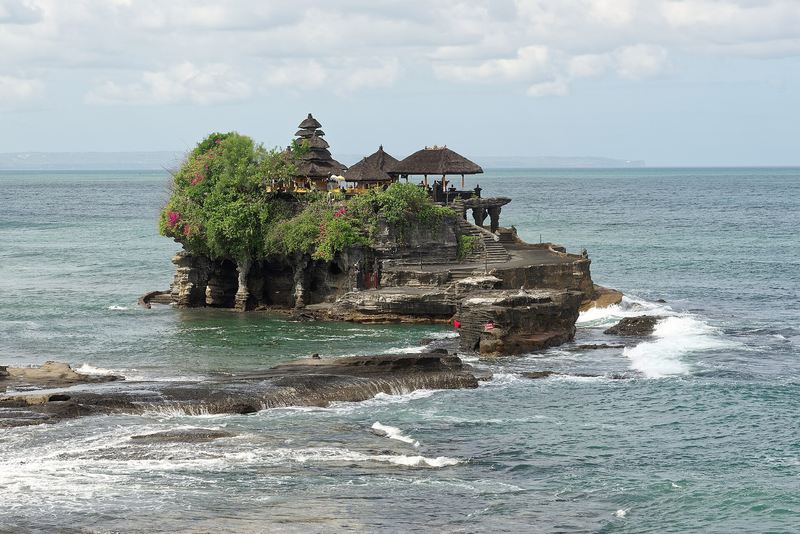
Tanah Lot Temple, Tabanan
Bali's sea temple on a rock in the waves, best planned around the tide before the sunset.
By the Baligasm editors · Updated 29 October 2026 · Photo: Jakub Hałun / Wikimedia Commons (CC BY-SA 4.0)
Overview
Tanah Lot: before you go
Tanah Lot is a Hindu temple on a rock islet off the black-sand shore of Beraban, in Tabanan, 25 to 45 minutes' drive north-west of Canggu. The shrine is closed to visitors, but when the tide is out you can cross to its base for a holy-water blessing. Foreign adults pay IDR 75,000, and a visit takes two to three hours. Check the tide first; a sunset-only trip mostly means crowds.
Pura Luhur Tanah Lot rises from a rocky islet just off Beraban's dark-sand coast and is dedicated to Bhatara Segara, god of the sea. Its history links it to Dang Hyang Nirartha, a 15th-century Javanese priest who travelled Bali's south coast. As the story goes, Beraban's headman resisted his teachings, so Nirartha shifted a chunk of the shoreline out into the water; the name is usually taken to mean land in the sea. The headman then became a disciple and was given a kris named Ki Baru Gajah, which is borne in a procession from Kediri to Pura Pakendungan, close by, once every 210 days. Nirartha's name is attached to a chain of sea temples on this shore.
Worship comes first here. The temple's anniversary, or pujawali, comes round each 210-day Balinese year on the day called Buda Wage Langkir, two weeks after Galungan; the most recent began on 3 December 2025 and lasted several days, and the next opens on 27 January 2027. Even during the festival, worshippers pray at the shrines at the foot of the rock, and only priests and ceremony staff climb into the small temple on top. Locals say the sea snakes living in the rocks protect the temple, and that they were created from Nirartha's sash.
The modern site covers 28.58 hectares of temples, gardens, paddies, car parks, an art market and restaurants. Visits passed 1.4 million in 2025, down from roughly 1.7 million the year before, and an ordinary day in May 2026 brought around 3,400 people. Look carefully at the islet itself. When the rock started to crumble in the 1980s, a conservation programme funded by a Japanese loan shored it up, and over a third of what you now see is artificial rock sculpted to blend in. A small Majapahit museum near the entrance has since been added to tell Nirartha's story.
The drawbacks are real. You cannot enter the temple. At high tide the spring is out of reach and you see the rock only from the clifftop. Sunset brings thousands of people, a packed headland and a single slow road out. The manager also announced a price rise for April 2026, which would have taken the foreign adult ticket to IDR 100,000 and car parking to IDR 10,000, then put it on hold; the old rates were still in force in October 2026. Arrive with the tide table in hand, though, and Tanah Lot remains one of the great sights of Bali.
- Opening hours
- Daily from early morning until 7 pm
- Ticket
- Foreign adults IDR 75,000; children IDR 40,000
- Time needed
- Two to three hours, plus an hour for the Kecak
- Best time
- An afternoon low tide, then stay on for sunset
- Dress code
- Shoulders and knees covered; no sarong needed in the grounds
- Location
- Beraban, Kediri, Tabanan; 25–45 minutes north-west of Canggu
Beraban, Kediri, Tabanan Regency, Bali 82121
Open in Google Maps ↗Read it on the Blog →What to see
What to see at Tanah Lot
The temple rock at low tide
As the water drops, a band of wet sand and reef emerges between the beach and the islet, and you can walk over to the bottom of the rock. The stairs up to the shrine are off limits, so the base is as near as visitors get. Wear sandals that grip, watch for slippery algae, and turn back the moment the sea begins to rise or staff wave people in.
The holy spring beneath the rock
Fresh water wells up at the foot of the islet, something locals regard as a small miracle surrounded by salt sea. Priests sprinkle visitors with it, and you may sip a little or rinse your face and hands, as worshippers do when praying for health or for children. No set charge applies; leave something in the donation box. You can reach the spring only when the tide is low.
The sacred snakes
In small caves in the rock face opposite the temple, keepers display the black-and-white banded sea snakes that, by local belief, guard Tanah Lot, having been born from Nirartha's sash. They are venomous sea kraits, though placid in the keepers' hands, so watch and leave the handling to them. A small donation is expected. For many children this is the highlight.
Pura Batu Bolong and its arch
Some 300 m north along the cliff path, a second shrine stands on a headland pierced by a crescent-shaped hole. Waves surge through the gap, and at sunset it is the most photographed view in the complex. During Pakelem, a ceremony of offerings to the sea, animals are released into the water beside it. It is an active shrine, so enjoy it from the path.
Sunset from the clifftop and Enjung Galuh
From the clifftop walkways and the grassy Enjung Galuh point you look straight at the rock as the sun goes down, which happens from roughly 6 pm in some months to 6:45 pm in others. Enjung Galuh has lawns and open pavilions for a more relaxed wait. Clifftop restaurants serve drinks with the view; have a coconut there and save dinner for a better kitchen.
The sunset Kecak
Most nights, at around 6 or 6:15 pm, a Kecak starts on the outdoor stage next to De Jukung restaurant near Pura Batu Bolong, a venue also signposted as the Surya Mandala cultural park. A ring of chanting men performs the Ramayana over 45 minutes to an hour, ending with fire. Tickets are about IDR 100,000 each, on top of the entry fee, and heavy rain cancels the show.
The quieter temples further north
Not many people go beyond Batu Bolong. About 100 m further along, Pura Batu Mejan protects a spring used for purification rites. North-west of the main temple, Pura Luhur Pakendungan stands where Nirartha reputedly meditated before crossing to the rock, and the sacred kris is carried there in procession. Past them, Yeh Kutikan is a peaceful stretch of shore used by fishing boats.
The art market and Majapahit museum
The walk from the car park leads through Pasar Seni, a long row of stalls selling paintings, carvings, shirts and sarongs; reaching the sea takes 10 to 15 minutes, more if you stop to browse. Prices are pitched at tourists, so haggle politely. Near the entrance, the small Majapahit museum traces Nirartha's journey from Java with statues, heirlooms and coins.
Seasons
Best time to visit Tanah Lot
Let the tide decide your timing before the sunset does. Find a tide table for Tanah Lot or Tabanan in an app or online and note the low-water times; there are normally two each day, and each arrives roughly 50 minutes later than on the previous day, so a low tide at sunset this week means high water at sunset next week. The deepest lows fall near full moon and new moon. Get there an hour ahead of low tide to reach the spring, and if the low comes mid-afternoon, stay for the sunset.
For elbow room, go on a weekday between roughly 8 and 10 in the morning, while the light is gentle and the coach parties have yet to arrive. Numbers climb from around 3 or 4 pm and peak at sunset. National holidays, Lebaran, Christmas and New Year above all, bring the heaviest crowds, and on pujawali days worshippers fill the complex; visitors are welcome but must stay out of prayer areas. An art and food festival takes place each year in late August.
April to October, the dry season, brings clearer sunsets and calmer water. Between November and March, rain and heavier seas cover the crossing to the rock more often, and the west monsoon dumps rubbish on this stretch of coast.
Getting there
How to get to Tanah Lot
Canggu25–45 minutes (13 km)
West by car or scooter through Pererenan and Cemagi. For sunset, be on the road by 4:30 pm.
Seminyak45–75 minutes (18 km)
With a driver or a ride-hailing car through Kerobokan and Canggu. Leave by 4 pm, and expect the return after dark to take up to twice as long.
Ubud1–1.5 hours (35 km)
With a private driver; many break the trip at Mengwi's Taman Ayun temple.
Uluwatu2–2.5 hours (45 km)
A long day with a private driver. Seeing the sun set at both Tanah Lot and Uluwatu Temple on the same evening cannot be done.
Ngurah Rai airport (DPS)1–1.5 hours (26 km)
Take an airport taxi, quoted at around IDR 230,000 to 290,000, or book a car; the usual route runs along Sunset Road and through Canggu.
Sanur1–1.5 hours (30 km)
With a driver along Denpasar's ring roads; avoid travelling between 4 and 7 pm.
| From | Time | How |
|---|---|---|
| Canggu | 25–45 minutes (13 km) | West by car or scooter through Pererenan and Cemagi. For sunset, be on the road by 4:30 pm. |
| Seminyak | 45–75 minutes (18 km) | With a driver or a ride-hailing car through Kerobokan and Canggu. Leave by 4 pm, and expect the return after dark to take up to twice as long. |
| Ubud | 1–1.5 hours (35 km) | With a private driver; many break the trip at Mengwi's Taman Ayun temple. |
| Uluwatu | 2–2.5 hours (45 km) | A long day with a private driver. Seeing the sun set at both Tanah Lot and Uluwatu Temple on the same evening cannot be done. |
| Ngurah Rai airport (DPS) | 1–1.5 hours (26 km) | Take an airport taxi, quoted at around IDR 230,000 to 290,000, or book a car; the usual route runs along Sunset Road and through Canggu. |
| Sanur | 1–1.5 hours (30 km) | With a driver along Denpasar's ring roads; avoid travelling between 4 and 7 pm. |
Know before you go
Tips for your visit
- 01Look up the tide table the evening before; no low tide means no blessing and no walk out to the rock.
- 02All visitors use the official 2.77-hectare car park, where a scooter costs IDR 3,000 and a car IDR 5,000. Tickets are not sold online, so carry cash for entry, parking, the blessing donation and the snake keepers.
- 03From the car park it is a flat 10 to 15 minute walk through the art market to the clifftop, where steps lead down to the sand facing the rock.
- 04Choose sandals with grip over flip-flops, as the reef around the islet is slippery.
- 05Cover shoulders and knees. Nobody will ask for a sarong, but the steps up the rock are for worshippers only.
- 06For sunset, claim a clifftop spot by 5 pm, or get to Batu Bolong earlier for the arch view.
- 07A driver who stays with the car is the easiest way back after dark, which is how most people do it. Ride-hailing apps are fine for the outward trip, but at sunset the whole car park empties at once and app cars become hard to find, so arrange your return beforehand.
- 08Either leave before the Kecak finishes or stay on for dinner; traffic on the only exit road is worst for the first hour after nightfall.
- 09Scooters are quicker on the Canggu side, but the lanes through Pererenan are narrow and crowded around sunset.
- 10Do not mix it up with Pura Batu Bolong in Canggu, a separate small temple on Batu Bolong Beach.
- 11If the ticket desk asks for IDR 100,000, the postponed 2026 increase has taken effect; check the board at the gate.
FAQ
Tanah Lot questions, answered
Can visitors enter Tanah Lot temple?
+
No. The stairs up the rock and the shrine at the top are reserved for Hindu worshippers; even at festival time the small inner temple admits only priests and those running the ceremony. When the tide is low you can cross to the foot of the islet, receive a blessing at the holy spring and see the sacred snakes, then watch the temple from the cliffs.
How much does Tanah Lot cost to enter?
+
Foreign adults pay IDR 75,000 and children IDR 40,000; Indonesian visitors pay IDR 30,000 and IDR 20,000. To park, a car pays IDR 5,000 and a scooter IDR 3,000. A rise to IDR 100,000 for foreigners had been due in April 2026 but was deferred, so read the board at the gate.
What are Tanah Lot's opening hours?
+
The complex opens every day from early morning and closes at 7 pm. Reported opening times range from 6 to 8 am, so do not count on getting in before 8. Getting out to the islet is governed by the tide rather than the clock, and staff close access when the sea is rough.
How do I find the time of low tide at Tanah Lot?
+
It shifts daily, so consult a tide chart for the Tabanan coast and note the two daily lows. Both move roughly 50 minutes later each day, and the lowest occur near the full and new moon. Aim to be there an hour before low water to cross to the spring, and head back as soon as the tide turns.
When does the Kecak dance start at Tanah Lot?
+
Normally around 6 pm or a quarter past, at the outdoor stage by De Jukung restaurant, near Pura Batu Bolong. It lasts up to an hour. Tickets are about IDR 100,000 per person in addition to the entry fee, sold at the venue or through ticketing apps, and the show is called off in heavy rain.
Is Tanah Lot worth visiting?
+
Yes, as long as you time it. A low tide gets you to the spring and the snakes, and the temple on its rock in the surf is one of the defining images of Bali. Those who turn up at high water and spend sunset in a crush tend to go home disappointed. A weekday afternoon on a falling tide is the ideal visit.
What time should I get there for sunset?
+
Pass through the gate by about 4:30 pm. Sunset varies from about 6 pm to 6:45 pm through the year, queues at the ticket booths form from around 4 pm, and the best clifftop positions and the Batu Bolong lookout are taken before 5. In peak season the crowd builds from 3 pm.
Do I need a sarong at Tanah Lot?
+
Not for the gardens, the beach or the spring, since visitors stay out of the shrines. Dress modestly regardless, covering shoulders and knees and leaving swimwear and crop tops behind. If a ceremony is under way when you visit, a sarong and sash are appropriate; the art market sells both.
How long is the drive from Canggu or Seminyak?
+
Canggu is about 13 km away, a 25 to 45 minute ride by car or scooter. Seminyak is about 18 km, so allow 45 to 75 minutes. The trip home after sunset is slower from both, because most visitors pull out of the car park at the same moment.
Should I see the sunset at Tanah Lot or Uluwatu Temple?
+
Tanah Lot is closer to Canggu and Seminyak and gives you the temple standing in the surf plus the blessing at low tide. Uluwatu suits anyone staying on the Bukit, with its clifftop setting and a bigger, better-staged Kecak. Up to two and a half hours of driving separate them, so pick one per evening.
Is Pura Batu Bolong part of Tanah Lot?
+
Yes. It is the shrine on the natural stone arch roughly 300 m north of the main temple, within the same ticketed site, and it features in most sunset photographs. Canggu has its own, smaller Pura Batu Bolong on the beach of the same name, so confirm which one a tour itinerary refers to.
Nearby
Pair it with
Kedungu Beach
A black-sand surf beach just to the north-west, with surf schools and calmer sunsets; 5–10 minutes by car.
Pura Gede Luhur Batu Ngaus, Mengening
A modest sea temple built on coral rock that sees only a sliver of Tanah Lot's visitors; 15–25 minutes away.
Pererenan and Canggu
Dinner and beach bars on the drive back once the sunset traffic eases; 25–45 minutes.
Pura Taman Ayun, Mengwi
Mengwi's moated royal temple of tiered meru, which pairs well with Tanah Lot on a touring day; 35–50 minutes by car.
Jatiluwih Rice Terraces
UNESCO-listed paddies inland; spend the morning there and finish here, 1.25–1.75 hours away.
More in Tabanan