Baligasm
Baligasm

Destination guide · South Bali

Kuta Area Guide

Bali's first beach resort, still the gentlest place to stand up on a board.

By the Baligasm editors · Updated 29 October 2026

Area brief

What Kuta is really like

Kuta is the beach town on Bali's south-west coast that sits right beside Ngurah Rai airport, 3–5 km and 10 to 40 minutes by car from arrivals. It has a 2.5 km surf beach, the island's cheapest rooms near the sand, Waterbom and the bars of Legian Road. Learner surfers, families, budget travellers and anyone with an early flight do well here; one to three nights is plenty.

Foreign tourism in Bali started on this sand. In the 1840s and 1850s the Danish trader Mads Lange kept a trading post at Kuta, and the area's first hotel, the Kuta Beach Hotel, was opened in 1936 by Robert and Louise Koke, who offered guests surf lessons. Hippies came from the late 1960s, surfers followed, family guesthouses called losmen spread through the lanes, and by the 1980s no resort strip on the island was busier. On paper Kuta is a single urban village of roughly 7 km² in Badung Regency; in practice most people include Tuban, which runs south to the airport fence.

Some of the old reputation is earned. Decades of Australian holidays built a scene of cheap beer, touts and late nights, and hawkers still work Kuta Beach Road and the Art Market while Legian Road stays loud until the small hours. Unlicensed money changers still cheat the careless. The town also carries a hard memory: on 12 October 2002 bombs at Paddy's Pub and the Sari Club killed 202 people, and a memorial marks the spot. Since the pandemic the island's energy has drifted north to Canggu, so Kuta now feels calmer and costs less than its image.

The streets are slowly getting better. Beachwalk, an open-air mall across from the sand, arrived in 2012, a year after a low stone wall went up between the beach and the road. In 2026 Badung started a phased upgrade: a breakwater between Tuban and Kuta, pavements widened to around 4 metres, cables buried underground and, at a later stage, a promenade running from Tuban towards Canggu. Expect hoardings and works along parts of the seafront while this goes on.

The beach is a 2.5 km strip of west-facing sand over a sandy bottom, which keeps Kuta the standard choice for a first surf lesson. It is not built for swimming: rips form outside the flagged areas. Between roughly October and April the west monsoon also pushes plastic onto the sand; in early 2026 Badung's cleaning agency put the load at 400 to 500 tonnes a day along the regency's coast, with Kuta, Legian and Jimbaran worst affected. Legian, next door on the same sand, is calmer and more family-minded, and Seminyak, 20 to 40 minutes north, eats and shops better at higher prices. Kuta wins on cost, surf schools, Waterbom and the airport.

Best for
Learner surfers, families, budget trips and airport stopovers
Vibe
Busy, noisy and cheap, though tamer than its name
From the airport
3–5 km; 10–20 minutes, or 20–40 at peak times
Days needed
One to three, or a night at each end of the trip
Best time
April to October, for offshore wind and clean sand
Getting around
On foot along the sand and lanes; ride-hailing or a driver further out

Kuta suits you if…

  • ✓A first surf lesson on soft whitewater over sand, with no reef underneath
  • ✓The night after landing or before flying out, a short hop from the terminal
  • ✓Families: Waterbom, turtle releases and air-conditioned malls sit close together
  • ✓Tight budgets: rooms, massages and street food undercut Seminyak
  • ✓Bar crawls you can walk, along Legian Road and the beach road

Skip it if…

  • ✕You want calm water to swim or snorkel; rips run along this open surf beach
  • ✕Hawkers, touts and noise after midnight would spoil your stay
  • ✕Your trip falls between December and February and the beach is the point; that is peak rubbish season
  • ✕Temples, paddies or design hotels matter more; look at Ubud or Seminyak instead
  • ✕Traffic tests your patience: the beach-road loop jams every evening

Neighbourhoods

Which part of Kuta to stay in

01

Kuta Beach and Kuta Beach Road

From Bemo Corner the beach road heads west to the sea and then turns north behind the low stone wall. Nowhere is Kuta more concentrated: board racks and surf schools, the turtle hatchery outside Grand Inna Kuta, Hard Rock Hotel, Beachwalk and a long line of seafront hotels. The water is a minute away. The trade-off is pavement sellers, sunset gridlock and the 2026 promenade works, which may fence off sections for a while.

Best for: First-timers and learner surfers who want the sand outside the door

02

Poppies Lane I and II

Two tight lanes run between the beach road and Legian Road. Lane I takes its name from Poppies Restaurant, open since 1973, and the Poppies Bali cottages next door have hosted guests since 1980. Lane II, a little further north, was once the home of the cheapest homestays and still holds guesthouses, board hire, walk-in spas and small bars. Scooters cut through both, so expect noise, but the beach is only a few minutes' walk.

Best for: Surfers and backpackers after a cheap bed near the waves

03

The Legian Road strip

Kuta's nightlife runs along Legian Road, which heads north from Bemo Corner towards Legian past bars, clubs, souvenir stalls and money changers. The bombing memorial is here, facing the vacant plot where the Sari Club once stood. Music carries until the early hours, especially on weekends and through July and August, so any room on or just behind the strip will be loud. Choose it only if late nights are the plan.

Best for: Groups who want to walk home from the bars

04

Bemo Corner, Kuta Square and Blambangan Road

The older commercial heart surrounds Bemo Corner, where Legian Road meets the beach road. Kuta Square, a row of shops near the Art Market, was struck in 2005 when a bomb exploded at Raja's restaurant. A short walk east, Blambangan Road holds the Senggol night market and the Vihara Dharmayana Chinese temple. Residents shop and eat here, prices fall and touts are scarce.

Best for: Return visitors chasing local food at local prices

05

Tuban and Kartika Plaza Road

Tuban covers the stretch south of central Kuta along Kartika Plaza Road down to the airport fence. Most of the large beachfront resorts are here, as are Waterbom, Discovery Shopping Mall and Lippo Mall Kuta. The Bukit, the runway and a breakwater shelter this end, so the surf is smaller, and aircraft fly low over Pantai Jerman. Evenings are quiet, and reaching the bars means a ride.

Best for: Families and resort guests who want the airport close

06

Melasti Road and the Legian border

Around Melasti Road, Kuta becomes Legian. The sand widens, fewer sellers patrol it, and the sandbanks at Kul Kul, opposite the Alam Kulkul hotel, and at Padma just beyond attract stronger surfers than the beginner zones to the south. Hotels lean mid-range and family-friendly. Beachwalk is a 15 to 20 minute walk south, and Double Six is within reach heading north along the shore.

Best for: Couples and families after Kuta rates with less racket

Top sights · 25 picks

Things to do in Kuta

Learn to surf on Kuta Beach

01 · Adventure

Learn to surf on Kuta Beach

📍 The whole beach; most schools sit on Kuta Beach Road

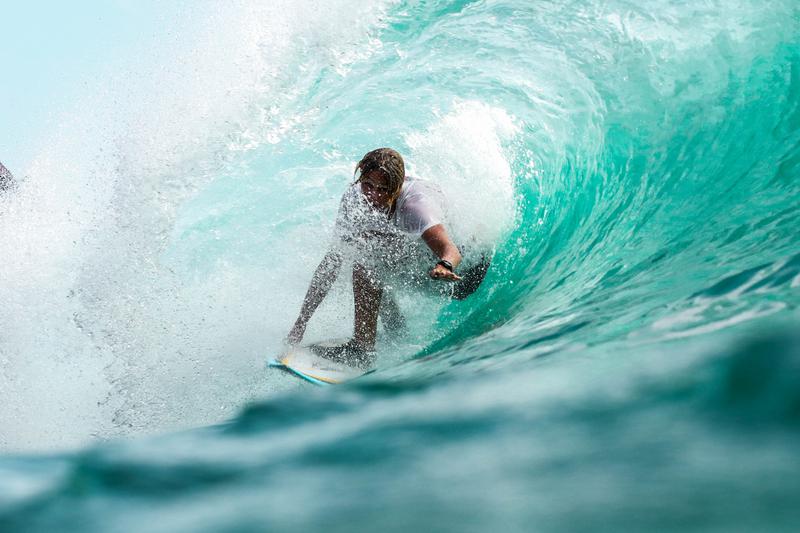
Surfing in Bali began on this beach, when the Kokes' Kuta Beach Hotel started giving its guests lessons in 1936. The bottom is sand, the whitewater rolls in long and soft, and there is no coral to land on, so few places on the island are kinder to a beginner. Waves behave best from mid to high tide; at low tide they tend to dump all at once. Proper schools such as Odysseys, on Kuta Beach Road, supply a rash vest, a helmet and a locker.

Tip: Go in the morning between April and October, when the wind is offshore, and fix price and length with freelance instructors first.

Sunset on Kuta Beach
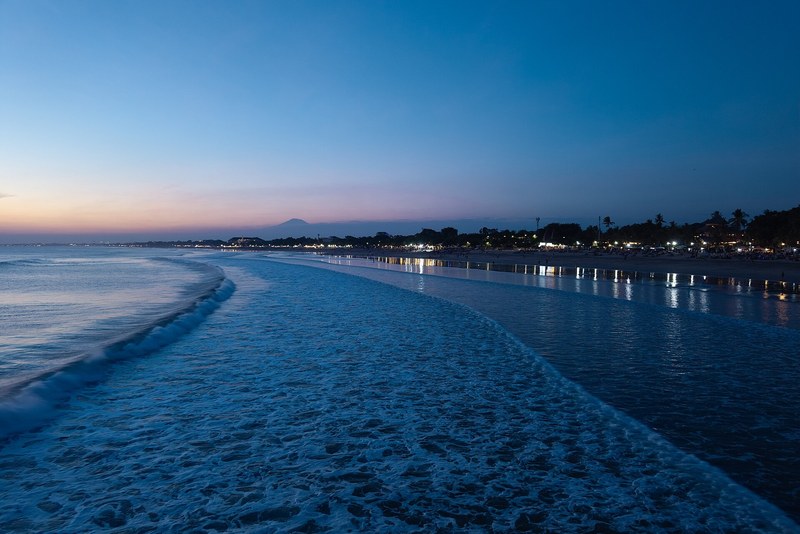
Photo: FBilula / Wikimedia Commons (CC BY 4.0)

02 · Beach

Sunset on Kuta Beach

📍 Tuban north to Melasti Road

Because the beach faces due west, Kuta earned the nickname Sunset Beach long ago. The sand starts filling around 5 pm with surfers paddling in, families, rows of plastic chairs and vendors carrying coconuts and cold Bintang. Depending on the month, the sun goes down between roughly 6:05 and 6:45 pm. The stretch near Beachwalk draws the biggest crowd, so head north towards Melasti Road for elbow room. Balawista lifeguards mark the safe zones with flags along the main section.

Tip: Hire a sunbed or bring a sarong, read the flags before any sunset dip, and leave the water before it gets dark.

03 · Culture

Bali Bombing Memorial

📍 Legian Road, central Kuta

Two bombs on Legian Road on 12 October 2002, at Paddy's Pub and the Sari Club, took 202 lives, among them 88 Australians and 38 Indonesians. Two years later a memorial was unveiled where Paddy's had stood. A marble plaque gives each victim's name and nationality, flanked by the flags of the countries who lost people, and the monument is lit after dark. Badung bought the empty Sari Club site opposite in 2025 and plans a peace museum there.

Tip: Free and open at all hours. Dress modestly, speak quietly and avoid posed selfies; families gather for commemorations each 12 October.

Waterbom Bali
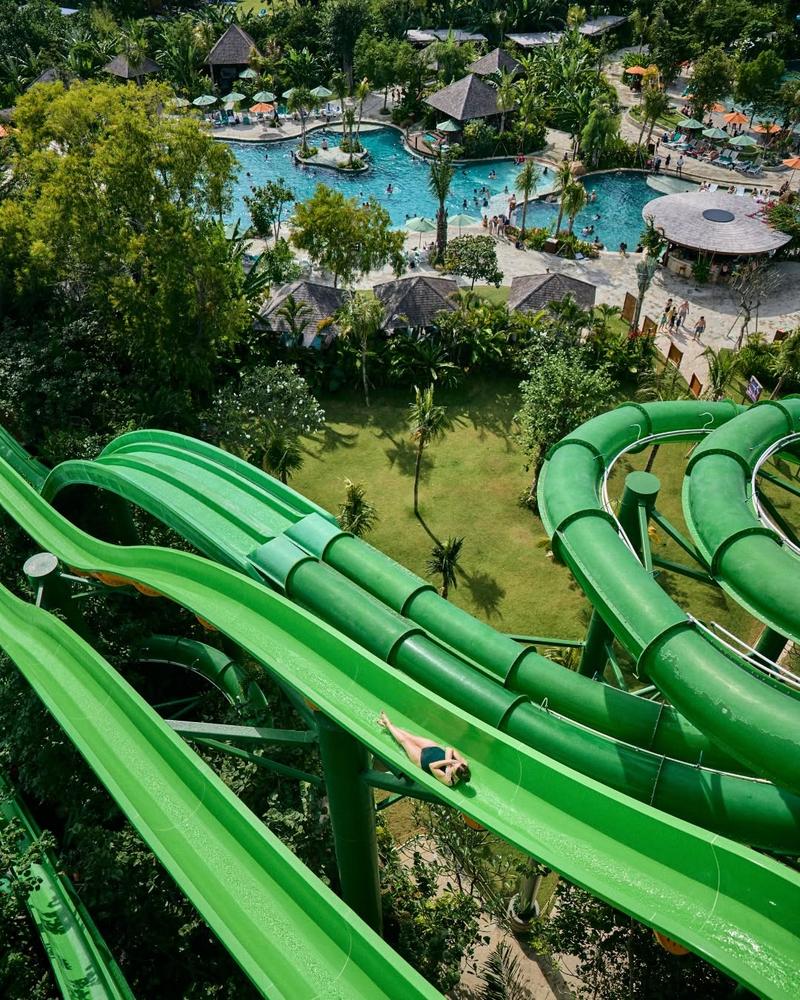
Photo by @waterbombali

04 · Family

Waterbom Bali

📍 Kartika Plaza Road, Tuban

Five large slides greeted the first visitors on 7 December 1993. Today Waterbom runs 28 slides and attractions across 3.5 hectares in Tuban, and more than half of the grounds, 55 percent, is kept as trees and gardens. Several of the bigger rides admit only riders taller than 100 cm, while the children's zone sets no minimum height. Towels, lockers and gazebos are charged separately. Gates open from 9 am to 6 pm every day except Nyepi.

Tip: Bought online, international tickets cost IDR 630,000 per adult and IDR 495,000 per child aged 2–11; in peak season book a day or more ahead.

05 · Nature

Sea turtle hatchling release

📍 Kuta Beach, opposite Grand Inna Kuta

A giant turtle statue marks the Bali Sea Turtle Society's hatchery on the sand in front of Grand Inna Kuta. Volunteers collect eggs laid along Kuta and neighbouring beaches and rebury them inside a guarded enclosure. Once the young turtles hatch, they are carried to the shoreline and let go in the late afternoon, and children normally get to release them first. The season runs from about April to October; roughly 200 hatchlings reached the sea on 26 August 2026.

Tip: Releases only happen when eggs hatch, so look at the society's social media on the day and come an hour early; a crowd forms around 4:30 pm.

Uluwatu Temple and the Kecak dance
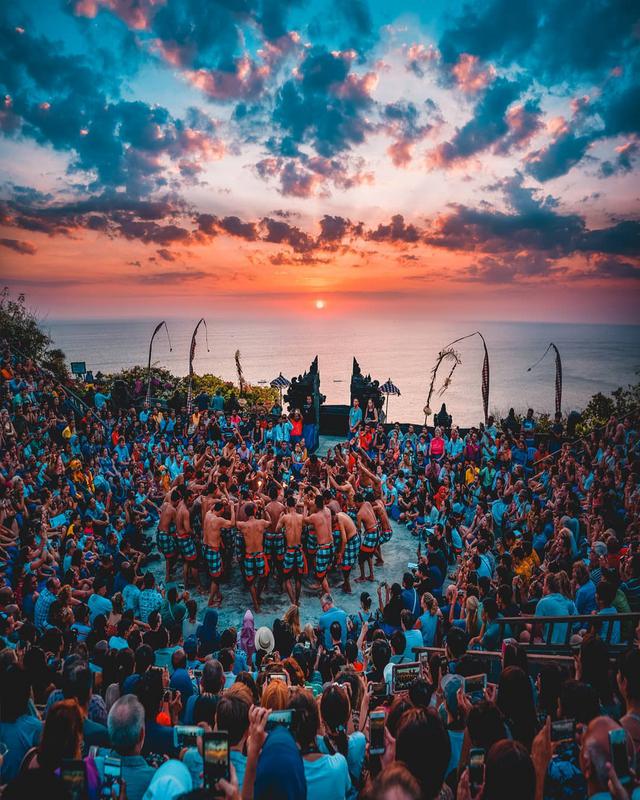
Photo by @hidwii

06 · Temple

Uluwatu Temple and the Kecak dance

📍 Pecatu, 1–1.5 hours south by car

For a half day out of Kuta, nothing beats this. Pura Luhur Uluwatu perches on a limestone cliff roughly 70 metres over the ocean at the south-western corner of the Bukit. Beside it, the Kecak fire dance begins at 6 pm in an open amphitheatre while the sun sets behind the cast. The distance is only about 25 km, yet the road through Jimbaran clogs badly, so plan to be in the car by about 3:15 pm.

Tip: Foreign adults pay about IDR 60,000 to enter and IDR 150,000 more for the Kecak. Put sunglasses away, because the monkeys grab them.

07 · Beach

Beach walk to Legian and Seminyak

📍 Kuta Beach north to Double Six, Seminyak

The sand runs on well past Kuta. Follow it north beyond Melasti Road into Legian and then past Double Six into Seminyak, a distance of about 3.5 km that takes 40 minutes at a steady pace and often beats a car at sunset. Once you cross into Legian the crowds ease, and the Kul Kul and Padma peaks are good spots to pause and watch stronger surfers. Ride back by app once traffic calms down.

Tip: Start at about 4:30 pm so you reach Double Six for sunset, and bring water: the beach has almost no shade.

08 · Market & Shopping

Beachwalk

📍 Kuta Beach Road, central Kuta

Opened in 2012 opposite the beach, Beachwalk is the most pleasant mall in the south for an hour's browsing. Its three open-air levels hold surf, fashion and beauty labels, with a food court on the top floor and an XXI cinema. Walkways link it to the Sheraton Bali Kuta Resort, Aloft and YELLO hotels. Between beach sessions it is the simple answer to a cloudburst, the midday heat or the need for a clean toilet.

Tip: Doors open at 10 am daily and close at 10 pm Monday to Thursday, an hour later Friday to Sunday; Beachwalk Kuta Fest takes over in early June.

Show all 25 things to do ↓

09 · Culture

Poppies Lane I and II

📍 Between Legian Road and Kuta Beach Road

These two lanes were Kuta before any mall existed. Poppies Restaurant opened on Lane I in 1973 and lent the street its name; its garden dining room still serves beside the Poppies Bali cottages, open to guests since 1980. A short distance north, Lane II was where backpackers once hunted for the cheapest beds, and guesthouses, board hire shops, small spas and bars still line it. Walk them from Legian Road down to the sea.

Tip: Scooters use both lanes as shortcuts and the tightest sections have no pavement, so keep to the side.

10 · Food & Drink

Kuta Night Market (Blambangan Senggol)

📍 Blambangan Road, east of Bemo Corner

No dinner in Kuta costs less. Locals call it Blambangan Senggol: a row of food stalls on Blambangan Road that starts up around 5:30 pm. Grilled fish, chicken satay, nasi campur, sweet martabak and fresh juice are sold at set prices, and you eat at shared tables or on your feet. The Vihara Dharmayana temple is a few minutes away on foot, and the beach, with its higher prices, lies around 1 km west.

Tip: Most stalls want cash, so carry small notes. It is busiest from 6 to 9 pm, and vendors start packing up near 10 pm.

11 · Temple

Vihara Dharmayana

📍 Blambangan Road, around 1 km inland from the beach

Known in the community as Kongco Kuta, this Chinese temple has occupied a corner of Blambangan Road since the 19th century. Carved dragons coil around the red columns of the main hall, lanterns swing from the roof, and under a banyan beside a turtle pond sits a four-faced Buddha. The Dalai Lama came here in 1982. At Chinese New Year the courtyards fill with incense smoke, offerings and families at prayer.

Tip: Entry is free and donations are welcome; open roughly 9 am–8 pm. Cover shoulders and knees, use no flash and leave the altars alone.

12 · Food & Drink

Legian Road nightlife

📍 Legian Road, Bemo Corner to Melasti Road

After dark, Legian Road remains the noisiest street in the south: open-fronted bars, clubs, drinks promotions and speakers turned up from Bemo Corner towards Legian. It works for a big group night rather than a quiet cocktail. Order beer or drinks from sealed bottles at bars with a good name, and keep your glass in sight, because methanol poisoning and spiked drinks have both been reported in Bali's tourist areas.

Tip: Take only the cash you need, keep your phone away from the kerb side and book a ride home on an app rather than accepting lifts from strangers.

13 · Viewpoint

Plane spotting at Pantai Jerman and Kelan

📍 Tuban, next to the airport runway

The airport runway juts out into the sea at the southern end of Kuta's coastline. Just north of it at Pantai Jerman, in Tuban, aircraft skim low over the water on arrival and departure, while beach bars rent loungers beside a seafront path popular with runners and cyclists. Across the runway on its southern side, Kelan beach has seafood stalls with take-offs and landings almost overhead.

Tip: Light is softest early in the morning or late in the afternoon. Bring a long lens and keep away from the fence, which airport security patrols.

14 · Market & Shopping

Kuta Art Market

📍 South end of Kuta Beach, off Bakung Sari Road

Pasar Seni Kuta has been selling souvenirs to visitors since the 1970s from a spot just behind the southern end of the beach. It is now a tangle of stalls plus a three-storey building piled with sarongs, Bintang vests, carved masks, rattan bags and fridge magnets, most of them factory-made. Every passer-by gets a sales pitch. Come for fast gifts and haggling practice; serious crafts are better bought in Ubud or Sukawati.

Tip: Open around 8 am–10 pm daily. Offer half the first price, pay in cash and walk off if the number is wrong.

15 · Beach

Watch the surf at Halfway

📍 Central Kuta Beach

Roughly midway between the southern tip of the beach and Legian lies Halfway, Kuta's main surf peak and the venue for local contests. Sit on the beach late in the day, when the tide is half up, to watch the best local riders work the shifting banks. Each June the Beachwalk Kuta Fest stages a surf competition here; the 2026 event, held from 3 to 5 June, included junior, longboard and open categories.

Tip: The show peaks at mid tide. At low tide the sets get quick, hollow and mostly unrideable.

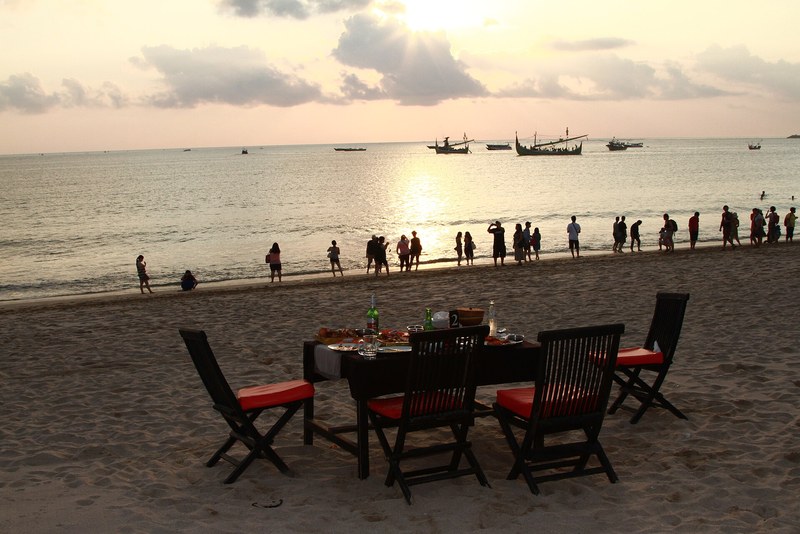
Jimbaran seafood dinner at sunset
Photo: Guanzhan Chen / Wikimedia Commons (CC BY 3.0)

16 · Food & Drink

Jimbaran seafood dinner at sunset

📍 Jimbaran Bay, 20–35 minutes south by car

The standard dinner trip from Kuta ends at Jimbaran Bay, where beach cafés set tables on the sand and grill fish, prawns and squid over coconut husks, priced by weight. The bay lies about 11 km south, 20 to 35 minutes by car, though airport and sunset traffic can double that. Pick your catch from the ice or the tank, then eat as the sun sinks and planes line up to land across the water.

Tip: Set off 45–60 minutes before sunset, and agree the weight and final price before anything is cooked.

17 · Adventure

Surf Kuta Reef by boat

📍 About 1 km off Tuban

Kuta Reef, a left-hander breaking about 1 km out beside the runway, was the wave that first lured surfers away from the beach. Paddling there is impractical, so local boats ferry riders from Pantai Jerman or Kedonganan. It wants a mid to high tide, works best in the dry-season trade winds and finishes over shallow, sharp coral. Leave it to intermediates and above; on small days the lineup gets crowded.

Tip: Settle the fare and return time before leaving; boats stop running around 6 pm and stay in on some ceremony days.

18 · Beach

Tuban beach behind Discovery Mall

📍 Behind Discovery Shopping Mall, Tuban

Down in Tuban, a boardwalk follows the sand behind Discovery Shopping Mall on Kartika Plaza Road. The Bukit, the runway and a breakwater all block swell here, so waves are smaller than in central Kuta and children can paddle with less fuss. The mall's rear terrace looks directly over the beach, and its department stores sort out a forgotten swimsuit or hat.

Tip: Combine it with Waterbom across the road and stay on for sunset; swim only inside the lifeguard flags.

Garuda Wisnu Kencana (GWK)
Photo by @thaylise_ferreira

19 · Culture

Garuda Wisnu Kencana (GWK)

📍 Ungasan, 35–50 minutes south by car

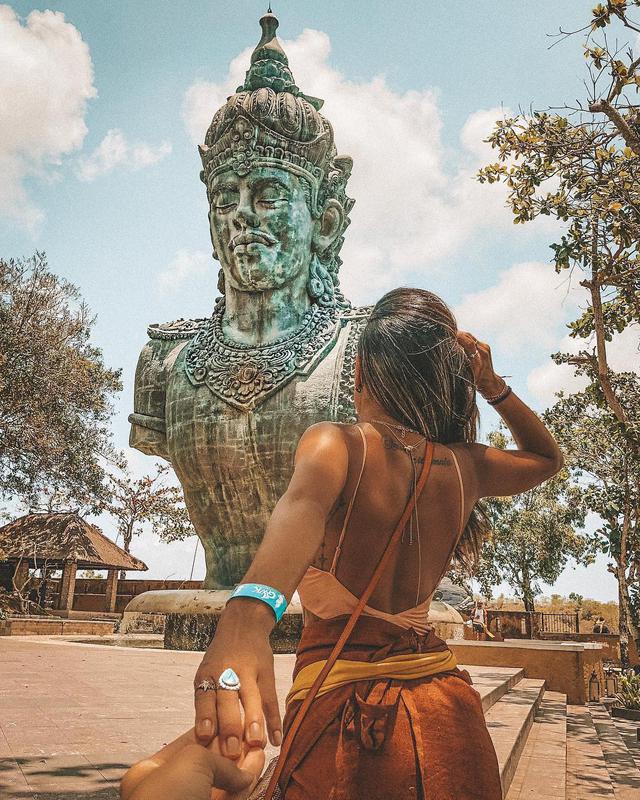
I Nyoman Nuarta's statue of Vishnu astride the bird Garuda rises 121 metres from its base in Ungasan, surrounded by walls quarried out of the limestone. A standard ticket includes the park and the dance shows in the amphitheatre, while a separate statue tour lifts you to viewing decks high over the Bukit. The park is about 13–15 km from Kuta and pairs easily with an afternoon at Uluwatu or Jimbaran.

Tip: Regular entry is IDR 150,000. Visit late in the afternoon, once the heat eases.

Tanah Lot
Photo: Jakub Hałun / Wikimedia Commons (CC BY-SA 4.0)

20 · Temple

Tanah Lot

📍 Tabanan, 1–1.5 hours north-west by car

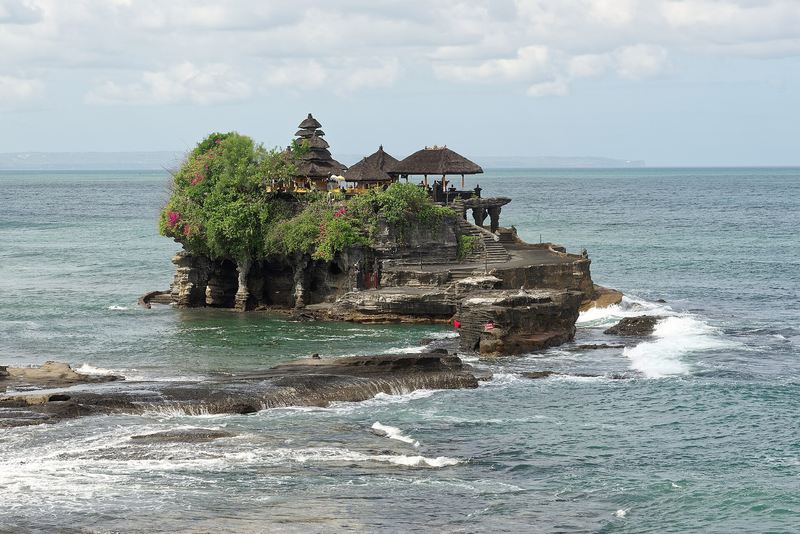
Of all Bali's sea temples, this is the one on every postcard: a shrine on a surf-washed rock in Tabanan, around 25 km north-west of Kuta. Allow one to one and a half hours each way, and more at sunset, when the single approach road backs up. Sunset brings the classic view and the biggest crowds; a morning visit gives you space on the cliff paths and a quicker drive home.

Tip: Foreign adults pay IDR 75,000 and children IDR 40,000. For sunset, leave Kuta by 3:30 pm.

21 · Wellness

Massage on Poppies Lane II

📍 Poppies Lane II and Legian Road

Walk-in spas crowd Poppies Lane II and Legian Road, selling Balinese massage, reflexology and body scrubs by the hour for far less than hotel spas charge. Standards vary, so look for a clean room, a printed menu of prices and a therapist who asks about pressure and old injuries. An hour of oil massage after a surf lesson is the cheapest fix for sore shoulders. Hotel spas along the beach road charge more but feel calmer.

Tip: Confirm the total, including any tax, before you begin; choose a hotel spa for a private room and a shower.

Trans Studio Bali

22 · Family

Trans Studio Bali

📍 Imam Bonjol Road, Denpasar, 10–20 minutes by car

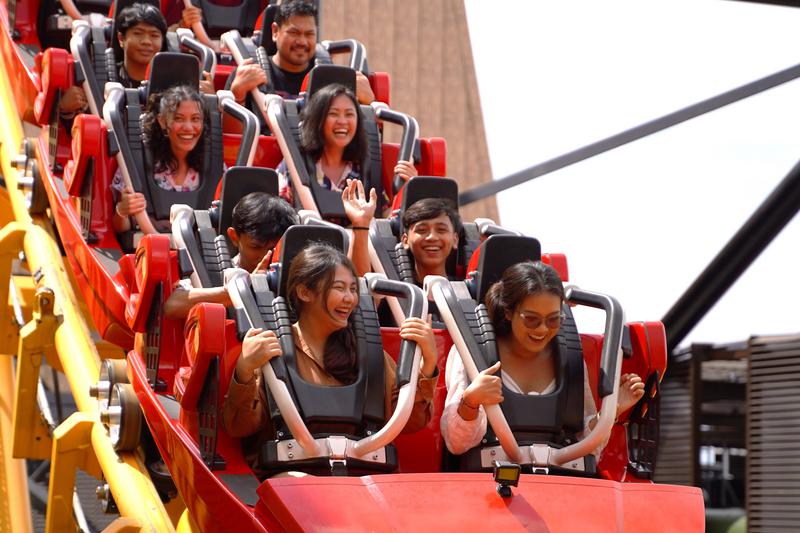
If rain wipes out a beach day, Trans Studio Bali is an entirely indoor theme park with more than 16 rides and shows, set on level one of Trans Studio Mall on Imam Bonjol Road, about 3 km north-east of central Kuta. Small children and teenagers both find plenty to do, and the weather makes no difference. Give it half a day and eat lunch in the mall.

Tip: Weekday hours are 11 am to 6 pm, and it stays open an hour later at weekends; look on the park's website for international-guest offers before paying at the gate.

23 · Culture

Mads Lange's tomb

📍 Tuan Lange Lane, east Kuta near the bypass

After leaving Lombok in 1839, the Danish trader Mads Lange built a trading post at Kuta, dealing in rice, spices and cattle and acting as the Dutch agent on Bali until he died in 1856. His restored grave lies in a quiet, shady spot beside the river, inland from the beach on a lane named after him. Few tourists make it here, and it shows that Kuta was a trading harbour long before anyone surfed.

Tip: If your map loses you in the lanes, ask for "kuburan Tuan Lange" (Mr Lange's grave), and dress modestly.

24 · Culture

Melasti processions on Kuta Beach

📍 Kuta Beach

Some days before Nyepi, the Balinese day of silence, villages bring temple shrines and sacred heirlooms down to the sea to be purified in the Melasti ceremony. Thousands of worshippers dressed in white arrive on Kuta Beach with gamelan orchestras, tall ceremonial umbrellas and offerings for the shoreline. Nyepi is expected on 8 March 2027, so Melasti will fall a few days before. Nyepi itself closes the airport, the beach and Waterbom.

Tip: Watch from well back, wear something that covers your shoulders, and never fly a drone or fire a flash near worshippers.

25 · Market & Shopping

Mal Bali Galeria

📍 Ngurah Rai Bypass, east Kuta

Close to the Simpang Siur roundabout on the bypass, Mal Bali Galeria fills the gap central Kuta leaves: a big indoor mall where you find duty-free shopping at T Galleria by DFS, a Gramedia bookshop, a Hypermart, an ice rink under the roof and an XXI cinema. Use it for a wet afternoon, a film with the children or a supermarket run before a villa stay. Lippo Mall Kuta on Kartika Plaza Road is smaller and has a Cinépolis cinema.

Tip: Open 10 am–10 pm daily. Avoid arriving from 4 to 7 pm, when traffic at the roundabout outside backs up.

Itinerary

How to spend your days in Kuta

Kuta in a day

Mostly on foot, about 7 km in all. If your legs give out after sunset, take a car for the 2 km inland to the night market.

  1. 7:00

    Take a surf lesson on Kuta Beach while the offshore wind holds.

  2. 10:00

    Have breakfast, then wander up Poppies Lane I and II to Legian Road.

  3. 11:00

    Stop quietly at the Bali Bombing Memorial.

  4. 12:30

    Eat lunch in the cool of Beachwalk, or haggle for gifts at the Kuta Art Market.

  5. 15:00

    Book an hour's massage on Poppies Lane II.

  6. 16:30

    Between April and October, see whether turtles are being released at the hatchery outside Grand Inna Kuta.

  7. 18:00

    Watch the sun go down from Kuta Beach, or stroll north towards Legian for more space.

  8. 19:30

    Eat at the Blambangan Senggol night market, and finish on Legian Road if you want a late one.

Three days in Kuta

Surf lessons, a cliff-temple sunset and one long walk up the coast. Uluwatu needs a driver; everything else works on foot or with short app rides.

  1. Day 1, 7:00

    Surf lesson on Kuta Beach, then a slow walk through Poppies Lane I and II.

  2. Day 1, 13:00

    The bombing memorial, lunch at Beachwalk and Vihara Dharmayana on Blambangan Road.

  3. Day 1, 18:00

    Sunset on the sand, then dinner at the night market.

  4. Day 2, 9:00

    Waterbom as the gates open, or a second surf lesson.

  5. Day 2, 15:15

    Drive south to Uluwatu Temple in time for the 6 pm Kecak.

  6. Day 2, 20:00

    Stop in Jimbaran on the way back for a late seafood dinner on the beach.

  7. Day 3, 7:00

    Plane spotting at Pantai Jerman, or a boat out to Kuta Reef if you already surf.

  8. Day 3, 13:00

    Tuban beach behind Discovery Mall, then one more turtle-release check.

  9. Day 3, 16:30

    Walk about 3.5 km north on the sand to Double Six and eat in Seminyak.

Kuta with kids, plus a rainy-day plan

A family day built around water, turtles and an early night, with an indoor fallback if the weather turns.

  1. 9:00

    Arrive at Waterbom for opening, ahead of the queues and the strongest sun.

  2. 13:00

    Eat at Discovery Mall, then let the children splash in Tuban's gentler surf behind it.

  3. 15:00

    Back to the hotel for a rest and some pool time.

  4. 16:30

    From April to October, join the turtle release at the hatchery, where children usually go first.

  5. 18:00

    Sunset on Kuta Beach, followed by an early dinner.

  6. If it rains

    Head indoors: the rides at Trans Studio Bali, or skating and a film at Mal Bali Galeria.

Longer trip? Plan up to seven days from Kuta or browse our Bali itineraries.

Where to stay

Hotels and villas in Kuta

All stays in Kuta →

Where to eat

Restaurants and cafés in Kuta

All restaurants in Kuta →

Seasons

Best time to visit Kuta

The dry months, April to October, show Kuta at its best. The south-east trades come off the land, straight offshore at the Tuban end and at an angle further up the beach, which grooms the waves for lessons and keeps rubbish out at sea. Prices and crowds peak in July, August and over Christmas and New Year. Waterbom says its quiet periods are February to April and October to November.

From about November to March the wet season brings onshore wind, heavy downpours and messy surf. It is also when the beach suffers most: from roughly October to April the west monsoon carries plastic, driftwood and other debris from the rivers and open sea, with the worst weeks usually between late December and early February. Badung deploys hundreds of cleaners with trucks and heavy machinery, yet on bad days the tideline stays dirty.

Check the calendar as well. The day of silence, Nyepi, should fall on Monday 8 March 2027, when the airport, beach and businesses close for 24 hours; Melasti processions come down to Kuta Beach a few days earlier. Families meet at the bombing memorial every 12 October. In early June, Beachwalk Kuta Fest fills the seafront with a surf contest and concerts.

Getting there

How to get to Kuta

  • Ngurah Rai airport (DPS)10–20 minutes, 20–40 at busy times

    A 3–5 km drive. Use the fixed-fare taxi desk in arrivals, book a ride-hailing car from the marked pickup area a short walk from the terminal, or arrange a hotel transfer.

  • Legian5–15 minutes

    About 3 km by car or scooter, and often quicker walking along the beach.

  • Seminyak20–40 minutes

    By car through Legian, slowest from 4:30 to 7 pm. The 3.5 km beach walk takes about 40 minutes.

  • Canggu45 minutes to 1.5 hours

    Around 18 km by car or scooter via Seminyak and Kerobokan; after 4 pm allow longer.

  • Ubud1 hour 15 minutes to 2 hours

    Roughly 36 km through Denpasar by private car. The Kura-Kura tourist bus makes four runs a day between Kuta and Ubud and must be reserved.

  • Uluwatu1–1.5 hours, 90 minutes or more at sunset

    About 25 km via the bypass and Jimbaran; the stretch past Jimbaran and GWK is where it jams.

  • Sanur30–45 minutes

    About 15 km via the Simpang Siur roundabout and the bypass. Fast boats to Nusa Penida and Nusa Lembongan leave from Sanur.

  • Nusa Dua30–45 minutes

    About 17 km on the Bali Mandara toll road or the bypass; up to 90 minutes in the evening rush.

Getting around Kuta

Central Kuta is small, and the sand is its best footpath: it is possible to go on foot from Tuban up to Legian without touching a road. Pavements on the beach road and Legian Road are narrow and cracked in places, and the 2026 widening works may close sections for a time. Poppies Lane I and II have no pavement at all, so watch for scooters.

Kuta Beach Road, Legian Road and the streets around them form a one-way loop, which turns a short car hop into a long detour. The beach road, Poppies Lane and the area around Beachwalk clog from late afternoon until well into the evening, as does Simpang Siur, the big junction on the bypass. A scooter is quicker, but riders need a motorbike licence from home, an International Driving Permit and a helmet. Police checks are real: over three days in May 2025, officers in Kuta, Seminyak, Canggu and Uluwatu ticketed 81 riders, including 30 foreigners.

Ride-hailing cars and motorbike taxis cover all of Kuta and are the simplest way to get to the malls, Tuban or the night market. Metered Bluebird taxis are the alternative. For Uluwatu, Tanah Lot or Ubud, book a car with driver for the day rather than stringing app rides together, and keep small notes for parking.

Know before you go

Kuta tips that save time

  1. 01Pay Bali's IDR 150,000 tourist levy before you travel, and only through the official Love Bali website or app.
  2. 02Change money only at licensed changers that display the Bank Indonesia logo and QR code, or use bank ATMs, and count the notes yourself at the counter.
  3. 03Only swim inside the red-and-yellow flags, keep out of the sea when a red flag is up and avoid the chequered surf zones.
  4. 04Stick to beer or sealed drinks at reputable bars. If your vision blurs after drinking, get to a clinic at once: methanol in fake spirits has killed people in Indonesia.
  5. 05Carry bags on the side away from traffic; snatch thefts from passing scooters are common in the busy streets.
  6. 06Touts respond best to a smile and a firm "no, thank you"; stopping to chat reads as interest.
  7. 07Between December and February, look at the beach before you plan a day on it, as one storm can bring rubbish ashore overnight.
  8. 08Book Waterbom online in July, August and the Christmas weeks.
  9. 09The airport is close, but leave 40 minutes for the drive in late afternoon.

FAQ

Kuta questions, answered

Is Kuta still worth a stop?

+

For certain things, yes: a first surf lesson, Waterbom, cheap rooms, nightlife and a bed near the airport. It is the wrong choice for calm swimming, quiet evenings or Balinese culture outside the door, and touts and the wet-season rubbish put some visitors off. Most people are happiest with one to three nights here before moving on to Ubud, Uluwatu or Sanur.

Should I pick Kuta or Seminyak?

+

Kuta is cheaper and has the surf schools, Waterbom, the louder bars and an airport run of 10 to 40 minutes. Seminyak has the better restaurants, boutiques, spas and beach clubs, and an older crowd. They share one beach: the drive between them takes 20 to 40 minutes and the walk along the shore about 40, so sleeping in one and spending an evening in the other is simple.

Can a complete beginner learn to surf in Kuta?

+

Yes. No beach in Bali is easier to learn on: the bottom is sand, the whitewater rolls in gently and there is no reef, with instructors along the whole shore. Take lessons in the morning between April and October, when the wind blows offshore, ideally on a mid to high tide. Once you can catch unbroken waves, move on to Legian, Canggu or Kuta Reef by boat.

Can you swim safely at Kuta Beach?

+

Only with care. Kuta is an open surf beach and rip currents form often outside the patrolled zones. Balawista lifeguards mark swimming areas with red-and-yellow flags and surf areas with chequered ones, shifting them through the day. Keep inside the red-and-yellow flags, do not go in when red flags are up, and avoid the sea after dark or after heavy rain.

How safe is Kuta for visitors?

+

Generally safe, provided you take big-city precautions. The usual problems are bags snatched from passing scooters, short-changing by unlicensed money changers, spiked drinks and fake spirits laced with methanol. Change money at licensed counters or bank ATMs, keep bags on the side away from traffic, order beer or sealed drinks, and use an app ride to get back to your hotel at night.

How long is the drive from the airport to Kuta?

+

Kuta is the closest resort area to Ngurah Rai International Airport, 3 to 5 km from the terminal. The run normally takes 10 to 20 minutes; in late-afternoon traffic, allow 20 to 40. The fixed-fare taxi desk in arrivals, a ride-hailing car from the marked pickup zone or a hotel transfer will all get you there.

Why is Kuta Beach sometimes covered in rubbish?

+

It happens in the wet season. Roughly from October to April, the west monsoon pushes plastic and driftwood onto Badung's beaches, with the worst weeks usually from late December to early February. In early 2026 the regency estimated 400 to 500 tonnes a day along its coast. Cleaning crews work daily, and between April and October the beach is usually clean.

How many nights should I spend in Kuta?

+

One to three. A single day is enough for a surf lesson, Poppies Lane, the memorial and sunset. With three you can add Waterbom, Uluwatu Temple and its Kecak dance, a Jimbaran seafood dinner and the beach walk to Seminyak. Many people also book their first or last night here simply because the airport is so near.

Which is the better base, Kuta or Legian?

+

Kuta has the cheapest rooms, the surf schools, Waterbom and the shortest drive to the airport. Legian, directly north on the same beach, is a little calmer and more family-minded, with fewer hawkers. Melasti Road marks the border; a car covers the gap in 5 to 15 minutes, or you can simply walk up the beach.

Does Kuta work for a family holiday?

+

More than the party reputation implies. Within a short ride you have Waterbom, Trans Studio Bali, the calmer surf at Tuban and, from April to October, turtle releases on the beach, while the malls rescue rainy days. Book a resort in Tuban or near Melasti Road rather than close to Legian Road. With toddlers who need calm water, Sanur or Nusa Dua is the better choice.

When is the best time of year for Kuta?

+

In the dry season, April to October, it is sunny, the sand is clean and the learner waves are at their best. Crowds are lighter in May, June and September than in July, August and over Christmas. November to March means rain, onshore wind and debris on the beach, and the dirtiest days tend to come between late December and early February.

Nearby

Where to go after Kuta

Read next

More Kuta guides on the Blog