Baligasm
Baligasm

Destination guide · Bukit Peninsula

Jimbaran Area Guide

Grilled fish at sunset, a dawn fish market and the calmest sand near the airport.

By the Baligasm editors · Updated 29 October 2026

Area brief

What Jimbaran is really like

Jimbaran is a fishing village and resort bay on the narrow neck of the Bukit Peninsula, just 6–8 km (15–30 minutes) south of Ngurah Rai airport. Its 4 km west-facing beach is calmer than Kuta's, fills with tables for grilled seafood every evening and has a busy fish market working at dawn. Couples, families and anyone needing a first or last night near the airport suit it best. One to three days is plenty.

Roughly 50,000 people live in Jimbaran, a village of 20.5 km² in South Kuta that climbs from a sandy western shore onto the arid limestone hills of the Bukit. At the northern tip, beside the airport runway, sits the Kedonganan fish market; at the southern tip, the Four Seasons at Muaya. Strictly, Kedonganan is a village of its own, yet visitors treat it as the top of Jimbaran Bay. Up the hill the mood changes: the AYANA estate and Raffles on the Karang Mas cliffs, Udayana University's main campus, villa compounds and the road towards GWK. Up there you need transport, whereas the beach is an easy walk from end to end.

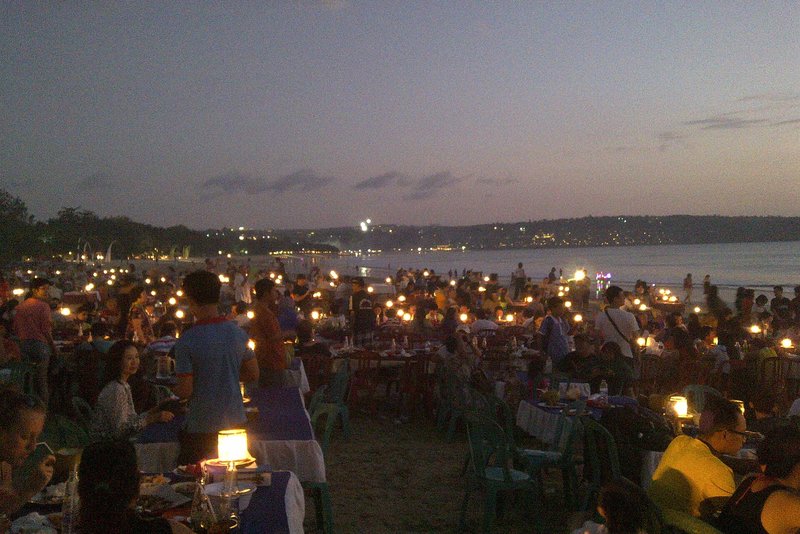
Dinner is the draw. Three groups of cafés share the beach, and each evening they carry tables onto the sand and cook fish, prawns and squid over smouldering coconut husks. Kedonganan's 24 cafés date from a 2007 rebuild by the village, which handed four to each of its six banjar. The central cluster, where Pemelisan Agung Road reaches the beach, includes Warung Ramayana, grilling since 1990 and often credited with starting the trade. Muaya, next to the Four Seasons, has the calmest water. Wherever you sit, seafood is sold by weight, so settle the rate and the total before anything reaches the grill.

There are drawbacks. Aircraft land and take off over the water at the north end, in plain view of diners. From about 4 to 7 pm, Uluwatu Road and the bypass junction seize up with sunset traffic, and an IDR 350 billion underpass at the Simpang Kampus Unud junction is scheduled for 2026 to 2027. During the rainy months, monsoon winds from the west push plastic onto the sand, and Badung listed Jimbaran among its worst-affected shores in early 2026. The bay has a painful history as well: on 1 October 2005, suicide bombings at two of its seafood cafés and at a Kuta restaurant left 20 people dead.

Set against its neighbours, Jimbaran is gentler and sleepier than Kuta, with softer surf and no bar strip. Uluwatu has the cliffs and reef breaks, but its beaches mean staircases and the airport is twice as far. Nusa Dua offers sheltered lagoons inside a gated enclave and faces the sunrise. Jimbaran gives you the sun going down over the sea, a fishing community that still works for a living and the shortest transfer of any resort bay on the Bukit.

Best for
Seafood dinners, couples, families and short stays near the airport
Vibe
Working fishing bay below hillside resorts; quiet once dinner ends
From the airport
6–8 km, 15–30 minutes by car; slower around sunset
Days needed
One to three days; ideal for a first or last night
Best time
April to October, for dry sunsets and a flat bay
Getting around
Walk the beach; ride-hailing car, scooter or driver for the hill

Jimbaran suits you if…

  • ✓Eating grilled fish at a table on the sand while the sun goes down
  • ✓Families after a sandy, gently shelving beach with softer waves than Kuta
  • ✓Arrival or departure nights, with the airport 15–30 minutes away
  • ✓Early starts: boats unload at the fish market from first light
  • ✓Hillside resort stays within easy reach of Uluwatu, GWK and Nusa Dua

Skip it if…

  • ✕Nightlife matters: there is no bar street to wander after dinner
  • ✕Plane noise would bother you, as the runway borders the north end of the bay
  • ✕You dislike traffic: Uluwatu Road and the bypass crawl from about 4 to 7 pm
  • ✕You travel between late December and February mainly for the beach, when rubbish is at its worst
  • ✕You want cliffs, reef snorkelling or surf outside the door; Uluwatu or Nusa Dua suit better

Neighbourhoods

Which part of Jimbaran to stay in

01

Kedonganan (the north end)

Right below the runway, Kedonganan is the working end of the bay. Boats are dragged up beside the fish market at first light, and the 24 village-owned seafood cafés stretch for about a kilometre to the south. Accommodation is largely budget and mid-range, tucked behind the beach on Kedonganan Beach Road and the lane towards Kelan. Prices are the lowest in Jimbaran and local life is closest, but you also get the loudest jets and, in the mornings, the smell of the market.

Best for: Budget travellers who want to walk to the fish market

02

Central bay (Pemelisan Agung Road)

In the middle of the bay, the plainest seafood cafés gather where Pemelisan Agung Road meets the beach, Lia Cafe and Warung Ramayana among them. Belmond Jimbaran Puri and the InterContinental front the sand a little further south. The beach here is broad and shelves gently, so you can stroll north to the market or south to Muaya without leaving the sand. Around 500 metres inland lie the village centre and its morning market.

Best for: Couples and families who want both the beach and the village on foot

03

Muaya and the Four Seasons end

The bay's southern corner, beneath the Four Seasons, has the calmest water and, when a big swell runs, the gentlest learner waves. Its row of seafood cafés, Menega included, puts more tables on the sand than any other, so this is also the busiest stretch at sunset. Being furthest from the runway, it hears the least aircraft noise. Samasta Lifestyle Village and the Mövenpick are around ten minutes' walk up Wanagiri Road.

Best for: First-timers and families who want the best swimming corner

04

Jimbaran village and Uluwatu Road

Inland from the beach, the old village grows out from the crossroads of Ulun Siwi Road and Uluwatu Road, where Pura Ulun Siwi faces the morning market. Side lanes hold banjar halls, family compounds, warungs, laundries and small guesthouses. Uluwatu Road is the main route south onto the Bukit, so the traffic is heavy and the pavements are narrow or absent. Stay here to see ordinary daily life rather than resort life.

Best for: Budget and repeat visitors who prefer local streets

05

Karang Mas cliffs and Tegal Wangi

West of the bay, Karang Mas Sejahtera Road leads out to two big estates on the cliffs: AYANA, home to Rock Bar, RIMBA and the SAKA Museum, and Raffles Bali, both looking straight out to sea. Under the cliff lies Tegal Wangi, a small cove of caves and rock pools. Outside the hotel grounds there is almost nothing to walk to, and the bay's seafood cafés are a 10 to 15-minute drive away.

Best for: Honeymooners and resort guests who want cliff-top sunsets

06

Bukit Jimbaran and the GWK road

Further inland, Jimbaran rises onto the Bukit plateau. Udayana University's main campus covers much of the hill, ringed by student housing, cheap warungs and villa estates, and Uluwatu Road climbs past them to Garuda Wisnu Kencana in Ungasan, roughly 6 km from the beach. Villas up here are good value and closer to Uluwatu's beaches, but every outing needs a scooter or a driver.

Best for: Villa groups and long stays splitting time between the bay and Uluwatu

Top sights · 22 picks

Things to do in Jimbaran

Seafood dinner on the sand at sunset
Photo: Okkisafire / Wikimedia Commons (CC BY-SA 4.0)

01 · Food & Drink

Seafood dinner on the sand at sunset

📍 Muaya and the central bay, Jimbaran Beach

This is the meal Jimbaran is known for. In the late afternoon the cafés drag tables onto the beach and set out ice trays and tanks of fish, prawns, squid, clams and lobster. Choose what you want, see it weighed, and it goes onto a grill fuelled by coconut husks, usually served with rice, vegetables, sambal and fruit. Depending on the time of year the sun sets between roughly 6:05 and 6:45 pm, while planes descend across the bay in the fading light.

Tip: Get the rate per 100 g or per kilo, photograph the scale and fix the total before cooking; lobster is often 'market price', so ask for a figure.

02 · Market & Shopping

Kedonganan fish market at dawn

📍 Kedonganan Beach Road, north end of the bay

Pasar Ikan Kedonganan is the busiest fish market in Bali, with about 200 traders and boats unloading just metres from the stalls. Tuna, snapper, mahi-mahi, squid, prawns, crab and live lobster are laid out on ice, sold by the kilo and open to haggling. Trading starts early, and roughly 7 to 9 am is the liveliest window, before the best of the catch has gone. Expect wet floors, shouting and a strong smell; that is the experience.

Tip: Closed shoes and cash. Early 2026 prices: snapper IDR 90,000–140,000 and prawns IDR 120,000–200,000 a kilo; parking IDR 2,000 (scooter) or IDR 5,000 (car).

03 · Food & Drink

Cook-your-own seafood at Kedonganan

📍 Kedonganan fish market and beachfront

For the lowest-cost seafood feast on the bay, buy at the market and hand your catch to a warung inside or a grill on the Kedonganan beachfront. For a cooking fee charged by the kilo, they clean it, grill or fry it and bring it out with rice and sambal. Seating is plastic chairs among fishermen and Indonesian families rather than candlelit tables on the sand, and you know exactly what you paid for every gram.

Tip: Cooking cost about IDR 20,000–30,000 per kilo in early 2026, rice and sambal usually included; settle the fee and the style before handing over the fish.

04 · Food & Drink

Kedonganan's village-run beach cafés

📍 Kedonganan Beach, north of the central bay

Two dozen seafood cafés line roughly a kilometre of sand at the northern end. Desa Adat Kedonganan, the customary village, rebuilt this strip from 2007 and allotted four cafés to each of its six banjar, so every member of the village holds a stake in the business. The tables on the beach and the grilled catch match those further south, but here the fish market is next door and aircraft pass low over the water while you eat.

Tip: Some grills on this stretch will also cook your market-bought fish at a per-kilo rate; check first.

Rock Bar at AYANA
Photo by @rockbarbali

05 · Food & Drink

Rock Bar at AYANA

📍 AYANA estate, Karang Mas Sejahtera Road

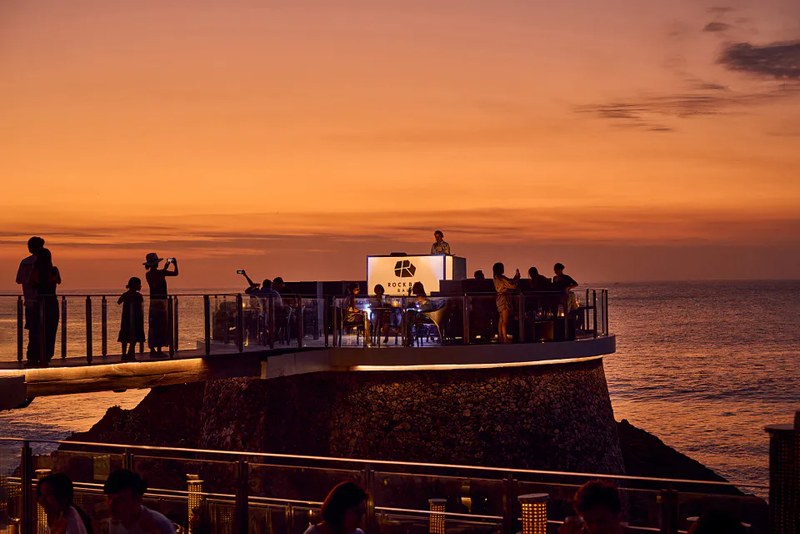
An inclinator carries guests down the AYANA cliff face to Rock Bar, which sits on the rocks at the waterline and runs for about 270 metres, with 880 seats spread across 22 areas. Waves break just beneath the decks, a DJ takes over as the light fades, and the sunset view along the coast explains the queue at the top. This is a polished resort bar with prices to match, best for a drink rather than a cheap night.

Tip: Open 4 pm to midnight. Non-guest minimums: tapas seats IDR 350,000 a head, dinner seats IDR 550,000, both before tax and service of 21%; cards or QR only, and smart dress.

Jimbaran Beach for a swim and the sunset
Photo: Akmaie Ajam / Wikimedia Commons (CC BY-SA 4.0)

06 · Beach

Jimbaran Beach for a swim and the sunset

📍 Central Jimbaran Bay

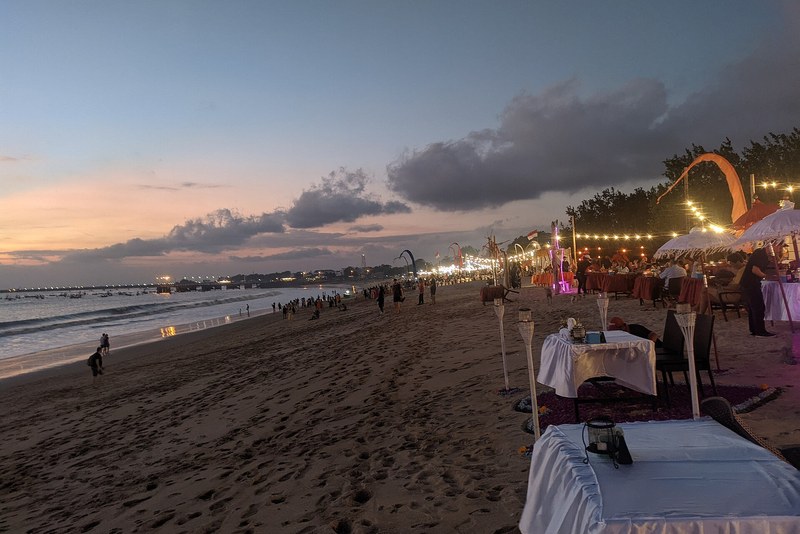
The bay faces west and lies in the lee of the reefs off the airport, so the waves are usually small and the sand slopes gently, making it a kinder swim than Kuta. There is room for long walks, football and family afternoons, and from mid-afternoon locals, joggers and grilled-corn sellers fill the beach. The dry season brings the clearest water and the cleanest sand, and the light turns gold an hour before sunset.

Tip: Stick near the lifeguard posts, give Kedonganan's moored boats a wide berth and skip swimming after a downpour.

07 · Beach

Muaya Beach

📍 Muaya, southern end of the bay

In front of the Four Seasons, the southern corner of the bay feels the calmest and cleanest. The water stays shallow and almost free of current, sheltered where the headland rocks bring the beach to an end. Daytime is quiet, with sunloungers and a handful of cafés. Late in the afternoon the Muaya seafood cafés lay out their tables, and the same sand turns into the busiest dinner spot in Jimbaran.

Tip: Swim before 3 pm, then stay on for a sunset dinner without moving the car.

08 · Nature

Morning beach walk, Kedonganan to Muaya

📍 Kedonganan fish market to Muaya Beach

The sand is Jimbaran's best footpath. Set off from the fish market at about 6:30 am, when jukung outriggers and bigger boats are hauled up and the catch is carried to the stalls. Walk south, passing first the village cafés, then the middle of the bay and finally the resort gardens, until the Muaya rocks stop you after roughly 3 km or 40 to 45 minutes. Because the bay faces west, the rising sun stays behind you over the hills.

Tip: Firm sand at low or mid tide makes it easier going; take a ride home from Muaya or Samasta.

Show all 22 things to do ↓

09 · Temple

Pura Ulun Siwi

📍 Uluwatu Road at Ulun Siwi Road, central Jimbaran

The village's principal temple sits at its main crossroads, with an 11-tiered meru in the inner court. Unusually for Bali, it faces east rather than towards Mount Agung. Local tradition places its origins in the 11th century, though the present buildings are generally dated to the 18th. The temple is bound to the subak, the cooperatives that share out irrigation water, and farmers still collect holy water here to keep pests off their crops.

Tip: Look in from the outer courtyard and gate wearing a sarong and sash; stay out of the inner court during ceremonies unless invited.

10 · Market & Shopping

Jimbaran morning market

📍 Uluwatu Road, opposite Pura Ulun Siwi

Facing the temple, the village market supplies Jimbaran's kitchens and shrines. From around sunrise there is fruit, vegetables, spices, flowers and the palm-leaf trays used for daily offerings, along with stalls selling coffee, jaja rice cakes and nasi bungkus for breakfast. It is a practical market rather than a pretty one, and most of it has packed up by mid-morning. Combine it with the temple and the fish market for an early loop.

Tip: Arrive before 8 am with small notes, and ask before photographing traders.

Garuda Wisnu Kencana (GWK) Cultural Park
Photo by @thaylise_ferreira

11 · Culture

Garuda Wisnu Kencana (GWK) Cultural Park

📍 Ungasan, about 6 km up the hill (15–25 min)

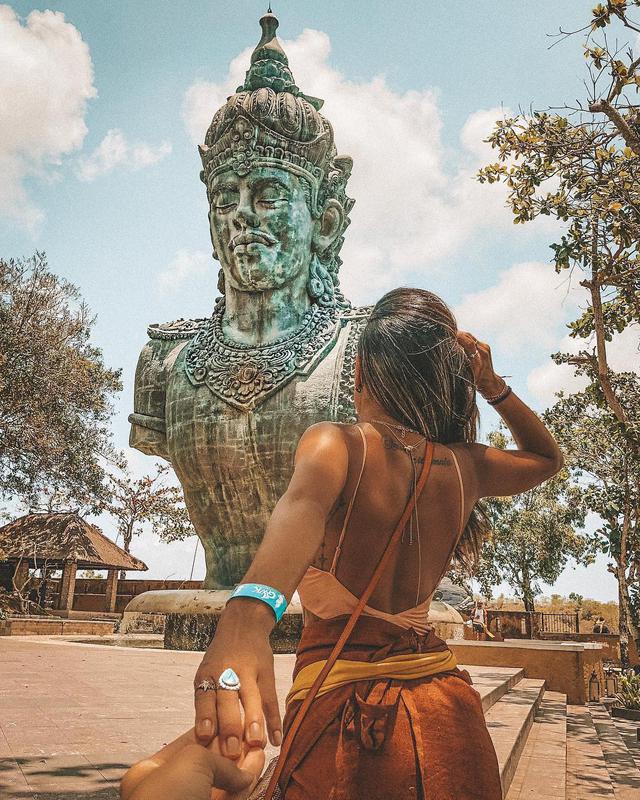
On the hill above the bay stands I Nyoman Nuarta's Vishnu riding the eagle Garuda, 121 metres tall including its pedestal. Paths reach it between sheer walls quarried out of the limestone. Your ticket includes the amphitheatre dances plus a children's animation screened twice a day, and a separate guided tour takes a lift up inside the statue to floors 9 and 23. Allow two to three hours, more if you stay for the evening show.

Tip: Standard tickets are IDR 150,000; the Top of the Statue package costs IDR 400,000. Come once the heat eases after 3 pm and finish with BarAong at 6 pm.

12 · Culture

BarAong evening show at GWK

📍 GWK Cultural Park, Ungasan

BarAong is GWK's modern take on the Barong legend, staged in the park's amphitheatre from 6 to 6:30 pm. It needs its own ticket and has lately run from Wednesday to Saturday. Combined with a late walk round the statue, it is a sound substitute for Uluwatu's Kecak if you would rather skip the temple crowds and the long drive to the tip of the peninsula, and it suits children well.

Tip: IDR 125,000 for the show only or IDR 200,000 with park entry; book online and confirm the show days, which change with the season.

Kecak at Uluwatu Temple
Photo by @hidwii

13 · Culture

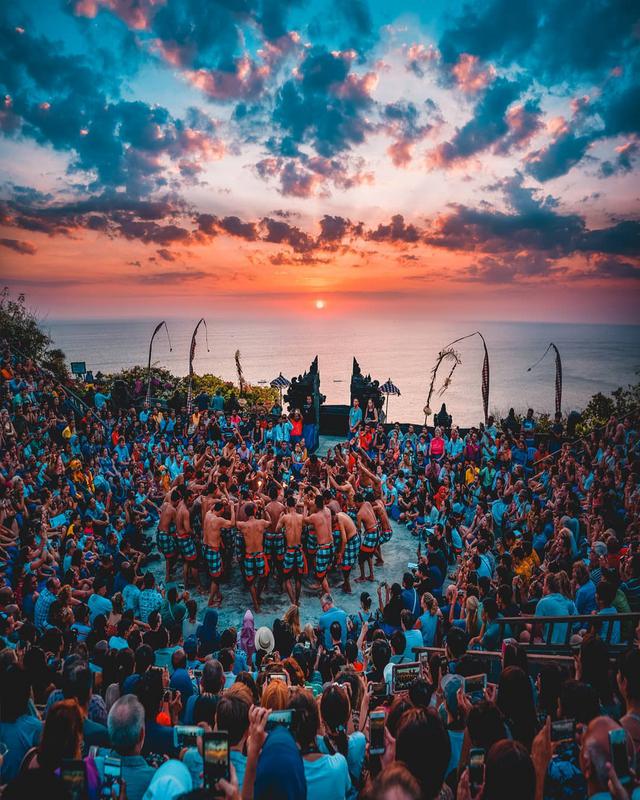
Kecak at Uluwatu Temple

📍 Pecatu, about 15 km south of the bay

The sunset Kecak at Uluwatu is the classic night out from Jimbaran. Beside Pura Luhur Uluwatu, a chorus of around 50 men chants in circles in a cliff-top amphitheatre while dancers act out the Ramayana, and at the 6 pm performance the sun drops into the Indian Ocean behind them. In normal traffic the drive takes 30 to 45 minutes, but the southbound road slows to a crawl in the hours before sunset.

Tip: The Kecak costs IDR 150,000 per adult on top of roughly IDR 60,000 for the temple. Set off by 3:30 pm to join the queue around 4:30 pm.

Tegal Wangi Beach
Photo by @ftrns

14 · Beach

Tegal Wangi Beach

📍 Tegal Wangi Road, below the Karang Mas cliffs

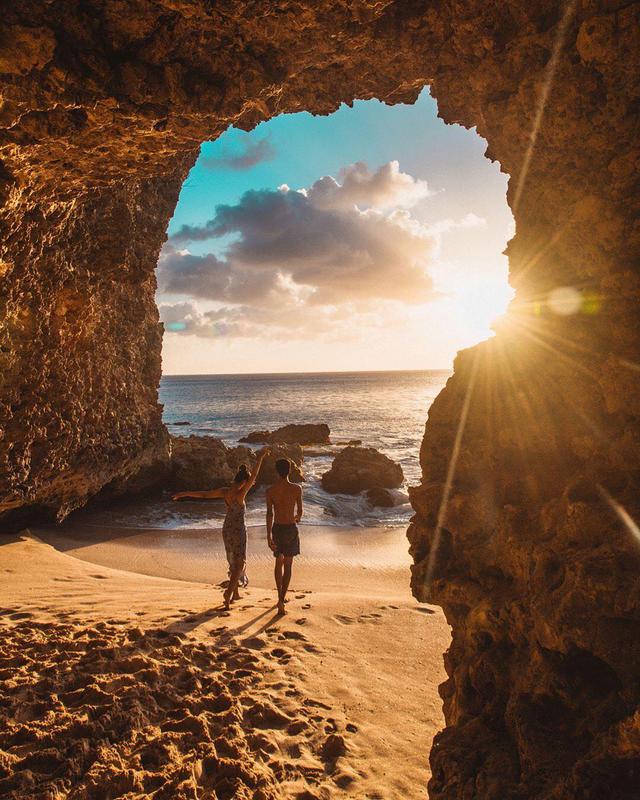
From a small car park near the AYANA estate, a short path and steps lead down to a cove beneath the cliffs. Pura Segara Tegal Wangi watches from above, and two caves open at the far end, the bigger one about 5 metres high. At low tide the reef forms pools that refill with every wave, known as natural jacuzzis. The cove faces west and ranks among Jimbaran's best sunset spots, although the village has closed access at times.

Tip: Confirm the path is open before you go, visit at low tide on a small swell and never swim off the reef edge, where surges build as the tide rises.

Balangan Beach
Photo by @gingerspierings

15 · Beach

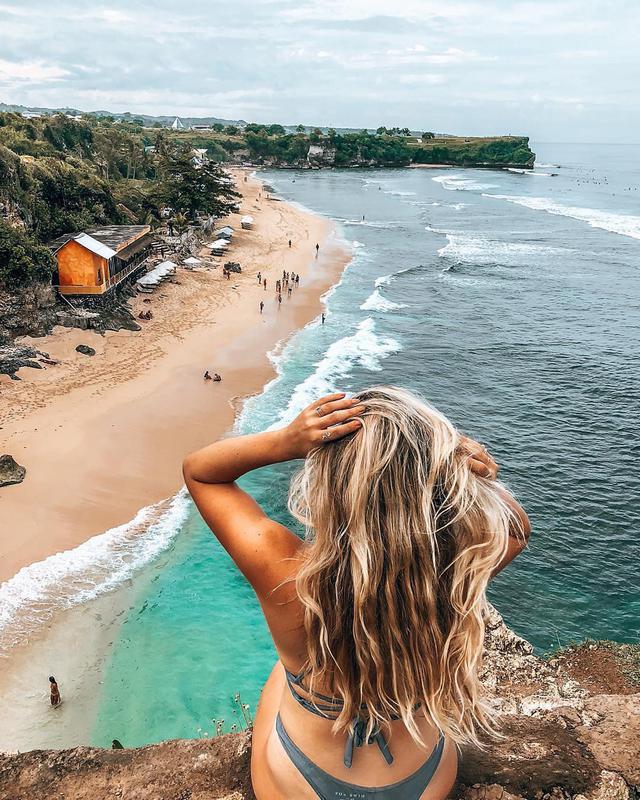
Balangan Beach

📍 Northern Bukit, roughly 13 km by road

Jimbaran's nearest surf beach lies on its boundary with Pecatu. Low cliffs back a long stretch of sand, and the warungs and surf schools cluster at its northern end. On medium days the reef wave belongs to intermediates; when it drops small, confident beginners can manage it. Low tide leaves the reef bare, so swim at high tide in reef shoes, then climb the headland at the far end to watch the sun go down.

Tip: A 25–35 minute drive; scooters park for about IDR 5,000, cars IDR 10,000. Badung issued zoning warnings in 2025, so some warungs may change.

16 · Family

Samasta Lifestyle Village

📍 Wanagiri Road, above Muaya

Samasta is Jimbaran's small open-air mall, laid out around courtyards in the style of a Balinese village and linked to the Mövenpick. You will find a Timezone arcade, Gaya Gelato, a handful of shops and several restaurants, while the plaza hosts free Balinese dance and live music. Ten minutes' walk up from Muaya, it is the easy fallback for families when it rains or when everyone has had enough sun.

Tip: In 2025 free Barong shows ran at 5:30 and 7 pm, with a Sunday Kecak at 8 pm; check Samasta's Instagram for the current programme.

17 · Adventure

Boat surf trips to Airport Right and Toro Toro

📍 Reefs off the runway, by boat from Jimbaran

Some of south Bali's best waves break on the reefs off the end of the runway, and the shortest, cheapest boat rides from Jimbaran serve two of them. The first, Airport Right, is a long, fast and sometimes hollow right-hander, fine for intermediates at shoulder to head height and for experts when it gets bigger. The second, Toro Toro, peels slowly and predictably, giving long rides on medium swells. Neither is a wave for beginners.

Tip: Go early; April and October usually bring the lightest winds. Agree the fare and pickup time before heading out.

18 · Adventure

Beginner surf at Muaya on big-swell days

📍 Muaya, in front of the Four Seasons

Usually the bay is too sheltered for surfing. When a large swell closes out the Bukit reefs, though, soft rolling whitewater reaches Jimbaran and Muaya becomes a favoured spot for learners: no current, simple access and a sandy entry. At high tide a little peak breaks opposite the lifeguard hut, while the central bay only breaks on the very biggest days of the year.

Tip: Book a surf school that picks the spot by swell; on small days it will take you somewhere else.

19 · Viewpoint

Plane spotting at Kelan Beach

📍 Kelan, beside the runway, 1 km north of the fish market

Kelan beach lies just north of the fish market on the southern flank of the runway, which juts out into the sea. Jets take off and land close by, and simple seafood stalls put tables on the sand. Walk up the beach from Kedonganan, about a kilometre, and stay for sunset as aircraft pass low over the water. It is louder than anywhere else on the bay, which is rather the point.

Tip: Late afternoon gives the softest light; keep well back from the airport fence, which security staff patrol.

20 · Culture

SAKA Museum

📍 AYANA estate, Karang Mas Sejahtera Road

Named after the Balinese Saka calendar, this museum on the AYANA estate is built around Nyepi, the Day of Silence. Displays cover the Melasti purification, the ogoh-ogoh effigies paraded on the eve of Nyepi and Tri Hita Karana, the principle of balance between people, nature and the divine. Workshops teach Balinese dance, canang offering-making and ogoh-ogoh modelling in clay. A visit takes about 45 minutes.

Tip: Open 10 am to 6 pm. Non-guests pay an entry fee, and workshops need booking ahead.

Thalassotherapy pool and Spa on the Rocks
Photo by @ayanaspabali

21 · Wellness

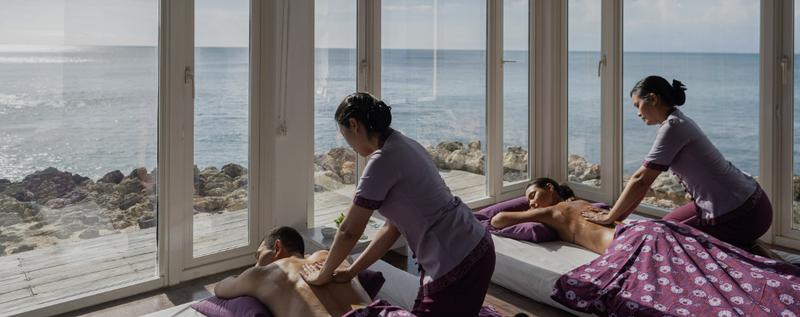
Thalassotherapy pool and Spa on the Rocks

📍 AYANA estate, Karang Mas Sejahtera Road

The AYANA spa spreads over 2.2 hectares of cliff. Its thalassotherapy pool, filled with mineral-rich Indian Ocean water, extends out towards the sea, while Spa on the Rocks is a separate glass-walled treatment villa down on the rocks, where waves hit the glass during your massage. It is the splurge for a hot afternoon, with Rock Bar next door for the sunset afterwards.

Tip: Spa on the Rocks takes bookings from 9 am until 6 pm and the pool stays open 10 am to 7 pm; reserve via the spa's WhatsApp.

22 · Food & Drink

Balinese cooking class with a market visit

📍 Jimbaran markets, Tanjung Benoa and the AYANA estate

Two schools build their lessons on Jimbaran's produce. Bumbu Bali, opened in Tanjung Benoa in 1997 by the Swiss chef Heinz von Holzen, begins its morning class with a walk round the Jimbaran market, then cooks your purchases in its own kitchen. Up on the cliffs, AYANA runs its own school in an open-air kitchen next to RIMBA, where a morning session lasting until 1 pm covers Balinese and Indonesian recipes; children aged 8 and over can join.

Tip: Bumbu Bali's class has recently run on Wednesdays; reserve either class a few days ahead.

Itinerary

How to spend your days in Jimbaran

Jimbaran in a day

A day built around the bay and mostly on foot, about 5 km in all, with two short rides of roughly 4 km each to Rock Bar and back.

  1. 6:30

    Watch the boats unload at the Kedonganan fish market, then pay a market warung to grill your pick for breakfast.

  2. 8:00

    Walk inland about 1.9 km (25 minutes) to Pura Ulun Siwi and the morning market at the Uluwatu Road crossroads.

  3. 9:15

    Head 500 metres down Pemelisan Agung Road to the beach and follow the sand about 1.3 km south to Muaya.

  4. 10:00

    Swim at Muaya while the bay is flat and the beach still empty.

  5. 12:30

    Climb roughly 900 metres to Samasta for lunch out of the midday sun.

  6. 15:00

    Rest at the hotel, or book an afternoon at the AYANA spa.

  7. 16:00

    Take a car the 4 km to Rock Bar, timed for the doors opening at 4 pm, and order a drink above the waves.

  8. 17:30

    Return the 4 km to the Muaya cafés, choose your fish and agree the price before it is grilled.

  9. 18:15

    Eat on the sand as the sun drops and the evening flights line up over the bay.

Jimbaran in three days

The bay on day one, the cliffs on day two and the wider Bukit on day three, with a different sunset each evening.

  1. Day 1, 6:30

    Fish market at first light; afterwards, have a Kedonganan warung grill what you bought for breakfast.

  2. Day 1, 11:00

    Walk the beach south to Muaya for a swim, then find shade and gelato at Samasta.

  3. Day 1, 17:30

    Sunset seafood dinner at one of the Muaya cafés.

  4. Day 2, 8:00

    Pura Ulun Siwi and the village market, followed by the SAKA Museum or AYANA's cooking class.

  5. Day 2, 14:00

    Tegal Wangi's rock pools at low tide if the path is open; otherwise the AYANA spa.

  6. Day 2, 16:00

    Rock Bar from opening, then dinner on the AYANA estate: teppanyaki at Honzen or charcoal-grilled yakiniku at Sumizen.

  7. Day 3, 7:00

    Surfers take a boat out to Airport Right; on a big swell, beginners book a Muaya lesson; everyone else drives to Balangan and swims at high tide.

  8. Day 3, 15:00

    GWK in the late afternoon with the 6 pm BarAong (Wednesday to Saturday), or leave at 3:30 pm for the Uluwatu Kecak.

  9. Day 3, 19:30

    Back at the bay for grilled fish at Kedonganan's village-run cafés.

Jimbaran on a rainy day

When storms roll in, most often from November to March, the AYANA estate and Samasta keep the day under cover, and every transfer is a short ride.

  1. 9:30

    Cooking class at AYANA's school beside RIMBA, which runs until 1 pm; book a few days ahead.

  2. 13:00

    Dim sum lunch at Liu Li Palace, the Cantonese restaurant inside RIMBA.

  3. 14:30

    The SAKA Museum on the same estate, about 45 minutes, or a treatment at the AYANA spa.

  4. 16:30

    Samasta Lifestyle Village for the Timezone arcade, Gaya Gelato and, when scheduled, a free dance show.

  5. 19:00

    Dinner indoors on the AYANA estate: yakiniku in a private room at Sumizen or omakase sushi at Honzen.

Longer trip? Plan up to seven days from Jimbaran or browse our Bali itineraries.

Where to stay

Hotels and villas in Jimbaran

All stays in Jimbaran →

Where to eat

Restaurants and cafés in Jimbaran

All restaurants in Jimbaran →

Seasons

Best time to visit Jimbaran

April to October is Jimbaran's best stretch. Dry skies keep the sunsets clear for dinner on the beach, south-east trade winds blow offshore and flatten the bay, and the sand stays clean. Those months also bring the big southern swells that switch on the airport reefs and, on the largest days, Muaya; boat trips are usually least windy in April and October. Reserve a beach table for sunset in July, August and over Christmas and New Year, the peak weeks.

From about November to March the rains arrive. A sudden downpour can cut a beach dinner short, and the cafés then move everyone under cover. Rubbish is the bigger issue: the west monsoon, from roughly October to April, drives plastic and driftwood onto Badung's west coast, typically worst from late December to early February. In early 2026 Badung was collecting 400 to 500 tonnes a day along its shoreline and named Jimbaran among the hardest-hit beaches. Close to 300 cleaners rake the sand each morning, yet fresh debris often lands by the afternoon.

Balinese holidays shape a visit too. On Nyepi, the Day of Silence, due on 8 March 2027, the airport, beaches and shops shut for 24 hours and hotel guests remain inside. In the days leading up to it, coastal villages carry their temple heirlooms down to the sea for the Melasti purification. The sun sets earliest, at about 6:05 pm, in May and June, and latest, close to 6:45 pm, in January and February.

Getting there

How to get to Jimbaran

  • Ngurah Rai Airport (DPS)15–30 minutes

    About 6–8 km by car: the fixed-fare taxi desk in arrivals, a ride-hailing car from the pickup zone (no motorbike pickups) or a hotel transfer. Allow extra time near sunset.

  • Kuta20–35 minutes; 45–60 before sunset

    8–12 km by car or scooter through Tuban and along the bypass; the toll road does not help on this route.

  • Seminyak45–60 minutes

    13–15 km via Sunset Road and the bypass, slowest between about 4 and 7 pm.

  • Uluwatu20–45 minutes; over an hour from 4 to 6 pm

    12–15 km on Uluwatu Road by car or scooter. Dreamland and Bingin are the near end, the temple the far end.

  • Nusa Dua20–30 minutes

    About 10 km along the bypass by car or scooter.

  • Sanur30–45 minutes

    Use the bypass or the Bali Mandara toll road, 18–22 km; anyone on a scooter must carry an e-money card to pay the toll.

  • Canggu1–1.5 hours

    About 22 km by car via Sunset Road and the bypass; longer in the evening rush.

  • Ubud1.5–2 hours

    About 37 km with a private driver, through Denpasar and along the bypass.

Getting around Jimbaran

On the bay, the beach is the road. A walk along the shore from the fish market at Kedonganan down to the Muaya rocks takes 40 to 45 minutes, and every café cluster has its own beach entrance. Inland, the pavements on Uluwatu Road are narrow or missing, so a short hop between the village centre and the beach is fine, but longer walks along the main road are unpleasant.

For the hill side, meaning Rock Bar, GWK, Balangan and Uluwatu, book a ride-hailing car, a Bluebird taxi or a car with driver. Confident riders will find a scooter cheap and handy, though Uluwatu Road is steep, busy and full of tour coaches. Traffic peaks between about 4 and 7 pm as sunset-chasers head south through the bypass junction, so set off for Uluwatu by 3:30 pm or after 7 pm.

Keep small notes for parking: at the fish market scooters pay IDR 2,000 and cars IDR 5,000, and other beaches charge much the same. Expect roadworks at the Simpang Kampus Unud junction, where an underpass is planned for 2026 to 2027.

Know before you go

Jimbaran tips that save time

  1. 01At any seafood café, ask for the rate per 100 g or per kilo, watch it being weighed, snap the scale and agree the full bill before cooking starts.
  2. 02Look for '++' on menus: at resort venues such as Rock Bar, tax and service add roughly a fifth to the bill.
  3. 03Choose a café by walking the sand and comparing the ice trays and price boards yourself, not on a tout's or a driver's say-so.
  4. 04Cash covers the fish market, its cooking warungs and parking; Rock Bar accepts only cards and QR payments.
  5. 05Wear closed shoes to the fish market, ideally from 6 to 9 am; melting ice leaves the floor wet.
  6. 06Light sleepers should stay at the Muaya end or up on the hill; Kedonganan is closest to the runway.
  7. 07Be at Rock Bar for the 4 pm opening and dress smartly: tank tops, sleeveless shirts and surf shorts are turned away.
  8. 08From late December to February, check the state of the sand each morning before committing a day to the beach; a stormy night can bring rubbish in.
  9. 09Pay Bali's IDR 150,000 levy for foreign visitors before you travel, using only the official Love Bali website or app.

FAQ

Jimbaran questions, answered

What makes Jimbaran worth the trip?

+

Three things: a seafood dinner at a table on the sand as the sun sets, a calm and sandy bay for swimming, and the shortest airport transfer of any Bukit resort area. The fish market at dawn and Rock Bar are each worth the journey too. Anyone after clubs, cliff-top views, reef breaks or a street of cafés to browse will be happier spending most nights in Kuta, Uluwatu or Seminyak.

Should I base myself in Jimbaran?

+

Yes, if peaceful nights, soft sand and short transfers matter more than nightlife; couples and families do well here. The airport is 15 to 30 minutes away, Uluwatu 20 to 45 and Nusa Dua 20 to 30. Pick Muaya or the hill for less aircraft noise, and Kedonganan or the village for lower prices. Most outings beyond the beach need a ride-hailing car or a driver.

How are seafood dinners priced, and how do I avoid paying too much?

+

The cafés charge by weight, quoted per 100 g or per kilo. You choose your fish or shellfish from the ice or a tank, it goes on the scale, and the bill follows that weight plus drinks and any tax. Ask the unit price, watch the weighing, take a photo of the reading and fix the total before cooking. As a benchmark, snapper sold for IDR 90,000–140,000 a kilo at the Kedonganan market in early 2026.

Which seafood strip is best: Kedonganan, the central bay or Muaya?

+

The grilled fish tastes much the same along the whole bay, so choose by setting. Muaya, next to the Four Seasons, has the most tables on the sand and the calmest water for a swim beforehand. The central bay, off Pemelisan Agung Road, is the simplest cluster and home to Warung Ramayana, cooking since 1990. Kedonganan's 24 village-run cafés sit beside the fish market, with planes passing low overhead.

Is the sea at Jimbaran safe for swimming?

+

Generally, yes. The reefs off the airport shelter the bay, so waves are usually small and the sand shelves gently, and Muaya at the southern end is the calmest corner of all. Swim near the lifeguard posts and away from the boats moored at Kedonganan. After heavy rain, stay out: in the wet season river runoff and rubbish reach the bay.

How long is the drive from the airport to Jimbaran?

+

Usually 15 to 30 minutes for 6 to 8 km, which puts Jimbaran second only to Kuta for a quick beach transfer from Ngurah Rai. Use the fixed-fare taxi desk in arrivals, a ride-hailing car from the pickup zone or a hotel transfer. Build in more time around sunset, when the bypass and Uluwatu Road back up.

Will aircraft noise be a problem?

+

Only at the north end. The runway runs out into the sea beside Kedonganan, and planes take off and land in full view of the bay. The noise fades towards Muaya and on the hill, where most of the large resorts stand. Light sleepers should avoid rooms in Kedonganan and Kelan and ask for one facing away from the runway.

Does Rock Bar take bookings, and how much should I budget?

+

Non-guests can reserve through AYANA's TableCheck page, though part of the seating is first come, first served, so arriving when the doors open at 4 pm is the surest approach. Budget at least IDR 350,000 a head at a tapas table or counter, or IDR 550,000 at a dinner table (October 2026 rates), before 21% tax and service. Cash is not accepted; pay by card or QR.

What time should I go to the fish market?

+

Aim for about 6 to 9 am, when boats are unloading and the choice is widest. The Kedonganan market keeps trading into the afternoon, and at weekends stalls stay open into the evening, but by midday the selection thins and some fish has been sitting on melting ice. Entry is free; scooter parking costs IDR 2,000.

When is the beach at its cleanest?

+

From April to October it is usually clean. The west monsoon brings plastic and timber onto Badung's beaches in the wet season, worst from late December to early February, and in early 2026 Jimbaran was listed among the hardest-hit stretches. Cleaners clear the sand each morning, but a stormy night can deliver a fresh load.

How many days does Jimbaran need?

+

One full day handles the highlights: dawn at the fish market, a morning swim at Muaya, drinks at Rock Bar and a seafood dinner on the beach. With two or three days you can fit in GWK, the Uluwatu Kecak, Tegal Wangi's rock pools, Pura Ulun Siwi and the SAKA Museum. With the airport so close, many travellers also book their first or last night of a Bali trip here.

Nearby

Where to go after Jimbaran

Read next

More Jimbaran guides on the Blog