Baligasm
Baligasm

Destination guide · Bukit Peninsula

Nusa Dua Area Guide

Reef-calm beaches, polished resorts and a seafront path made for sunrise.

By the Baligasm editors · Updated 29 October 2026

Area brief

What Nusa Dua is really like

Set behind security gates on the Bukit Peninsula's eastern shore, Nusa Dua is a planned resort zone about 13 km south of Ngurah Rai airport, or 25 to 45 minutes by car on the toll road. Behind its guarded entrances sit more than 20 large resorts, reef-calmed beaches and a seafront promenade of roughly 7 km. It suits families, couples and first-time visitors after an easy resort break. Allow three to five days; one covers the sights.

The enclave was planned rather than grown. Indonesia drafted its master plan in the early 1970s as the World Bank's first tourism project in the country, and the state developer now known as ITDC opened the first hotel in 1983. Today roughly 350 hectares hold over 20 big resorts, most rated five stars. The name translates as 'two islands', a nod to Peninsula Island and Nusa Dharma, the pair of rocky islets off the central beach. Nusa Dua is also the country's favourite summit venue: Miss World and APEC came in 2013, the IMF and World Bank held their annual meetings here in 2018, and G20 leaders gathered in 2022.

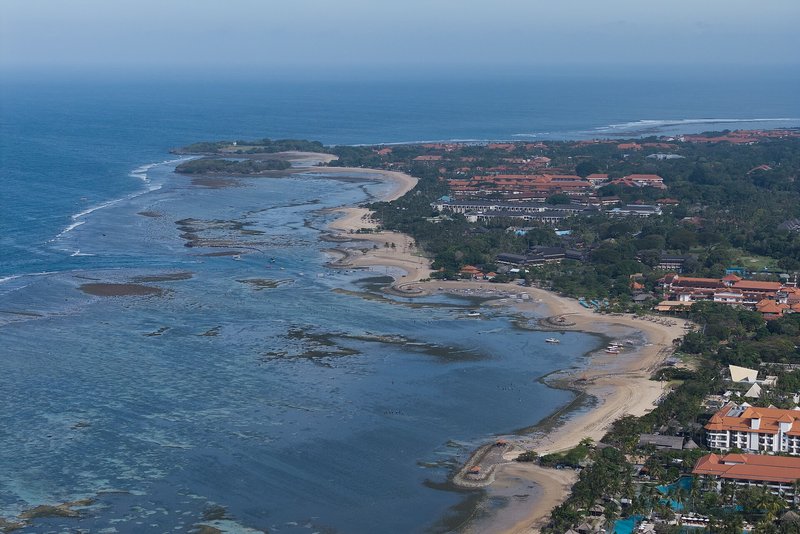
Life inside the three guarded gates resembles a tidy campus more than a Balinese town. Lawns are wide, roads are swept, guards inspect cars on the way in, and a paved promenade ties the beaches together from the Ayodya end up into Tanjung Benoa. An offshore reef keeps the sea calm, which has drawn families for decades. The flip side is that nobody strolls the streets at night. Dinner happens in hotels or at Bali Collection, an open-air mall, the Devdan stage show is the big night out, the roads go quiet by ten, and security tightens whenever a big conference is under way.

Resort restaurants charge international prices, so many guests slip out to Bualu, just west of the gates, where warungs on Pantai Mengiat Road and Srikandi Road dish up babi guling and nasi campur for a fraction of the cost. To the north, Tanjung Benoa is the noisy watersports strip, with parasails and banana boats busy most mornings. To the south, Sawangan and Geger hold the newest cliff and beach resorts and a calmer shore where villagers still farm seaweed in the shallows.

Change here comes in small steps. A weekly Kecak and Barong show began on Peninsula Island in 2023, steel frames for coral regrowth went into the water in 2021 under a national reef programme, and the Bali National Golf Club shut in July 2025 for a rebuild due to finish in early 2027. Next to Uluwatu, Nusa Dua is flat and effortless, with no cliff stairs, no surf-town buzz and no sea sunset, as the coast looks east. Next to Sanur it is more polished and more cut off, with few cafés on foot. Hire a driver for anything beyond the gates.

Best for
Families, couples and effortless resort breaks
Vibe
Gated, groomed resort enclave beside calm water
From the airport
About 13 km, 25 to 45 minutes via the toll road
Days needed
Three to five; a single day covers the sights
Best time
April to October for dry, sunny beach weather
Getting around
Promenade and shuttles inside the gates; ride-hailing or a driver outside

Nusa Dua suits you if…

  • ✓Families with small children who need shallow, sheltered water
  • ✓Couples after a big resort, a spa and peaceful evenings
  • ✓First trips that start close to the airport
  • ✓Early risers: around 7 km of level seafront for walking and running
  • ✓Watersports at Tanjung Benoa and, for experts, wet-season reef surf

Skip it if…

  • ✕You want bars to hop between or a lively street after dinner
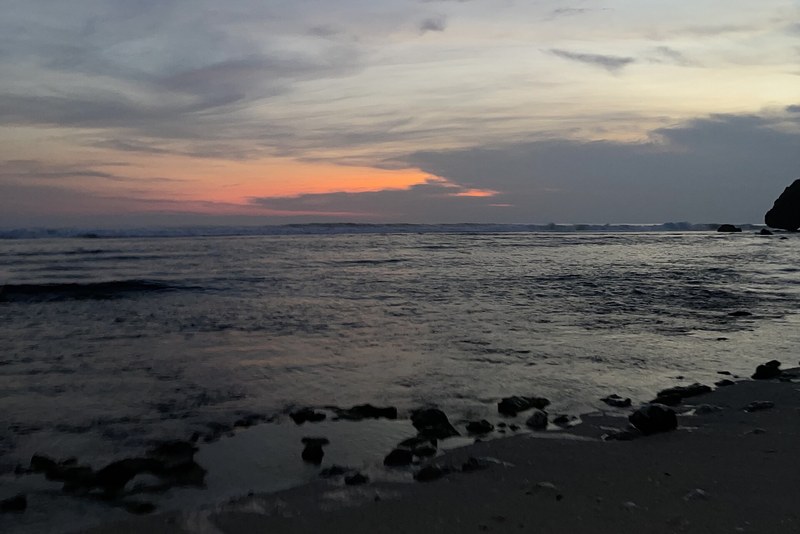
  • ✕Sea sunsets matter to you: this coast faces the sunrise
  • ✕Your budget is tight and you will not leave the enclave to eat
  • ✕You hope for rice paddies or village life on the doorstep
  • ✕Depending on taxis and shuttles frustrates you: little beyond the gates is walkable

Neighbourhoods

Which part of Nusa Dua to stay in

01

The ITDC enclave (central Nusa Dua)

The gated heart, with security posts on all three gates day and night, contains most of the large resorts, along with both convention centres, Museum Pasifika, the Devdan theatre, Bali Collection, the main beach and its promenade. It is spotless and quiet, and the beach path and a free shuttle connect it all, so you can go days without a car. What you give up is value and atmosphere: meals cost resort prices, and the streets are close to deserted after dark.

Best for: First-timers and families who want everything within the gates

02

Tanjung Benoa

North of the enclave, this thin spit of sand is livelier and less expensive. Watersports operators crowd its eastern shore, while Pratama Road holds mid-range hotels, homestays and restaurants. At the tip, the old fishing village keeps a mosque, a Hindu Pura Dalem and a Chinese temple a few minutes' walk apart. The sand is less groomed and boats churn the water, yet you can still walk the promenade into the enclave.

Best for: Watersports fans and anyone wanting resort access on a smaller budget

03

Bualu and Pantai Mengiat Road

Just west of the gates, Bualu is the working town where most of the affordable food lives. Pantai Mengiat Road and Pintas Siligita Road are lined with warungs, seafood grills, minimarts, laundries and massage shops, and Srikandi Road is home to the area's most famous babi guling. Guesthouses and small hotels cost far less than beachfront rooms. Reaching the main beach means a short ride or a longer walk via the Mengiat side of the enclave.

Best for: Budget travellers and long stays who want local food close by

04

Sawangan and Geger

Below the enclave the shore turns into low cliffs and emptier sand. The newer luxury resorts cluster here, among them The Mulia, the terraced Apurva Kempinski, the Hilton and Samabe, alongside Geger Beach, its clifftop temple and the seaweed beds of Peminge village. Little exists outside the hotels, and central Nusa Dua is too far to walk, so most guests rely on complimentary resort shuttles.

Best for: Honeymooners and luxury stays seeking privacy

05

Kampial (inland)

Kampial spreads across the low hills behind Bualu: housing estates, neighbourhood shops and villas let for long stays. Puja Mandala, the complex of five houses of worship, is here, and the feel is everyday South Bali rather than resort land. Villas offer good value for families and groups, but the beach is out of walking range, so every trip needs a driver, a scooter or a ride-hailing car.

Best for: Villa groups and longer mid-range stays

06

Kutuh and the Pandawa side

Head south-west from Sawangan and the road climbs onto limestone uplands around Kutuh, Pandawa and Gunung Payung, a 20 to 30-minute drive from the gates. Here is the rugged fringe of Nusa Dua, with beaches cut into cliffs, paragliders drifting above the Timbis cliffs and villa estates looking out to sea. Pandawa fills with domestic visitors at weekends and you need your own transport, but Uluwatu's beaches and GWK are nearer than they are from the enclave.

Best for: Villa groups wanting sea-view cliffs and easy access to both coasts

Top sights · 22 picks

Things to do in Nusa Dua

Nusa Dua Beach (Mengiat Beach)
Photo: FBilula / Wikimedia Commons (CC BY 4.0)

01 · Beach

Nusa Dua Beach (Mengiat Beach)

📍 Central ITDC enclave

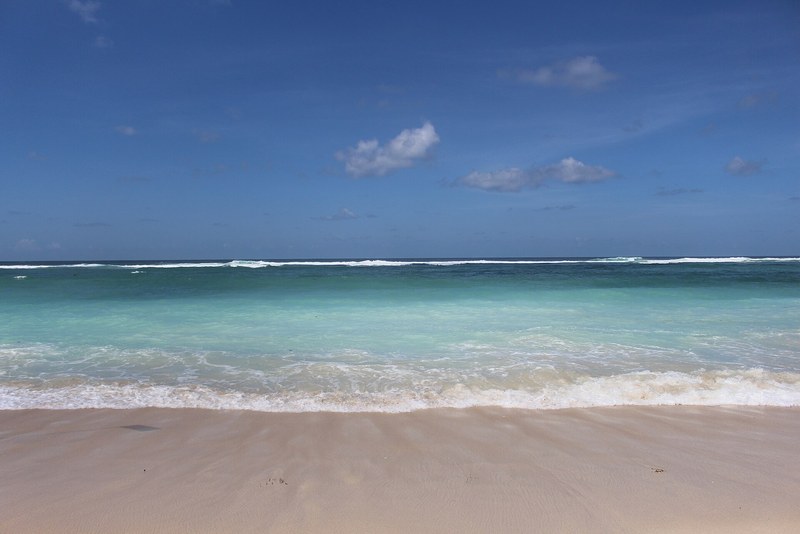
Locals often call the main beach Mengiat, and it fronts the big resorts at the centre of the enclave. Swell breaks on the offshore reef, leaving clear, calm water inside that is shallow enough for toddlers to splash in. The sand is soft and pale, resort lawns run right down to it, and because it faces east it catches the sunrise. Hotel guests get some of the loungers, though public ones can be rented further along the promenade.

Tip: Access is free apart from a small parking charge at Mengiat; swim from mid to high tide, as low water leaves patches too shallow.

02 · Nature

The Nusa Dua beach promenade

📍 Ayodya end north to Tanjung Benoa

Roughly 7 km of paved path traces the shoreline from the Ayodya end of Nusa Dua, through the resort gardens and on into Tanjung Benoa. Smooth and level, it works for buggies and wheelchairs and is the best stretch on the Bukit for a dawn walk, a run or an easy bike ride. Beach bars and public sunloungers dot the route, and covering the full length on foot takes one to two hours.

Tip: Set out by 6:30 am for sunrise and cooler air; bikes can be hired near the path, and any hotel lobby will call a taxi back.

Geger Beach and Pura Geger
Photo: Devianagloria / Wikimedia Commons (CC BY-SA 4.0)

03 · Beach

Geger Beach and Pura Geger

📍 Sawangan, just south of the enclave

At the quieter southern end of Nusa Dua's sand, next to The Mulia in Sawangan, lies Geger. Pura Geger Dalem Pemutih crowns a low headland above it and frequently holds ceremonies; visitors may walk the outer grounds, but the inner courtyards are closed. The sea is calm enough to swim, and seaweed grows in farmed plots in the shallows. South of the temple wall, a path leads down to a smaller cove among limestone rocks, best visited at low tide.

Tip: Use the public entrance and car park beside The Mulia, since resorts do not let day visitors cut through; bring a sarong for the temple.

Waterblow
Photo: Chapsorini / Wikimedia Commons (CC BY-SA 4.0)

04 · Viewpoint

Waterblow

📍 Peninsula Island, central enclave

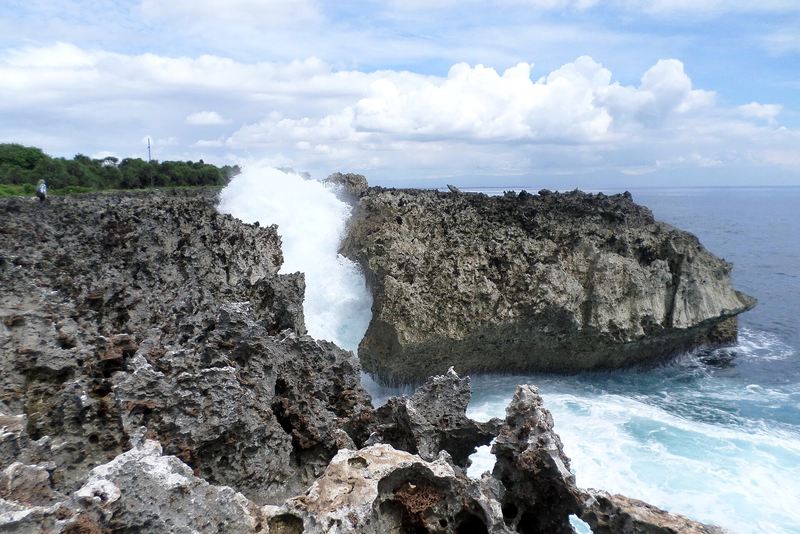
Behind the Grand Hyatt on the seaward side of Peninsula Island, ocean swell is squeezed into a slot in the limestone and explodes upwards as a curtain of spray. Walkways lead to viewing decks over the rocks. The show depends on a high tide and a decent swell; on a calm day at low water there is barely a splash, which explains the mixed reports. On a good day it is the most dramatic sight in Nusa Dua.

Tip: Foreign visitors pay about IDR 25,000 in cash; look at the tide and ask at the booth how the sea is behaving, with July to October bringing the biggest swells.

05 · Nature

Peninsula Island and Nusa Dharma

📍 End of the main beach, central enclave

The two islets behind Nusa Dua's name lie at the far end of the main beach. Peninsula Island, the bigger of the pair, is landscaped parkland with a 15-minute loop path, a large Krishna and Arjuna statue, event lawns, an open-air stage and the Waterblow along its outer rim. Little Nusa Dharma, to the north, has a garden, a small Hindu shrine and views back down the coast towards Tanjung Benoa.

Tip: Come in the late afternoon, catch the Waterblow if the tide is high, and stay for Friday's Kecak at the Taksu Art Stage on the same island.

06 · Culture

Puja Mandala

📍 Kampial, about 4 km by road west of Bali Collection

Five active places of worship share a 2.5-hectare hillside in Kampial. Pura Jagat Natha serves Hindus, Ibnu Batutah is the mosque, Buddha Guna the vihara, Bukit Doa the Protestant church, and Maria Bunda Segala Bangsa its Catholic neighbour. Opened in 1997, the complex was built as a public statement of religious harmony beside Bali's largest tourism zone. Every building is in daily use, so admire them from the courtyard and go inside only where doors stand open.

Tip: Free to enter, donations appreciated. Allow 20 minutes, cover shoulders and knees, and come outside Friday noon prayers or Sunday worship if you want calm.

07 · Culture

Devdan: Treasure of the Archipelago

📍 Bali Nusa Dua Theatre, near Bali Collection

Staged at the Bali Nusa Dua Theatre, this large production tells of two children who stray from a tour group, discover a chest of sacred heirlooms and are swept across Indonesia, from Bali and Java to Sumatra, Kalimantan and Papua. Expect a loom dance, fire dancing, ballet and an aerial duet in a Kalimantan jungle set, with a few performers drawing the audience in. It is slick entertainment rather than temple ritual, and it works well for families and wet evenings.

Tip: Shows at 7:30 pm on Monday, Wednesday, Friday and Saturday, lasting just over an hour; the side-view category C seats are fine, and booking online costs less.

08 · Culture

Kecak and Barong on Peninsula Island

📍 Taksu Art Stage, Peninsula Island

An open-air amphitheatre on Peninsula Island seating around 600, the Taksu Art Stage has hosted a weekly show since 2023. It begins with the Barong, the lion-like guardian of Balinese myth, then moves into a Kecak drawn from the Ramayana. Compared with the famous cliff-top Kecak at Uluwatu, it is smaller and more relaxed, with no temple path to climb and no monkeys. On Saturday evenings through the second half of 2026, the same stage also presents Cipta Rwa Loka, a newer production.

Tip: Fridays 6–7 pm for about IDR 150,000; Cipta Rwa Loka on Saturdays at 7 pm for about IDR 200,000. Seating is outdoors, so rain can cancel.

Show all 22 things to do ↓

09 · Culture

Museum Pasifika

📍 Block P, central enclave

Eight pavilions around a garden in the enclave's Block P house Museum Pasifika, whose 11 rooms display around 600 pieces by some 200 artists drawn from 25 Asian and Pacific nations. The Bali galleries are the highlight, with Le Mayeur's dancers alongside Miguel Covarrubias, Rudolf Bonnet, Theo Meier and Willem Hofker, plus a scattering of European names including Paul Gauguin. An hour is about right, and the audio guide is free.

Tip: Open daily 10 am to 6 pm; the rooms lack air conditioning, so arrive at opening. Ninety-minute painting and batik classes are also offered.

10 · Adventure

Snorkelling and diving the Nusa Dua reef

📍 Off Tanjung Benoa and the central beach

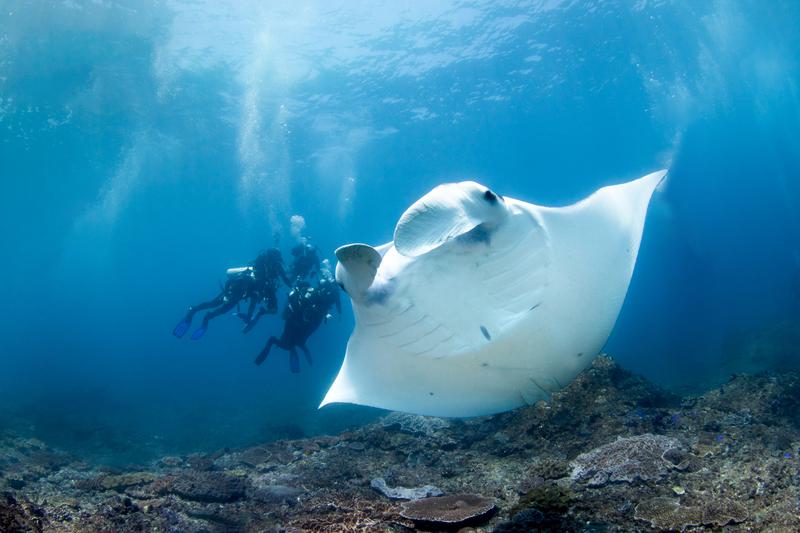
Offshore, the reef slopes from about 5 to 16 metres, with table and soft corals, clownfish and nudibranchs, and on a clear day you can see 10 to 25 metres. Tanjung Benoa boat operators run short snorkel outings, while dive shops offer local reef dives and boat trips to Nusa Penida, around an hour away. Nusa Dua also forms part of a national coral-garden restoration effort, with steel frames placed on the seabed in 2021.

Tip: Go early, before the wind roughens the sea; ask whether a guide gets in the water with you, and check masks and life jackets fit before leaving.

Pandawa Beach
Photo: Riska Diamitri / Wikimedia Commons (CC BY-SA 4.0)

11 · Beach

Pandawa Beach

📍 Kutuh, about 11 km south-west

Twenty to thirty minutes away in Kutuh, the access road to Pandawa slices through towering white cliffs, where niches hold statues of the five Pandawa brothers of the Mahabharata and their mother, Kunti, before reaching a long, reef-protected beach. The turquoise water is calm, kayaks are available, and lifeguards patrol a flagged zone on the western side. Domestic families crowd it at weekends, when an open-air stage at the western end hosts a Kecak fire dance in the evening.

Tip: Foreign adults pay about IDR 25,000 and children IDR 15,000; a two-person kayak is about IDR 50,000. The Kecak usually begins around 6 pm, so confirm the day before.

12 · Temple

The temple quarter of Tanjung Benoa

📍 Northern tip of Tanjung Benoa

Three faiths sit within a few minutes' walk of each other in the old fishing village at the top of Tanjung Benoa. Caow Eng Bio, a Chinese temple on Segara Ening Road, is dedicated to the sea goddess Shui Wei and the 108 brothers who protect the Hainanese community; the story goes that Hainan traders built it after riding out a storm, on land granted by the king of Badung. Close by stand the carved triple gateway of Pura Dalem Ning Lan Taman Beji and the village mosque.

Tip: Visit in the morning, dress modestly and ask before photographing worshippers; the lanes are tight, so arrive by scooter taxi or bicycle rather than car.

Babi guling and warungs in Bualu
Photo by @kokocelamitan

13 · Food & Drink

Babi guling and warungs in Bualu

📍 Srikandi Road, Bualu

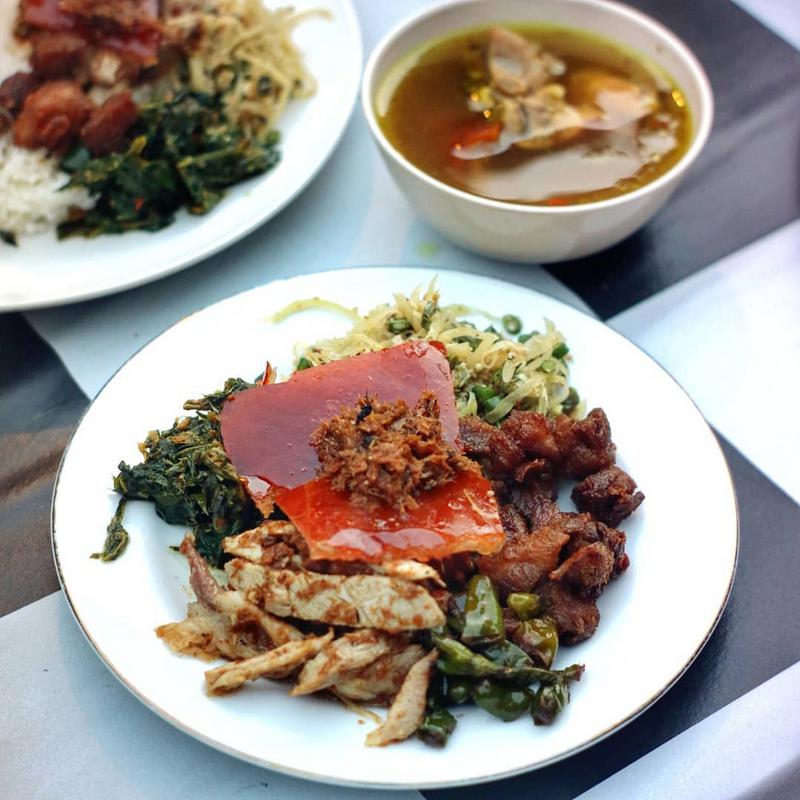
Prices drop the moment you leave the gates for Bualu. The best-known stop is Warung Babi Guling Sari Dewi, usually called Pak Dobiel, on Srikandi Road, where Balinese spit-roast pork is served with crackling and spicy sides and a queue forms before opening. Around Pantai Mengiat Road and Pintas Siligita Road, nasi campur counters, seafood grills and small cafés feed hotel staff and visitors alike, all for a fraction of resort prices.

Tip: Arrive by late morning, as the pork often runs out by mid-afternoon; if you avoid pork, order chicken nasi campur at a neighbouring warung.

Watersports at Tanjung Benoa

14 · Adventure

Watersports at Tanjung Benoa

📍 Pratama Road, Tanjung Benoa

Bali's watersports centre is the sandy spit north of the enclave. Its beach is lined with operators selling parasailing, banana boats, the inflatable flying fish, jet skis, flyboarding and helmeted sea walks, and boats queue offshore most mornings. It is noisy and commercial, and the sand is not as pretty as Nusa Dua's. Walk-up prices can be negotiated, and packages combine several rides with hotel pickups. Solo jet ski hire is not available here; Sanur offers it.

Tip: Go before midday when the sea is calmer; agree the price, duration and inclusions before paying, and make sure every life jacket fits.

15 · Market & Shopping

Bali Collection

📍 Central enclave

Spread over about 8 hectares, the open-air shopping village at the heart of the enclave mixes fashion and surf labels, craft and souvenir stores, spas and restaurants along shaded walkways. It is the main place to spend an evening inside the gates, with free shows on a weekly rota (rindik bamboo music on Thursday nights, plus dance, Kecak and fire performances on other evenings) and food festivals at certain times of year. New arrivals in August 2026 included a bakery, a coffee shop and a menswear store.

Tip: Open daily 10 am to 11 pm; a free shuttle covers 34 Nusa Dua hotels on three routes, with times posted on the mall's website.

16 · Adventure

Wet-season reef surf

📍 Reefs off the enclave and Sawangan

When Uluwatu goes flat, Nusa Dua comes alive. Roughly from November to March, west and north-west winds blow offshore on this coast and the reefs start breaking: the speedy Sri Lanka right off Club Med, the short, punchy Nikko right below the Hilton in Sawangan, the peaky A-frame at Mengiat, and Benoa, a long left so far out you need a boat. Every one breaks over shallow reef, so they are strictly for experienced surfers.

Tip: Wear reef booties and look at a live forecast before paying for a boat; outside the wet season, onshore trade winds usually ruin these waves.

17 · Beach

Sawangan Beach

📍 Sawangan, south Nusa Dua

Beyond Geger, Sawangan is a long ribbon of pale sand in front of the Hilton and neighbouring cliff and beach resorts. It feels emptier than the main beach, with fewer sunloungers and more space to stroll, and its offshore reef holds the Nikko break in the wet season. Swim around high tide, as the reef flat in front of the sand becomes very shallow at low water, and bring shade of your own.

Tip: Free to enter with a small parking fee; public access is restricted to a few lanes between resorts, and the way down is steep in places.

Balinese cooking classes
Photo by @artcafebumbubali

18 · Food & Drink

Balinese cooking classes

📍 Central enclave and Tanjung Benoa

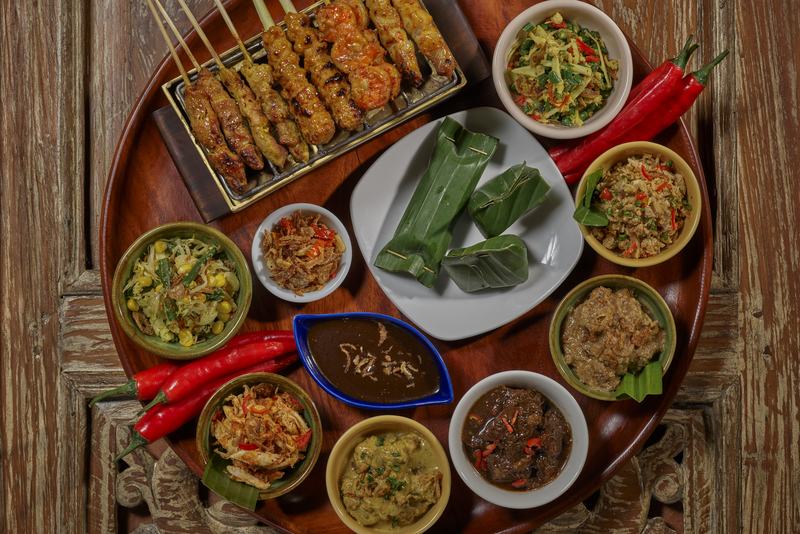
Two cooking schools teach Balinese food around Nusa Dua. Kekeb, about ten minutes on foot from Museum Pasifika, holds afternoon classes that start with a market visit and finish with around 12 dishes. Bumbu Bali in Tanjung Benoa was founded in 1997 by Swiss chef Heinz von Holzen, whose cookbooks did much to record Balinese cuisine; its morning class begins at Jimbaran market before moving to a village-style kitchen.

Tip: Kekeb runs Monday, Wednesday and Friday from about 3 to 7:30 pm; Bumbu Bali has lately held its class on Wednesdays, so reserve early.

19 · Wellness

Spas, from street-side to resort rituals

📍 Bualu and the Sawangan cliffs

Massage options range from modest spas outside the gates to elaborate resort rituals. At the simple end, places such as Carla Spa charge around IDR 140,000 for a full-body massage. At the other extreme, The Apurva Kempinski's Awakening the Chakra Spirit package spends three hours on its clifftop, an hour each of sound meditation, massage and a water purification rite, and non-guests can book it too.

Tip: Reserve resort packages a day in advance and ask whether day visitors may use the pool.

Sunday brunch at a Nusa Dua resort
Photo by @hotelmulia

20 · Food & Drink

Sunday brunch at a Nusa Dua resort

📍 Sawangan and the southern enclave

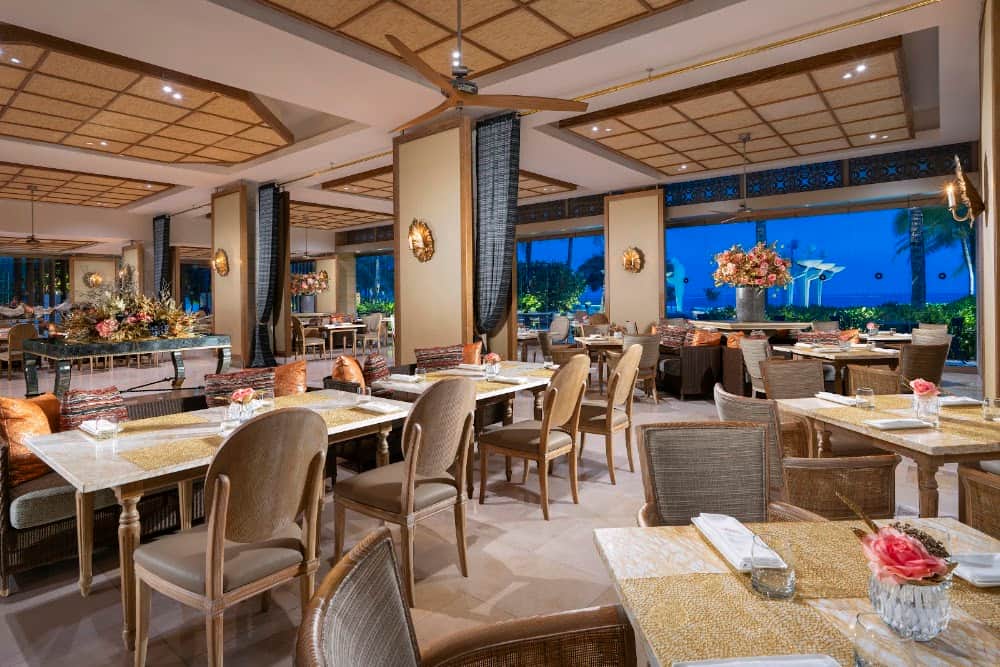
Sunday brunch is where the big hotels try hardest to outdo each other, so it justifies a trip away from your own resort. At The Mulia, Soleil lays out long Mediterranean and Asian stations, while Kayuputi at The St. Regis offers a more formal brunch by the beach from late morning. Expect to while away the afternoon, dress up a little, and pay something nearer a tasting-menu dinner than a café breakfast.

Tip: Book several days ahead and ask what the drinks package covers, as both charge for it separately.

Manarai Beach House
Photo by Manarai Beach House

21 · Food & Drink

Manarai Beach House

📍 In front of the Sofitel, central enclave

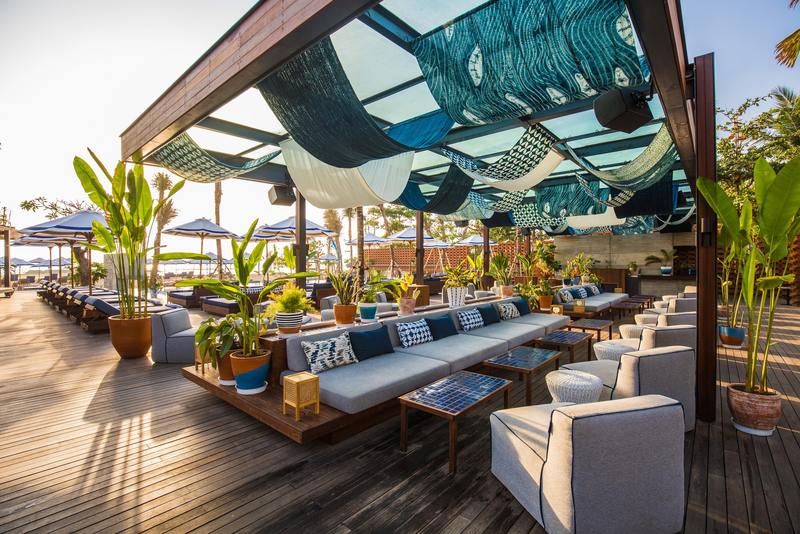
With no nightlife strip in Nusa Dua, Manarai comes closest to a night out within the gates. The Jakarta hospitality group Ismaya runs it on the sand in front of the Sofitel, with a restaurant, an outdoor lounge, a pair of pools and, on some evenings, DJs or live bands, while parasailing and jet skis can be booked off its beach by day. It shuts around 10 pm, which says a lot about how early Nusa Dua goes to bed.

Tip: Follow its social pages for weekend sets, and reserve a daybed if you are coming as a group.

Cruises from Benoa Harbour
Photo by @balihaicruises_

22 · Adventure

Cruises from Benoa Harbour

📍 Benoa Harbour, 20–30 min by car

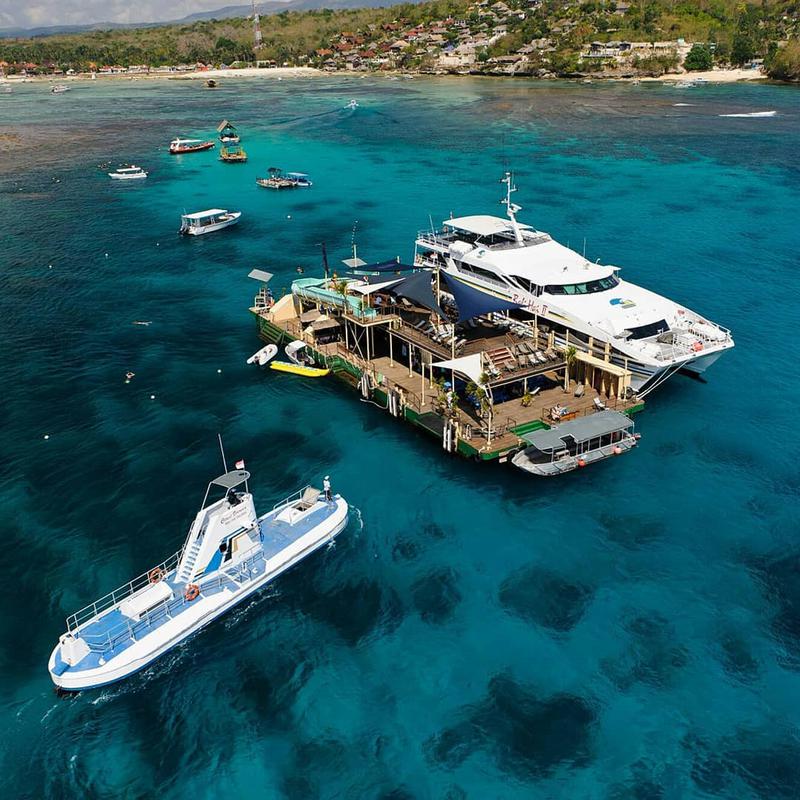
Bali Hai's cruise boats to Nusa Lembongan leave from the port on the far side of the bay. The day cruise sails at around 9:15 am and returns at about 4:15 pm, leaving time on the island for snorkelling and swimming, with transfers from South Bali hotels included. After dark, a sunset dinner cruise loops around the harbour with a buffet, live music and a cabaret-style show.

Tip: Confirm your pickup time the day before; the Badung Strait can be choppy, so take seasickness tablets if you are prone.

Itinerary

How to spend your days in Nusa Dua

Nusa Dua in a day

Mostly on foot inside the enclave, with three short rides of 5 to 10 minutes: to Bualu for lunch, on to Puja Mandala and back to Peninsula Island. Plan it for a Monday, Wednesday, Friday or Saturday, when the Devdan show plays.

  1. 6:00

    Walk the promenade north from Mengiat towards Tanjung Benoa as the sun rises, then have breakfast.

  2. 8:30

    Swim at Nusa Dua Beach while the sea is flat; if the tide is out, move the swim to later.

  3. 10:00

    Be at Museum Pasifika for opening, before the rooms warm up.

  4. 12:00

    Lunch on babi guling at Pak Dobiel in Bualu, or nasi campur along Pantai Mengiat Road.

  5. 13:30

    Drive a few minutes to Puja Mandala in Kampial and its five places of worship.

  6. 15:00

    Explore Peninsula Island, Nusa Dharma and the Waterblow, ideally on a high tide.

  7. 17:30

    Shops, a free performance and an early dinner at Bali Collection.

  8. 19:30

    Walk to the Bali Nusa Dua Theatre for Devdan; on Fridays, choose the 6 pm Kecak and Barong on Peninsula Island instead.

Nusa Dua in three days

Day one in the enclave, day two at the Tanjung Benoa end, day three in the quieter south, finishing with a sunset drive to Jimbaran.

  1. Day 1, 7:00

    Beach time and a stroll on the promenade, then Museum Pasifika when it opens at 10.

  2. Day 1, 15:00

    Peninsula Island and the Waterblow, timed for high tide.

  3. Day 1, 18:00

    Dinner at Bali Collection before Devdan, or the Friday Kecak on Peninsula Island.

  4. Day 2, 8:00

    Watersports or a snorkel trip from Tanjung Benoa while the wind is still light.

  5. Day 2, 11:30

    Wander the temple quarter at the tip of the spit, then lunch in Bualu.

  6. Day 2, 15:00

    A spa treatment, or Kekeb's cooking class if it is a Monday, Wednesday or Friday.

  7. Day 3, 8:00

    Geger Beach, Pura Geger and the rocky cove at low tide, followed by Puja Mandala.

  8. Day 3, 13:00

    Swim and kayak at Pandawa Beach in Kutuh.

  9. Day 3, 17:00

    Drive 20 to 30 minutes to Jimbaran for grilled seafood on the sand as the sun goes down.

Nusa Dua on a rainy day

Indoor and covered stops for a wet-season day, all a few minutes apart inside the enclave.

  1. 10:00

    Museum Pasifika, adding a 90-minute painting or batik class if you want to linger.

  2. 12:30

    Lunch and coffee under the covered walkways of Bali Collection.

  3. 14:00

    A long massage at a Bualu spa or a resort spa.

  4. 17:30

    Return to the mall for dinner, checking its website for tonight's free performance.

  5. 19:30

    Devdan, which is staged indoors whatever the weather.

Longer trip? Plan up to seven days from Nusa Dua or browse our Bali itineraries.

Where to stay

Hotels and villas in Nusa Dua

All stays in Nusa Dua →

Where to eat

Restaurants and cafés in Nusa Dua

All restaurants in Nusa Dua →

Seasons

Best time to visit Nusa Dua

The dry months from April to October make for the easiest beach holiday here, with sunshine, lower humidity and a calm sea inside the reef. Through this period the south-east trades blow onshore along this east-facing coast, so snorkelling and watersports are best done in the morning before the afternoon chop builds. July to October also brings the largest southern swells, which is when the Waterblow puts on its best display at high tide.

The wet season, November to March, means heavy downpours, sticky air and grey spells. Nusa Dua copes better than most of Bali, because the lagoon stays swimmable and a big resort gives you plenty to do when it pours. In these months the wind swings west and north-west, blowing offshore here, and the Sri Lanka, Nikko and Mengiat reef breaks come into season.

Holidays drive crowds more than weather does. July, August and the Christmas to New Year fortnight fill the resorts, while Indonesian families pour into Pandawa and Tanjung Benoa during school breaks and religious holidays. Summits at the convention centres mean tighter checks at the gates. Nyepi, the Day of Silence, next falls on 8 March 2027: the whole island, airport included, shuts down for 24 hours, and a large Nusa Dua resort is one of the most comfortable places to spend it.

Getting there

How to get to Nusa Dua

  • Ngurah Rai airport (DPS)25 to 45 minutes

    About 13 km by car over the Bali Mandara toll road. A pre-booked transfer costs roughly IDR 250,000–350,000 per car; ride-hailing apps and the airport taxi desk also serve the route.

  • Jimbaran20 to 30 minutes

    Around 10 km by car or scooter on the Ngurah Rai Bypass.

  • Uluwatu30 to 45 minutes

    Some 20 km across the Bukit through Ungasan, by car or scooter.

  • Kuta30 to 50 minutes, up to 90 in rush hour

    About 15 km via the toll road, which avoids the Jimbaran bottleneck; very early or late at night it takes only 20 to 25 minutes.

  • Seminyak45 to 60 minutes, up to 1.5 hours from 4 to 7 pm

    Roughly 20 km with a car or driver, using Sunset Road, the bypass and the toll road.

  • Sanur25 to 40 minutes, 45 to 75 in the evening peak

    Around 21 km by car on the bypass and the Bali Mandara toll road.

  • Canggu1 to 1.5 hours, more at rush hour

    About 28 km with a car or driver via Sunset Road and the toll road.

  • Ubud1.5 to 2.5 hours

    A 40–45 km drive through Sukawati, the bypass and the toll road; leaving before 7:30 am can cut it to about an hour.

Getting around Nusa Dua

Inside the enclave, walking works. The promenade links the resorts from the Ayodya end up to Tanjung Benoa, and the mall, the theatre and the museum are only minutes apart. Bali Collection's free shuttle bus runs three routes serving 34 hotels, most resorts operate their own shuttles, and bicycles can be rented near the path. Guards staff the three gates around the clock, so cars get a brief check, particularly at night.

Everything else calls for Grab, Gojek, Bluebird or a hired driver. App drivers can drop off anywhere, but pickup rules differ between resorts: some allow them to the lobby, others send guests to the gate or a set pickup point, whereas Bluebird taxis and hotel cars can always come to the door. Hiring a car and driver for the day is the simplest way to string together Geger, Puja Mandala and Pandawa.

Scooters are useful for Bualu, Geger and the Pandawa side, and they have their own lane on the Bali Mandara toll road across the bay, paying about IDR 5,500 by e-money card, against about IDR 14,000 for cars. Traffic is at its worst between roughly 4:30 and 7:30 pm on the Ngurah Rai Bypass near the airport and around the Simpang Siur roundabout, so plan trips to Kuta, Seminyak and Canggu outside those hours.

Know before you go

Nusa Dua tips that save time

  1. 01Look up the tide each day: swim on a mid-to-high tide, visit the Waterblow at high water and explore Geger's rocky cove when the tide is low.
  2. 02The sun rises over the sea here; to watch it set into the water, drive 20 to 30 minutes to Jimbaran or 30 to 45 minutes to Uluwatu.
  3. 03Leave the gates to eat at least once, as Bualu's warungs cost a small fraction of resort menus.
  4. 04Before paying for taxis within the enclave, use the free Bali Collection shuttle, which serves 34 hotels on three routes.
  5. 05Keep small cash handy for the Waterblow (about IDR 25,000), beach parking and the Pandawa entry fee.
  6. 06Scooter riders need an Indonesian e-money card for the cashless Bali Mandara toll road; without one you will be turned away at the booth.
  7. 07At Tanjung Benoa, settle the price, ride time and extras before any watersport, go in the morning and check the life jacket fits.
  8. 08Skip the turtle pens on Pulau Penyu off Tanjung Benoa, which welfare groups criticise; the free Serangan turtle centre, 20 to 30 minutes north, is the better outing for children.
  9. 09Golfers: the Bali National course has been shut since July 2025 while it becomes Bali Beach Country Club, due back in early 2027, so ask about status before booking a round.
  10. 10Carry a sarong for Pura Geger, Puja Mandala and the Tanjung Benoa temples, and keep shoulders covered.
  11. 11Foreign visitors must pay Bali's IDR 150,000 tourist levy, which is easiest to settle online before you fly.

FAQ

Nusa Dua questions, answered

Is Nusa Dua a good place to stay in Bali?

+

It is if your priorities are calm water, a comfortable resort and a short airport run. Few beaches on the island are safer for small children, nowhere on the Bukit beats the seafront promenade for a walk, and outings to Pandawa, the Waterblow or Puja Mandala each fill a pleasant half day. If you want nightlife, village life or street food outside your door, base yourself elsewhere and visit for a day.

Should I choose Nusa Dua or Uluwatu?

+

Nusa Dua suits travellers who want flat beaches with gentle water, no stairs, large family resorts and a quick airport transfer. Uluwatu is for those who want clifftop views, reef waves, the temple's Kecak at dusk and more cafés. The drive between them takes only 30 to 45 minutes, so you can base yourself in one and visit the other for an afternoon and dinner.

Can you swim at Nusa Dua beach?

+

Yes. Swell breaks on an offshore reef, so the main beach, Mengiat and Geger offer clear, calm water for most of the year and are well suited to children. Aim for mid to high tide, as in front of several resorts the sea gets very shallow when the tide is out. Tanjung Benoa is less pleasant for swimming because of the constant boat traffic.

How long does it take to reach Nusa Dua from the airport?

+

The enclave is about 13 km from Ngurah Rai, and the Bali Mandara toll road gets you there in 25 to 45 minutes, longer between 4:30 and 7:30 pm. Pre-booked transfers are roughly IDR 250,000 to 350,000 per car, and ride-hailing apps and the airport taxi desk cover the route too. The cashless toll for cars, about IDR 14,000, is normally added to the fare.

How many days should I spend in Nusa Dua?

+

One full day lets you swim, see the Waterblow, Museum Pasifika and Puja Mandala, and catch a show after dark. Most people are happiest with three to five days, since the appeal is slowing down by the pool and the sea, with half-day trips to Tanjung Benoa, Geger, Pandawa and Jimbaran. Families often book a full week and treat it as a calm base.

Can you get around Nusa Dua on foot?

+

Within the enclave, largely yes. You can follow the seafront for about 7 km, the mall, theatre and museum sit close together, and Bali Collection's complimentary bus loops past 34 hotels. Outside the gates, pavements are patchy, and Geger, Puja Mandala, Pandawa and Jimbaran all require a car, a ride-hailing booking or a scooter.

Do Grab and Gojek operate in Nusa Dua?

+

Yes, both apps work throughout Nusa Dua and Tanjung Benoa, and hotel drop-offs are no problem. Pickups are less consistent: certain resorts let app drivers come up to the lobby, while others ask guests to meet them at the security gate or a designated pickup spot. Bluebird taxis and hotel cars can always reach the door, which is simplest late at night.

What can you do in Nusa Dua in the evening?

+

Mostly dinner and a show, which is exactly what many guests want. Devdan plays four nights a week at 7:30 pm, a Kecak and Barong performance runs on Friday evenings at 6 pm on Peninsula Island, and Bali Collection keeps its shops, restaurants and free performances going until 11 pm. For bars and clubs, head to Seminyak, Canggu or Uluwatu.

Does Tanjung Benoa count as Nusa Dua?

+

For visitors, effectively yes. Tanjung Benoa is the sandy spit directly north of the gated enclave, a separate subdistrict on paper but treated by most people as part of the same area. It holds the island's busiest watersports beach, lower hotel prices, a fishing village whose temples include a Chinese one, and the top end of the promenade, which means the two are connected on foot.

When does the Waterblow look its best?

+

Visit on a high tide when there is a solid swell running, conditions that line up most often between July and October. When the tide is out or the sea is flat, the waves hardly reach the rocks and the spectacle fizzles. Check the tide times first, then ask at the ticket booth before paying the cash entry of about IDR 25,000; staff will tell you honestly whether it is worth it.

Is there surf in Nusa Dua?

+

Yes, chiefly in the wet season and only for experienced surfers. From about November to March, offshore westerlies switch on reef breaks such as Sri Lanka, Nikko and Mengiat, while Benoa, far out to sea, needs a boat. All of them break over shallow reef. Beginners should book lessons on the sandy beach breaks of Kuta instead.

Nearby

Where to go after Nusa Dua

Read next

More Nusa Dua guides on the Blog