Baligasm
Baligasm

Destination guide · East Bali

Amed Area Guide

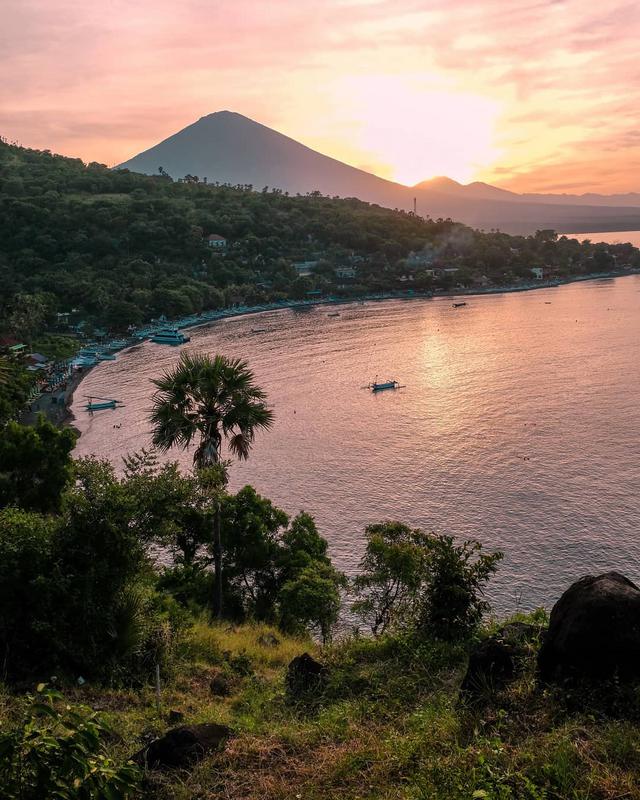
Coral off the beach, fishing boats at dawn and Mount Agung on the skyline.

By the Baligasm editors · Updated 29 October 2026

Area brief

What Amed is really like

Amed is a 14 km run of fishing villages and dark-sand bays on Bali's north-east tip, in Karangasem regency, with coral a few strokes from shore and Mount Agung on the skyline. The drive from the airport takes 2.5 to 3 hours, and the Liberty wreck at Tulamben lies 20 to 30 minutes north. It suits snorkellers, divers, freedivers and anyone happy with early nights. Plan three nights, or four to five for a course.

Nobody lives in a single place called Amed. The name covers a 14 km stretch of coast road in Karangasem, starting at the Culik turn-off and linking the bays of Amed, Jemeluk, Bunutan, Lipah, Lean, Selang, Banyuning and Aas. Mount Agung, 3,031 m, rises about 17 km to the west. What draws people is the reef: it begins almost at the waterline, and off Jemeluk the slope falls into a wall around 40 m deep, so snorkelling, diving and freediving all start from the beach. Tulamben and the USAT Liberty are 15 km to the north-west.

Tourism arrived late. The road was only sealed in 2000 and telephone lines followed in 2003. Ecodive Bali, the first dive centre, opened in 1997, and Jemeluk's roadside is now lined with dive and freediving schools, yet fishing and salt-making still set the rhythm of the day. Outrigger jukung push off before first light, and a handful of farmers still crystallise Amed salt in split coconut trunks, although their numbers dropped from roughly 200 to 20 in the ten years to 2016.

The compromises are real. Getting here from the airport takes 2.5 to 3 hours. Amed village has a beach of coarse black pebbles and the bays further east have grey-black sand, fine for wading in with fins and less so for sunbathing. There is no town centre and no ride-hailing, so you rely on a scooter or driver along a road that climbs steeply over the headlands with little street lighting. Cash machines are few, and a big night out means a sunset bar with a live band.

The reef carries old scars. In the late 1980s coral in front of Amed village was broken up, partly for building, and the shoreline retreated by roughly 100 m. Work to restore the reef started in 2003, and the statues placed underwater at Jemeluk are part of that effort. As for alternatives, Tulamben is a dive village with little else, Candidasa, an hour south, sits nearer the airport, Tenganan and Padang Bai but has a thin strip of beach, and Padang Bai has far more boats to the Gilis. Pick Amed when the reef outside your room matters most.

Best for
Snorkelling, diving and freediving straight from the beach
Vibe
Quiet fishing villages, early nights and a handful of bars
From the airport
About 100 km, a 2.5 to 3-hour drive
Days needed
Three nights; four or five for a dive or freediving course
Best time
April to October for calm, clear water
Getting around
Scooter or car and driver; no ride-hailing apps

Amed suits you if…

  • ✓Snorkellers: Jemeluk's coral begins a few strokes from the sand
  • ✓Divers, with the Liberty wreck at Tulamben 20–30 minutes away
  • ✓A first freediving course, with deep water close to shore
  • ✓Couples after quiet evenings, sunsets behind Agung and sunrise over the sea
  • ✓Day trips to Lempuyang, Tirta Gangga and Taman Ujung

Skip it if…

  • ✕A soft, sandy swimming beach is the goal: these are pebble and grey sand
  • ✕You have fewer than three nights; the transfer eats 2.5–3 hours each way
  • ✕You want nightlife, shops or a centre to wander around
  • ✕You will not ride a scooter or pay for a driver, as ride-hailing apps do not operate here

Neighbourhoods

Which part of Amed to stay in

01

Amed village and Culik

The coast road leaves the main east-coast highway at Culik and meets the sea at Amed proper, the bay that lent its name to the whole strip. Jukung outriggers rest on a beach of coarse black pebbles, the Purwakerti salt fields and the Amed Salt Centre sit beside the road, and the Pyramids dive site lies offshore. Rooms here cost less than anywhere else on the strip, and Jemeluk's cafés are a couple of minutes away by scooter.

Best for: Low-cost stays close to the salt farmers and fishing fleet

02

Jemeluk

Jemeluk is the practical heart of Amed. You can swim from the sand to its reef, statues and wall; the road behind is lined with dive and freediving schools, Ecodive Bali and Apneista among them; and cafés and warungs fill I Ketut Natih Road. Beyond the bay the road climbs to the Jemeluk viewpoint. Nowhere else on the strip lets you snorkel, eat and book a dive without needing a scooter.

Best for: First-time visitors and anyone booked on a course

03

Bunutan

Past the viewpoint, villas and small resorts climb the hillsides behind Bunutan's quieter beach, where garden eels poke out of the sand. Off the point, a deeper drift dive brings reef sharks and barracuda. Many rooms look east towards sunrise over the Lombok Strait, but the Jemeluk restaurants are 2 to 3 km back west, so dinner involves a ride.

Best for: Couples and villa groups after sea views and peace

04

Lipah and Lean

Roughly 4 km east of Jemeluk, Lipah has the second cluster of warungs, mini-markets and dive shops, gathered around a shaded grey-black beach with loungers for hire and a tiny wreck just offshore. Lean, the next cove along, is smaller and calmer. Together they make a relaxed middle base, about 3 km from the Japanese wreck.

Best for: A beach with a few restaurants, minus Jemeluk's dive boats

05

Selang and Banyuning

Beyond Lipah the road narrows and climbs again. A handful of upmarket villas and resorts sit on the slopes at Selang and Banyuning, with a few seafront restaurants and the Japanese wreck in Banyuning bay. Currents run stronger here: visibility off Selang can fall, and the islet of Gili Selang, at the very tip of Bali, should be left to experienced divers. Most dinners mean a drive.

Best for: Honeymooners and return visitors wanting seclusion

06

Aas and the far east

Aas marks the end of the Amed strip, around 14 km from Culik and the furthest bay from Jemeluk's dive centres. The handful of places to stay are small family bungalows and guesthouses looking straight out to sea, where the sun rises, with jukung drawn up on the beach in front. Past Aas the road keeps going around Bali's eastern tip, through the Seraya villages to Ujung, a slow and hilly way to Amlapura.

Best for: Long stays and anyone after real quiet

07

Tulamben

Twenty to thirty minutes beyond Culik, and 15 km north-west of Jemeluk in Kubu district, Tulamben exists around the USAT Liberty, which rests about 40 m off a shore of black sand and volcanic boulders. Most resorts are attached to a dive operator, and village porters carry tanks down to the water. Beyond that there is not much: a few warungs, no beach for swimming and early nights.

Best for: Divers logging several dives a day, including night dives on the wreck

Top sights · 16 picks

Things to do in Amed

Snorkelling Jemeluk Bay
Photo by @artaheaven

01 · Nature

Snorkelling Jemeluk Bay

📍 Jemeluk Bay, Purwakerti, just east of Amed village

Jemeluk is the reason most people make the long drive. From the beach you swim a few metres over coral and reef fish to the point where the slope becomes a wall falling to around 40 m, so deep blue water is unusually close to shore. Among the statues sunk here as coral nurseries is a miniature shrine. The buoy that once marked it has gone, so ask at a dive shop for directions.

Tip: Snorkel early, before the boats, and wear fins, as a current can run along the wall.

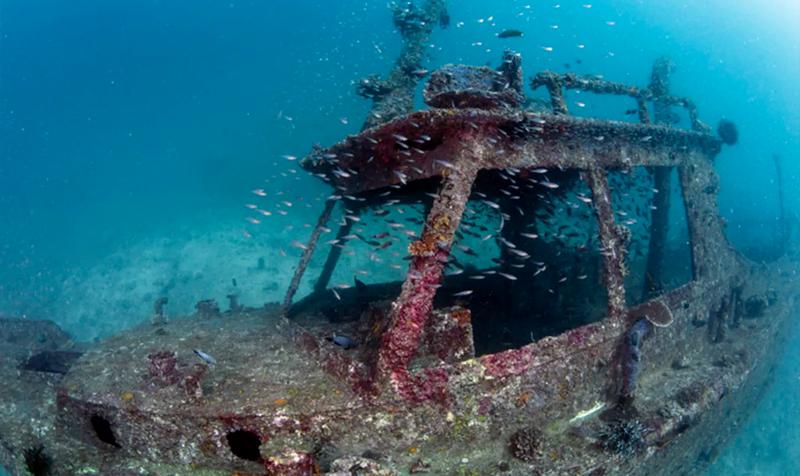
USAT Liberty wreck at Tulamben
Photo: Pb1791 / Wikimedia Commons (CC BY-SA 3.0)

02 · Adventure

USAT Liberty wreck at Tulamben

📍 Tulamben, 15 km north-west of Jemeluk (20–30 minutes by car)

The USAT Liberty, a US Army cargo ship roughly 120 m long, was hit by a Japanese submarine torpedo in January 1942 and run aground at Tulamben so its cargo could be saved. Tremors during Mount Agung's 1963 eruption pushed it off the beach, and it now rests around 40 m from shore at 5 to 30 m, thick with coral. Divers walk in from the beach, and on clear days snorkellers can make out the shallow stern.

Tip: Get there by 8 am, ahead of day-trip groups. Two Tulamben dives from Amed with Ecodive Bali cost about IDR 1.35 million.

03 · Nature

The Japanese wreck at Banyuning

📍 Banyuning, about 7 km east of Jemeluk

Around 20 m off the beach in Banyuning bay lies a small steel wreck whose top is just a few metres down, so snorkellers get as good a look as divers, who carry on along the reef to around 35 m. Its identity is unknown, and it may not even be Japanese. Coral coats the hull, and schools of cardinalfish and trumpetfish hang around it. It is an easy, sheltered swim when the sea is calm.

Tip: In late 2025 Kawi Karma Beach Restaurant asked IDR 25,000 to cover parking, entry, showers and a drink; a mask or fins cost IDR 25,000 each to rent.

04 · Adventure

A freediving course at Jemeluk

📍 I Ketut Natih Road, Jemeluk (Purwakerti)

Amed is one of the main freediving hubs in Southeast Asia: calm water at Jemeluk reaches around 50 m deep without any boat ride. Apneista, based on the beach, charges IDR 4.6 million for its two-day beginner course (Level 1); the three-day Level 2, which includes a dive trip to the Liberty, costs IDR 6.5 million. Its 25 m training pool is at Blue Earth Village, where the school also runs yoga sessions for freedivers every day.

Tip: The Molchanovs certification fee is extra. You need to be at ease in the water rather than a strong swimmer.

05 · Adventure

Learning to scuba dive

📍 Dive shops at Jemeluk, Amed village and Lipah

Warm water, shore entries and the Liberty half an hour away make Amed a gentle place for a first course. Ecodive Bali, open at Jemeluk since 1997 and the oldest operator on the coast, charges about IDR 6.8 million for a three-day PADI Open Water course with five dives, while a pair of fun dives at either Jemeluk or Tulamben costs about IDR 1.35 million including equipment and hotel transfers. Plenty of other PADI and SSI shops line the coast road.

Tip: Avoid diving straight after heavy rain, when run-off clouds the water.

06 · Viewpoint

Jemeluk viewpoint at sunrise

📍 Headland between Jemeluk and Bunutan, a steep 500 m walk up from the bay

Where the road tops the headland beyond Jemeluk, a free roadside lookout with simple shelters faces back across the bay, the lines of jukung on the sand and Mount Agung beyond. This is the picture most people take home from Amed. At dawn the sun comes up behind you over the Lombok Strait, the first light hits Agung, and the fishing fleet heads out below.

Tip: Sunrise falls between about 5:45 and 6:35 am depending on the month. Parking is free.

07 · Viewpoint

Sunset behind Mount Agung

📍 Jemeluk Bay and the beach at Amed village

Although the coast faces north-east, Mount Agung stands roughly 17 km due west of Jemeluk, so the evening sun sinks behind or beside the volcano, sitting nearest the summit in March and September. Above Jemeluk Bay, Sunset Point is a bar on the cliff with an infinity pool and a band on most evenings. Watching from the beach at Amed village costs nothing.

Tip: Sunset Point had a IDR 125,000 per-person minimum spend in late 2025. Sunset is between about 6:05 and 6:45 pm.

08 · Culture

Amed salt fields and the Amed Salt Centre

📍 Coast road in Purwakerti, at the western end of the strip

Salt has been made in Amed for centuries and was once offered as tribute to the kings of Karangasem. Farmers filter seawater brine through woven bamboo, then leave it to crystallise in the sun in palungan, split coconut trunks set out in rows. The salt gained Geographical Indication status in 2015, yet by 2016 only about 20 farmers remained. Their cooperative opened the Amed Salt Centre in 2019 to demonstrate the process.

Tip: Free, with donations welcome. Salt is made only in the dry season, roughly April to October.

Show all 16 things to do ↓
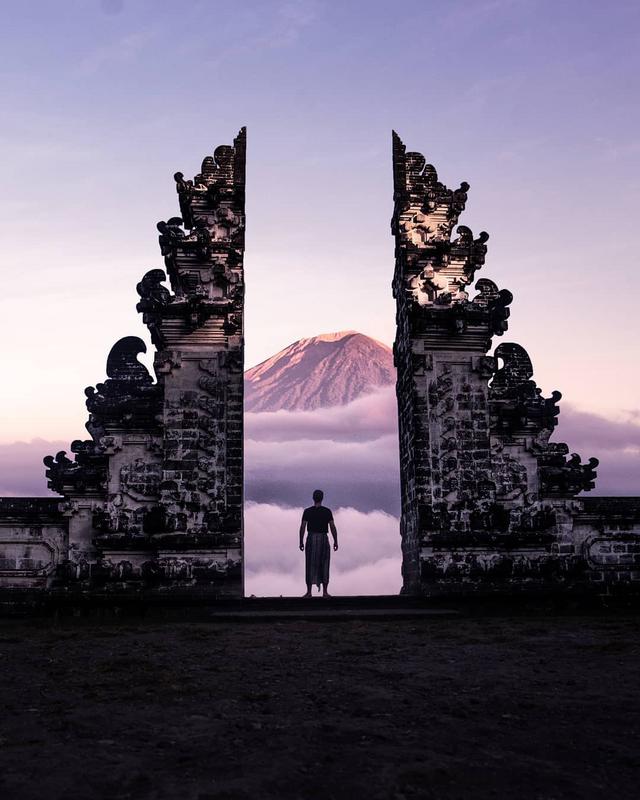
Lempuyang's Gates of Heaven
Photo by @marcel.bhm

09 · Temple

Lempuyang's Gates of Heaven

📍 Mount Lempuyang, about 16 km south of Jemeluk (about 40 minutes by car)

The split gate of Pura Penataran Agung Lempuyang, with Mount Agung filling the gap, may be the most photographed view in Bali; the temple is the lowest in a complex that ranks among the island's nine directional sanctuaries. Be realistic: you collect a numbered ticket and often wait 2 to 4 hours for 30 to 60 seconds in the gateway. The lake-like reflection in the pictures comes from a mirror held beneath the phone lens.

Tip: Foreign visitors pay around IDR 100,000, sarong included, and IDR 50,000 for the compulsory shuttle. Lahangan Sweet nearby has its own gate and a far shorter queue.

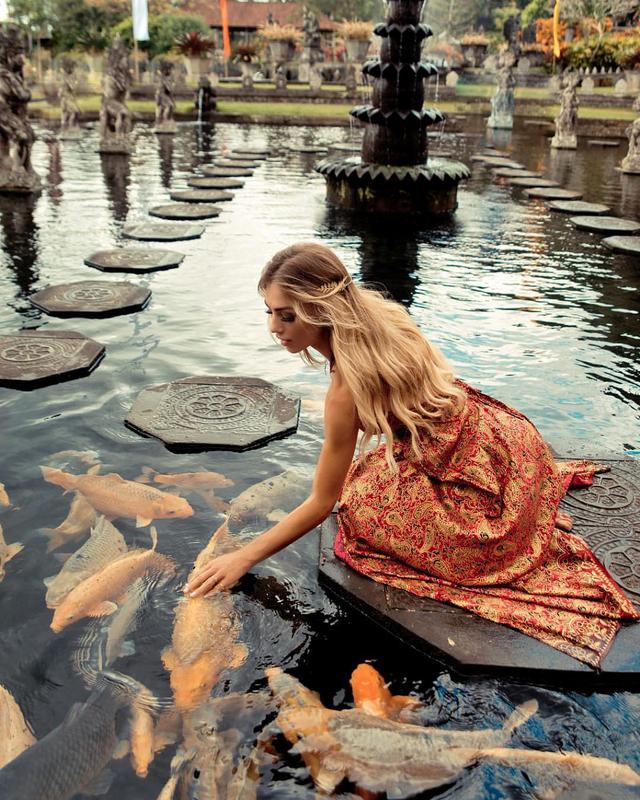
Tirta Gangga water palace
Photo by @marimalz

10 · Culture

Tirta Gangga water palace

📍 Ababi, about 17 km south-west of Jemeluk (about 30 minutes by car)

Karangasem's last raja started this water garden in 1946. Earthquakes during Mount Agung's 1963 eruptions brought most of it down, and much of what stands today was rebuilt from 1979 onwards. Stepping stones cross koi-filled ponds, springs feed the bathing pools, and rice terraces wrap around Ababi village. Since 2025 the ticket also covers the swimming pools and a small museum.

Tip: Foreign adults pay IDR 90,000, a price set in March 2025. Arrive early, ahead of the tour buses.

11 · Culture

Jukung fishing boats at dawn

📍 Beaches at Amed village and Jemeluk

Before the sun is up, Amed's painted jukung, slender outrigger canoes, slide off the beaches and fan out across the strait; by mid-morning most are lined up on the sand again. Watch from the shore at Amed village or Jemeluk, or join a crew: fishermen take visitors trolling for mackerel at dawn and run snorkelling trips along the coast later in the day.

Tip: Arrange it through your guesthouse the night before, and settle the price, the hours and life jackets in advance.

12 · Adventure

Pyramids, Bunutan and Gili Selang dives

📍 Off Amed village, Bunutan and Selang, by local boat

For more depth, local boats run divers out beyond the house reefs. Off the shore between Amed and Jemeluk, the Pyramids are lines of hollow concrete structures, each 3 m tall, placed at 18 to 24 m and now an artificial reef thick with fish. Bunutan is a promontory dropping from 20 to 40 m, visited by reef sharks, barracuda and rays, while Gili Selang, a rock off Bali's easternmost point, combines healthy coral with powerful currents.

Tip: Bunutan and Gili Selang are for experienced divers; two dives there with Ecodive Bali cost roughly IDR 1.45–1.55 million.

13 · Beach

Lipah Beach and its little wreck

📍 Lipah, about 4 km east of Jemeluk

Lipah's bay is among the more comfortable places on the strip to spend a few hours, with shade, paid loungers and grey-black sand rather than the coarse pebbles of Amed village. Just offshore, in water about 1.5 m deep, lies a small wooden wreck, and on flat days the reef beyond it is an easy snorkel. Warungs and a couple of dive shops are gathered close by.

Tip: Vienna Beach Resort offers free parking and use of its facilities if you buy something there.

Tulamben's Coral Garden, Wall and Seraya

14 · Nature

Tulamben's Coral Garden, Wall and Seraya

📍 Tulamben and Kubu, around the Liberty wreck

Tulamben offers more than the Liberty. Next to the wreck, the Coral Garden spans roughly 4 to 25 m, with shallows that suit snorkellers. The Wall, another shore dive, plunges to about 60 m, where sharks, tuna and the occasional mola mola cruise past. Seraya, a sandy slope nearby, is a muck dive known for nudibranchs, pygmy seahorses and harlequin shrimp.

Tip: Women from a village cooperative carry tanks to the water, two at a time; the rate was IDR 10,000 a tank in 2021.

15 · Adventure

The climb to Pura Lempuyang Luhur

📍 Mount Lempuyang, above Pura Penataran Agung Lempuyang

Beyond the famous gate, a path climbs through forest past smaller shrines to Pura Lempuyang Luhur, the seventh and highest temple in the complex, at about 1,060 m. Expect around 1,700 steps and 3 to 4 hours for the round trip. Balinese consider it one of their holiest climbs, and you share it with worshippers carrying offerings; on clear mornings there are views across to Agung.

Tip: Take at least 1.5 litres of water and proper shoes; the steps turn slippery after rain.

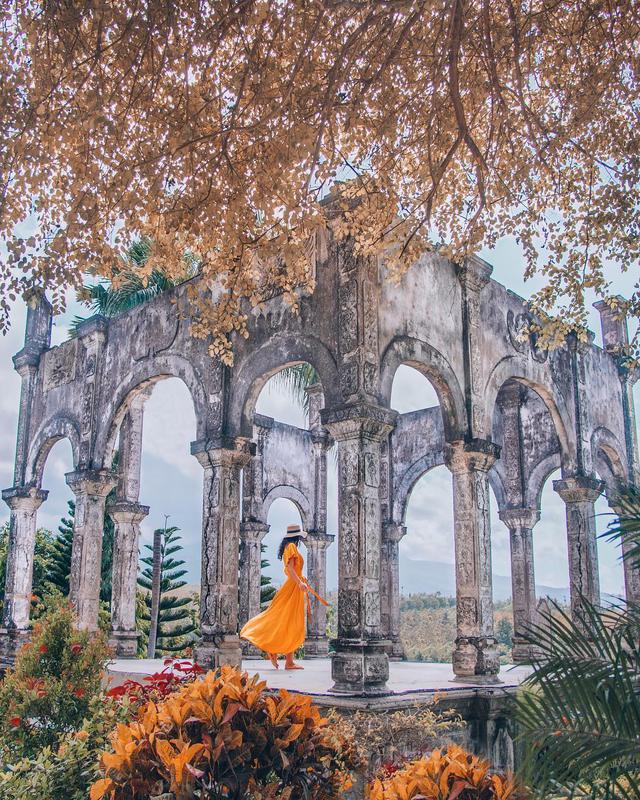
Taman Ujung and the coast road home
Photo by @ayda_june

16 · Culture

Taman Ujung and the coast road home

📍 Tumbu, near Amlapura, about 27 km from Jemeluk (40–50 minutes by car)

Decades before Tirta Gangga, the same raja created Taman Soekasada Ujung (1909–1921) with help from a Dutch architect, which is why Balinese gateways sit alongside European arches. Ponds, bridges and a floating pavilion spread across about 10 hectares beside the sea. Return to Amed on the coast road through the Seraya villages, roughly 25 km of narrow, hilly lane around Bali's eastern tip.

Tip: Foreign adults pay IDR 100,000 (since January 2024). The coast road from Ujung to Banyuning takes about an hour; drive it in daylight.

Itinerary

How to spend your days in Amed

Amed in a day

Based at Jemeluk, with about 3 km on foot. The hops east to the Japanese wreck (7 km), back to Lipah (3 km) and west to the salt fields (6 km) need a scooter or a driver.

  1. 5:30

    Climb the steep 500 m from Jemeluk Bay to the viewpoint (10–15 minutes) for sunrise, then walk back down.

  2. 7:00

    Swim out from Jemeluk beach while the water is still quiet and search for the coral-covered statues.

  3. 9:00

    Breakfast on I Ketut Natih Road, then rest through the late-morning heat.

  4. 11:00

    Ride 15–20 minutes east to Banyuning and snorkel the Japanese wreck.

  5. 13:30

    Lunch in Lipah, 3 km back towards Jemeluk, then laze on its shaded sand.

  6. 15:30

    Ride on to Purwakerti, 6 km west, to see salt being made at the Amed Salt Centre (dry season only).

  7. 17:30

    Watch the sun go down behind Mount Agung from Sunset Point or the free beach at Amed village.

  8. 19:00

    Walk to a warung in Jemeluk for the day's grilled fish.

Three days in Amed

The coast on day one, Tulamben on day two, Lempuyang and the water palaces on day three. You can walk within a bay; everything else needs a scooter or a car and driver.

  1. Day 1

    Use the one-day plan above for a full day on the coast.

  2. Day 2, 6:30

    Be at Tulamben, 20–30 minutes away through Culik, to get in the water at the Liberty ahead of the tour groups.

  3. Day 2, 10:30

    Make a second dive, or snorkel the Coral Garden, then return to Amed for lunch.

  4. Day 2, 16:00

    Visit the Amed Salt Centre, then watch sunset from the beach at Amed village.

  5. Day 3, 4:45

    Drive about 40 minutes to the Lempuyang car park in time for the first shuttle, around 5:30.

  6. Day 3, 11:00

    Head 25 minutes downhill to Tirta Gangga for the koi ponds, a swim and lunch.

  7. Day 3, 14:00

    Continue about 10 km through Amlapura to Taman Ujung.

  8. Day 3, 16:00

    Return on the Seraya coast road, about an hour to Banyuning and 7 km more to Jemeluk.

Amed when the sea is murky

Heavy rain can wash run-off into the bays and blur visibility for a day or two. Swap the reef for the palaces and an early night.

  1. 8:00

    Drive 30 minutes to Tirta Gangga for the opening; the spring-fed pools are as good in drizzle as in sun.

  2. 10:00

    If the rain eases, walk the rice terraces around Ababi, keeping to the dykes.

  3. 12:00

    Lunch at the restaurant terrace above the Tirta Gangga pools.

  4. 13:30

    Drive about 10 km to Taman Ujung for its ponds and floating pavilion.

  5. 15:30

    Stop at the Amed Salt Centre in Purwakerti; the fields are idle in the wet months, but the centre explains the craft.

  6. 18:00

    Dinner in Jemeluk and an early night, ready to snorkel once the water clears.

Longer trip? Plan up to seven days from Amed or browse our Bali itineraries.

Where to stay

Hotels and villas in Amed

All stays in Amed →

Seasons

Best time to visit Amed

Plan Amed for the dry season. From April to October the sea is generally calm and clear, visibility peaks and the salt farmers are at work. Between November and March, afternoon storms roll in and heavy rain can wash run-off into the bays, clouding the water for a day or two, though dive shops run all year. Mount Agung is clearest at dawn and usually in cloud by midday.

July, August and the weeks around Christmas and New Year are the busiest, so reserve rooms and courses early. At Tulamben, the Liberty gets crowded from mid-morning once day-trip dive groups arrive from the south.

Nyepi, Bali's day of silence, falls on 8 March 2027, when the island shuts for 24 hours and boats stay ashore. Lempuyang closes to tourists for about five days during its temple festival after Galungan; the 2025 closure ran from 23 to 27 April, and with Galungan next on 13 January 2027, expect the gate to shut to visitors for several days from then.

Getting there

How to get to Amed

  • Ngurah Rai airport (DPS)2.5–3 hours

    The 100 km route follows the east-coast bypass through Candidasa and Amlapura to Culik, and afternoon traffic slows it. Most visitors book a private driver through their hotel.

  • Ubud2–2.5 hours

    An 80 km drive. Perama's shared shuttle links Ubud, Padang Bai, Candidasa, Amed and Tulamben, stopping at Amed Café Hotel.

  • Seminyak or Canggu3–3.5 hours

    Around 95 km; set off early to get clear of south Bali's traffic.

  • Sanur2–2.5 hours

    Around 85 km on the coast bypass. Perama's shuttle also starts from Sanur and Kuta.

  • Padang Bai1–1.25 hours

    Around 48 km via Candidasa and Amlapura. East Bali's main harbour, with many more boats to the Gilis and Lombok than Amed.

  • Gili Islands1–1.5 hours by fast boat

    Bali's shortest crossing to the Gilis, though departures are few and mostly in the morning.

  • Lovina2.5–3 hours

    Around 90 km along the north coast through Singaraja and Tulamben.

  • Tulamben20–30 minutes

    Around 15 km by car or scooter via Culik.

Getting around Amed

With 14 km of coast and no centre, Amed needs wheels. Ride-hailing apps do not operate, there are no metered taxis, and the bemo minibuses from Culik mostly run in the morning. Most guesthouses rent scooters, drivers can be hired by the day, and dive centres include hotel transfers within Amed and Tulamben in their prices.

Expect a single lane each way that twists and climbs hard over every headland, with almost no street lighting. Take it slowly, and if you are new to scooters, stay off it after dark. Within a single bay, such as Jemeluk or Lipah, the beach, dive shops and dinner are all walkable.

Know before you go

Amed tips that save time

  1. 01Carry cash. Not every bay has an ATM, and warungs, beach fees, parking, the Tulamben porters and the Lempuyang shuttle all want notes.
  2. 02Pack reef shoes for the pebble beaches and the rocky entry at Tulamben.
  3. 03If you can, skip diving the day after a downpour; run-off reduces visibility.
  4. 04Bring a head torch. The coast road is largely unlit, and a blackout on 2 May 2025 left about 80 percent of Bali without power for hours.
  5. 05Never stand on the coral or on the Jemeluk statues, which are there to grow new reef.
  6. 06Pay Bali's IDR 150,000 tourist levy online through Love Bali before you arrive.
  7. 07Medical care along the strip is basic, with serious cases sent to Amlapura or Denpasar; check that your insurance covers diving.

FAQ

Amed questions, answered

Is Amed worth the trip?

+

Yes, if snorkelling or diving from the beach, learning to freedive or slow days beneath Mount Agung appeal; Jemeluk and the Liberty wreck rank among Bali's best shore sites. It is harder to justify on a short trip, given the 2.5 to 3-hour transfer each way, beaches of pebble or grey sand, and evenings that rarely go beyond a couple of bars.

How do I get from the airport to Amed?

+

By road, around 100 km or 2.5 to 3 hours via the east-coast route, Amlapura and Culik, and longer in afternoon traffic. Most people arrange a private driver through their hotel, while Perama's shared shuttle is a cheaper option from Kuta, Sanur and Ubud. Ride-hailing apps do not work in Amed, so book your return journey in advance.

How many nights should I spend in Amed?

+

Three nights suit most visitors. Spend one day snorkelling Jemeluk and Banyuning, one morning diving or snorkelling the Liberty, and one day touring Lempuyang and Tirta Gangga inland. If you are taking a scuba or freediving course, allow four or five nights, because each transfer uses up most of a morning.

How good is the snorkelling?

+

Excellent by mainland Bali standards. At Jemeluk Bay, coral, fish and sunken statues start a few strokes from the sand; the Japanese wreck at Banyuning lies just a few metres down; and Lipah has a little wreck in 1.5 m of water. Snorkel in the morning, when the sea is usually calmer, and wear fins in case of current.

Can snorkellers see the Liberty wreck?

+

Yes. It lies around 40 m off the beach at Tulamben with its stern only about 5 m below the surface, so on clear days you can see the hull and its fish from above; the deepest parts reach about 30 m. Go early to beat the divers, and wear water shoes over the boulders at the entry.

Should I stay in Amed or Tulamben?

+

Choose Amed unless diving is your only plan. It has more restaurants, several bays to snorkel and the freediving schools, with Tulamben 20 to 30 minutes away. Tulamben makes sense for divers doing three or four dives a day, night dives on the wreck included, since nearly every resort there doubles as a dive operation.

Which bay is best to stay in?

+

Jemeluk is the most convenient, with snorkelling off the beach and dive shops and dinner within walking distance. For a lower budget, look at the guesthouses around Amed village; for a calmer compromise with a beach of its own, Lipah. The villas of Bunutan and the bays further east, out to Aas, are the most peaceful and face the sunrise, but every meal out involves a scooter or driver.

Can I take a boat from Amed to the Gilis?

+

Yes. Amed has the shortest fast-boat crossing to the Gili Islands, 1 to 1.5 hours, but sailings are few and mostly in the morning. Padang Bai, about an hour's drive south, has far more departures. Book a morning boat and leave a spare day before any onward flight.

Which months suit Amed best?

+

The dry months from April to October bring the calmest sea, the best visibility and working salt farms; July and August are the busiest months. From November to March, afternoon storms and run-off can cloud the water after heavy rain, but diving continues year-round. Avoid Nyepi on 8 March 2027, when the entire island closes.

Can I climb Mount Agung from Amed?

+

Yes, with a licensed guide. Rules in force since January 2025 make a local guide compulsory and stop climbs in bad weather, and trails close during major ceremonies at the mountain's temples. Most climbs begin close to Besakih temple, which is on the opposite, south-western flank from Amed, so your hotel can book both the guide and a very early car.

Nearby

Where to go after Amed

Read next

More Amed guides on the Blog