
Bali Rules for Tourists 2026: Laws, Etiquette & What Not to Do

Aluna Saraswati, Travel & Lifestyle Writer
Aluna Saraswati is a Bali-born freelance travel and lifestyle writer at Baligasm. Raised in Sanur and educated in English Literature at the University of Edinburgh, she combines local insight with a global perspective. Passionate about Balinese cuisine, lesser-known corners of the island, scenic destinations and cultural experiences, Aluna writes practical travel guides and stories that help visitors discover Bali beyond the obvious. She is currently based in Bali, though her work often takes her off the island.
In this guide · 13 places
- 1.The Governor's Rules for Foreign Tourists
- 2.Temples: Dress, Behaviour and Who Should Not Enter
- 3.Unmarried Couples and the New Criminal Code
- 4.Drugs, Cannabis and CBD
- 5.LGBTQ+ Travellers
- 6.Alcohol, Methanol and Drinking
- 7.Driving and Scooters
- 8.Money: Rupiah Only, Licensed Changers and QRIS
- 9.Plastic, Littering and the Environment
- 10.Working, Overstaying and Deportation
- 11.Nyepi: The Day Bali Switches Off
- 12.Etiquette That Is Not Law but Still Counts
- 13.Staying Safe and Emergency Numbers
Most visitors never notice Bali's rules, because the island makes them easy to follow: a sarong is handed over at the temple gate, the offerings on the pavement are easy to step around, and the warung owner will tell you what things cost. The handful of travellers who end up in the news each year usually broke one of a short list of rules, most of them written down only in recent years.
This is that list for 2026: the governor's rules for foreign tourists, the Indonesian laws that matter on holiday, temple etiquette and the customs that are not law but still count.
Bali rules for tourists in ten lines
- Pay the IDR 150,000 tourist levy and use licensed hotels, guides and car rentals.
- Dress modestly at temples and in villages, and stay out of a temple's inner courtyard unless you are there to pray.
- Never climb sacred trees, sit on shrines or pose for revealing photos at sacred sites.
- Pay in rupiah, and change money only at licensed money changers.
- Ride a motorbike only with a valid licence and a helmet.
- No drugs of any kind, including CBD products.
- No work, paid or unpaid, on a tourist visa.
- No littering and no single-use plastic.
- Stay inside your hotel on Nyepi, the Day of Silence (8 March 2027).
- Respect offerings and ceremonies: step around canang sari and wait for processions to pass.
Quick answers
- What are the new rules for tourists in Bali?
- A 2025 governor's circular asks foreign tourists to respect temples, dress modestly, pay the tourist levy, use licensed guides, hotels and rentals, pay in rupiah, wear a helmet, and avoid single-use plastic, climbing sacred trees and working without permits.
- Can unmarried couples stay together in Bali?
- Yes. Indonesia's new Criminal Code (in force 2 January 2026) penalises sex outside marriage and cohabitation, but only on a complaint from a spouse, parent or child. Hotels cannot file a complaint.
- Is CBD legal in Bali?
- No. Indonesia has zero tolerance for cannabis in any form, including CBD oils, creams and vapes.
- Can tourists rent scooters in Bali?
- Yes, with a valid motorbike licence (an International Driving Permit with the motorbike class or an Indonesian licence) and a helmet. A 2023 proposal to ban tourist rentals did not become law.
- Can women on their period enter temples in Bali?
- Under a 2020 Bali governor's regulation, people who are ritually impure, which includes menstruation, should not enter temples.
1. The Governor's Rules for Foreign Tourists
In 2025 the governor of Bali issued a circular for foreign visitors, updating the list of do's and don'ts from 2023. It is not a criminal law, but breaking it can lead to a sanction or legal action under Indonesian law.
| Do | Don't |
|---|---|
| Respect temples, sacred symbols, customs and culture | Enter the main or inner area of a temple unless you are there to pray |
| Dress modestly, especially at sacred sites | Climb sacred trees or damage sacred places |
| Behave politely in temples, tourist areas and public places | Litter, pollute rivers and lakes, or use single-use plastic |
| Pay the tourist levy | Use vulgar language or behave rudely |
| Use licensed tour guides and licensed accommodation | Work or run a business without the right documents |
| Change money at licensed money changers, pay in rupiah and use QRIS | Overload vehicles |
| Carry a valid driving licence, follow traffic rules and wear a helmet on a motorbike | Drive under the influence of alcohol or drugs |
| Rent cars only from licensed rental companies | — |
Members of the public can report breaches to a government hotline, and viral photos and videos of tourists misbehaving at sacred sites have led to deportations in recent years.
2. Temples: Dress, Behaviour and Who Should Not Enter
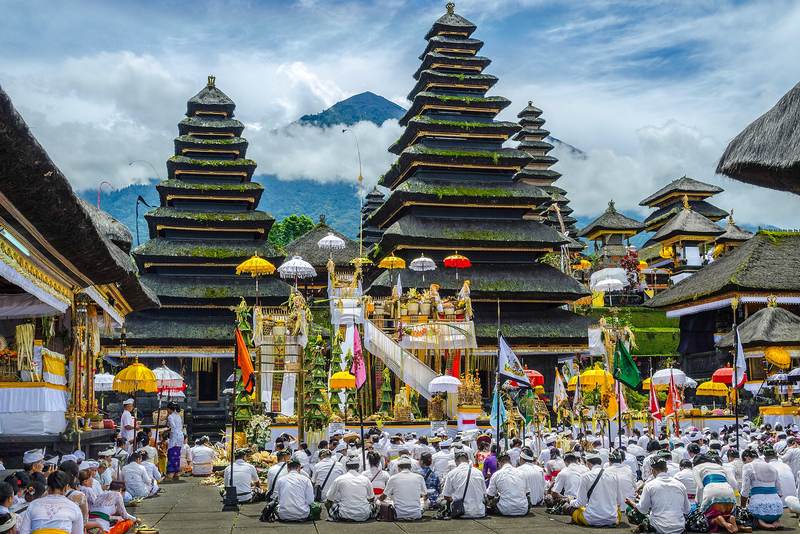
Every Balinese village has at least three temples, and many are open to visitors. Cover your shoulders and knees, and wear a sarong and a sash where the temple asks; the larger temples lend or rent them at the gate.
Inside, stay out of the inner courtyard unless you have come to pray, never sit on a shrine or a wall, and do not climb sacred trees or stand higher than a priest during a ceremony. A Bali governor's regulation from 2020 also bars anyone who is ritually impure from entering a temple, and it includes menstruation in that definition. Many temples post their rules at the entrance. Villages can impose their own sanctions for breaking temple rules, from a fine and an apology to paying for a cleansing ceremony.
Sacred mountains count too. In 2023 immigration deported a visitor who posed for indecent photos on Mount Agung, Bali's holiest mountain. Our guide to the best temples in Bali lists dress codes and entry fees temple by temple.
3. Unmarried Couples and the New Criminal Code
Indonesia's new Criminal Code came into force on 2 January 2026. It makes sex outside marriage punishable by up to a year in prison (Article 411) and living together as an unmarried couple punishable by up to six months (Article 412).
For visitors, the key detail is that both are complaint-based offences. Police can act only if a spouse, a parent or a child of one of the people involved files a complaint; hotels, neighbours and the police themselves cannot start a case.
4. Drugs, Cannabis and CBD
Indonesia has some of the world's toughest drug laws, and Bali is no exception. Trafficking can still bring the death penalty, and possession of even a small amount can mean years in prison. The UK Foreign Office warns that Indonesia has zero tolerance for cannabis in any form, including CBD oils, creams and vapes that are legal at home, so leave them out of your bag.
Never carry a parcel or bag for someone else, and treat any offer of drugs on the street or at a party as a possible set-up.
5. LGBTQ+ Travellers
Same-sex relationships are not illegal in Bali or anywhere in Indonesia except the province of Aceh, according to the UK Foreign Office. Same-sex marriage is not recognised, and the new Criminal Code's rules on sex outside marriage apply to everyone in the same complaint-based way.
Discretion with public displays of affection, as for any couple, is the local norm.
6. Alcohol, Methanol and Drinking
The legal drinking age is 21, and customs applies the same age to the duty-free alcohol allowance. Driving after drinking is also on the governor's list of things tourists must not do.
Methanol poisoning from counterfeit or homemade spirits has killed visitors in Indonesia. Drink in licensed bars and hotels, and skip cheap cocktails made with arak of unknown origin.
7. Driving and Scooters
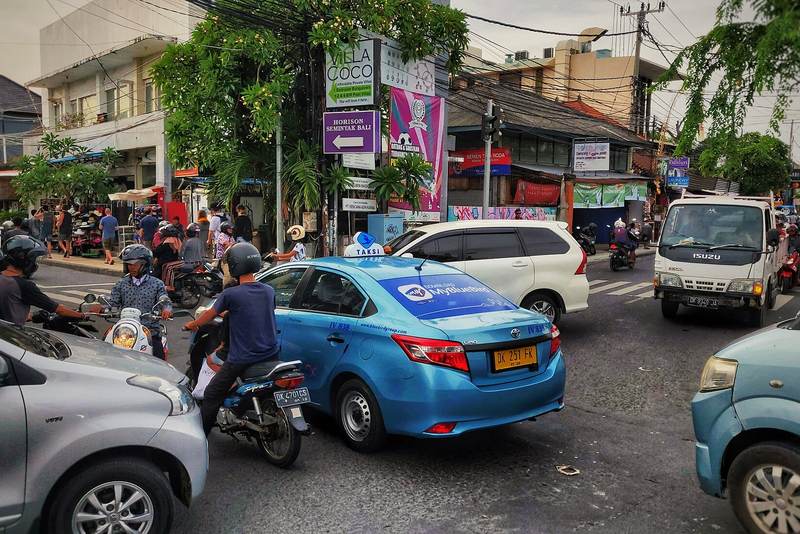
Traffic drives on the left. To ride a motorbike you need a valid licence for motorbikes, either an Indonesian licence or an International Driving Permit with the motorbike class, plus a helmet on every ride. The governor's rules also require cars to come from licensed rental companies.
A ban on tourists renting scooters was announced in 2023 but never brought in, and the 2025 rules assume visitors ride with a licence and a helmet. Travel insurance may not pay out for an unlicensed rider. A car with a driver, or Grab and Gojek, remove the risk for very little money.
8. Money: Rupiah Only, Licensed Changers and QRIS
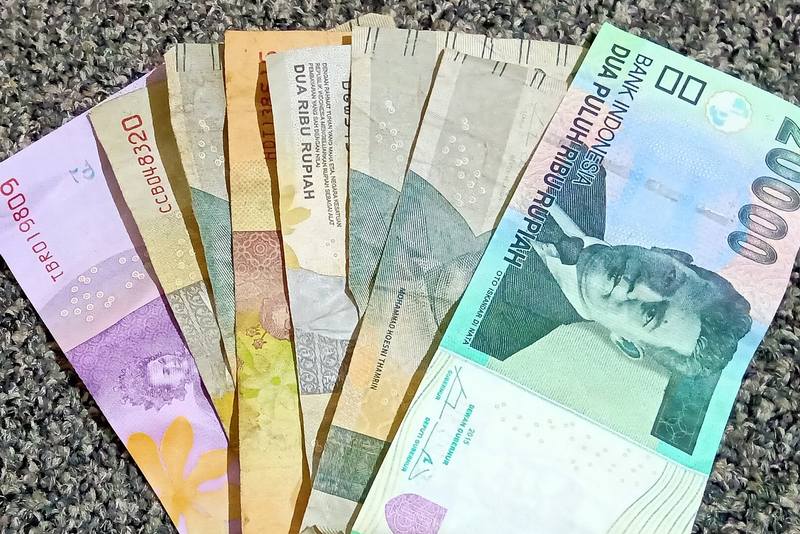
By Indonesian law every payment must be made in rupiah. The governor's rules add that tourists should change money only at licensed money changers, which display the Bank Indonesia KUPVA logo, their licence certificate and an "Authorized Money Changer" sign, and encourage paying with QRIS, Indonesia's national QR payment system.
Booths offering rates far above the rest of the street are the classic Bali money-changing trick: the count comes up short. Bank ATMs inside branches or shops are the simplest way to get cash.
9. Plastic, Littering and the Environment
Bali has restricted single-use plastic bags, straws and polystyrene since 2019, and the 2025 circular for tourists forbids using single-use plastic and polluting water. In 2025 the governor also banned the production of bottled water under 1 litre on the island. Bring a refillable bottle; most hotels, cafés and many shops have refill stations.
10. Working, Overstaying and Deportation
Bali's immigration office deported 342 foreigners in the first half of 2026. The usual reasons are overstaying, working without the right permit and behaviour that breaks public order. Work includes unpaid jobs, paid content for local businesses and teaching classes, even on a valid visa on arrival.
Overstaying costs IDR 1,000,000 per day, and a long overstay can mean detention, deportation and an entry ban. Our Bali visa on arrival guide explains the extension.
11. Nyepi: The Day Bali Switches Off
Nyepi, the Balinese Day of Silence, falls on Monday 8 March 2027. For 24 hours from 6 AM the whole island stops: no traffic, no flights, no work and no lights after dark. In 2026 the airport closed for the full day, ferries stopped and mobile data was switched off, though Wi-Fi, calls and text messages kept working.
Visitors must stay inside their hotel or villa, where staff keep things running quietly and curtains are drawn at night. The evening before brings the ogoh-ogoh parades, giant papier-mâché demons carried through every village, which are worth staying up for.
12. Etiquette That Is Not Law but Still Counts
These are customs rather than rules, but the Balinese notice them:
- Heads and hands. Do not touch anyone's head, including children's. Give and take things with the right hand, or with both.
- Feet. Do not point your feet at people or at shrines, and take shoes off before entering a home.
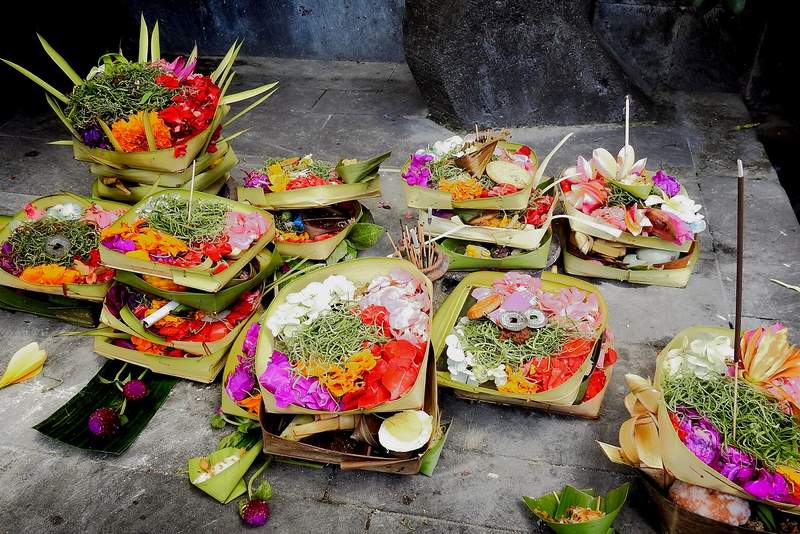
- Offerings. Step around the small palm-leaf offerings on pavements, steps and dashboards rather than over them.
- Ceremonies. Processions sometimes close roads. Wait, and never walk through the middle.
- Bargaining. Expected in markets and street shops, not in malls, restaurants or supermarkets. Keep it friendly.
- Tipping. Not expected; where the bill has no service charge, a tip for good service is appreciated.
13. Staying Safe and Emergency Numbers
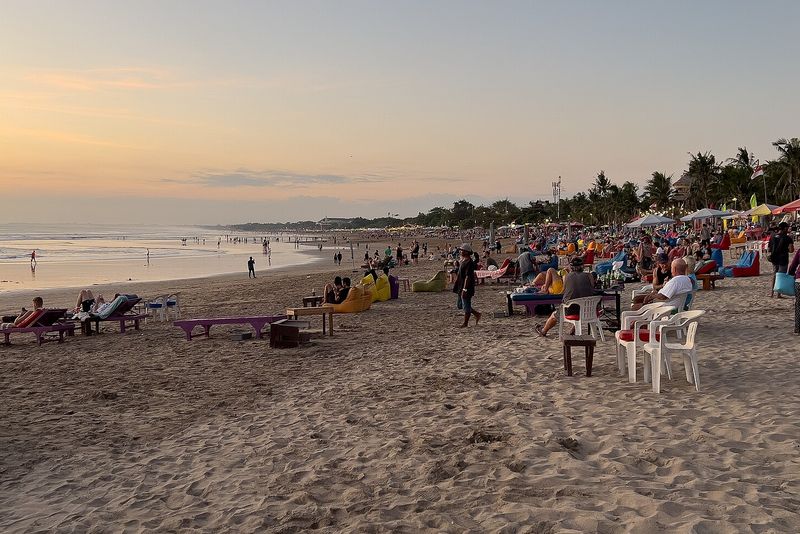
The risks for visitors are mostly everyday ones: motorbike accidents, bag-snatching by thieves on scooters, rip currents on surf beaches and rabies from dogs and temple monkeys. Swim between the lifeguard flags, keep bags on the side away from the road, and see a doctor the same day after any animal bite or scratch.
Police: 110. Ambulance: 118. The single emergency number 112 is being rolled out across Bali and already works in parts of the island. Tap water is not safe to drink.
Frequently Asked Questions
What are the new rules for tourists in Bali?
A 2025 governor's circular asks foreign tourists to respect temples, dress modestly, pay the tourist levy, use licensed guides, hotels and rentals, pay in rupiah, wear a helmet, and avoid single-use plastic, climbing sacred trees and working without permits.
Can unmarried couples stay together in Bali?
Yes. Indonesia's new Criminal Code (in force 2 January 2026) penalises sex outside marriage and cohabitation, but only on a complaint from a spouse, parent or child. Hotels cannot file a complaint.
Is CBD legal in Bali?
No. Indonesia has zero tolerance for cannabis in any form, including CBD oils, creams and vapes.
Can tourists rent scooters in Bali?
Yes, with a valid motorbike licence (an International Driving Permit with the motorbike class or an Indonesian licence) and a helmet. A 2023 proposal to ban tourist rentals did not become law.
Can women on their period enter temples in Bali?
Under a 2020 Bali governor's regulation, people who are ritually impure, which includes menstruation, should not enter temples.
What is the drinking age in Bali?
The legal drinking age is 21.
Is Bali a country?
No. Bali is a province of Indonesia, so Indonesian law applies alongside Bali's own rules for tourists.
When is Nyepi 2027?
Monday 8 March 2027. The airport is expected to close for 24 hours, as it does every Nyepi, and visitors must stay inside their hotel.

Written by
Travel & Lifestyle Writer
Bali-born · raised in Sanur · English Literature, University of Edinburgh
Aluna Saraswati is a Bali-born freelance travel and lifestyle writer at Baligasm. Raised in Sanur and educated in English Literature at the University of Edinburgh, she combines local insight with a global perspective. Passionate about Balinese cuisine, lesser-known corners of the island, scenic destinations and cultural experiences, Aluna writes practical travel guides and stories that help visitors discover Bali beyond the obvious. She is currently based in Bali, though her work often takes her off the island.
Add Baligasm as a preferred source on Google (opens in a new tab)