
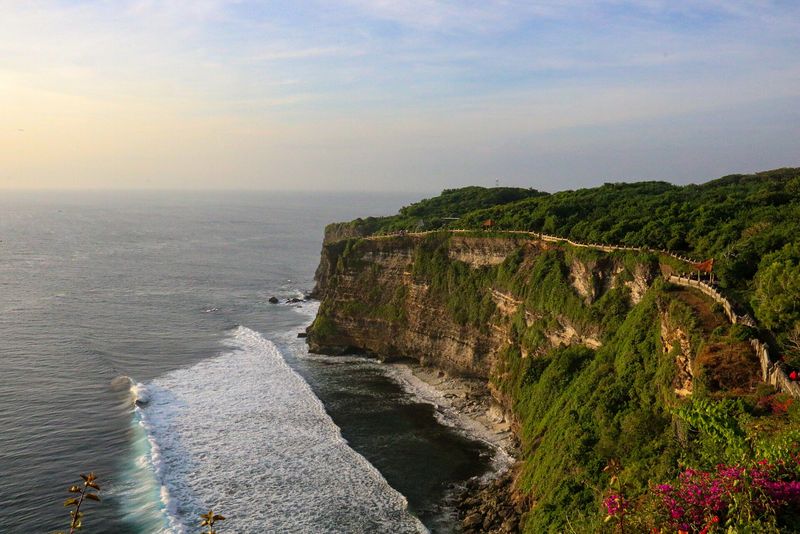
Uluwatu Temple & Kecak Dance 2026: Tickets, Times & Monkey Tips

Aluna Saraswati, Travel & Lifestyle Writer
Aluna Saraswati is a Bali-born freelance travel and lifestyle writer at Baligasm. Raised in Sanur and educated in English Literature at the University of Edinburgh, she combines local insight with a global perspective. Passionate about Balinese cuisine, lesser-known corners of the island, scenic destinations and cultural experiences, Aluna writes practical travel guides and stories that help visitors discover Bali beyond the obvious. She is currently based in Bali, though her work often takes her off the island.
At 6 PM every evening, dozens of men sit in rings on the cliff above the Indian Ocean and start chanting "cak", with no instruments, while the sun goes down behind them. The Kecak at Uluwatu Temple is the most famous performance in Bali, and the temple it belongs to is one of the island's most sacred.
This guide covers both: the temple, its rules and its notorious monkeys, and how to get a good seat for the Kecak in 2026. For the rest of the peninsula, from beaches to cliff bars, see our guide to Uluwatu.
Uluwatu Temple and Kecak at a glance
| Temple entry | IDR 60,000 per foreign adult, IDR 40,000 per child aged 4–12; under-4s free |
| Temple hours | 7 AM–7 PM daily |
| Kecak | 6 PM–7 PM daily; a second show runs on busy nights |
| Kecak ticket | IDR 150,000 per adult, IDR 75,000 per child, separate from temple entry |
| Payment | Cash or QRIS at the gate |
| Dress | Sarong and sash, lent at the entrance |
| Arrive | By 4:30 PM for a good Kecak seat |
Quick answers
- How much is the Uluwatu Temple entrance fee?
- Entry is IDR 60,000 per foreign adult and IDR 40,000 per child aged 4–12, since 3 January 2026. Children under four go free.
- What time is the Kecak dance at Uluwatu?
- It runs from 6 PM to 7 PM every day, with a second show at 7 PM on busy nights. The box office opens in the late afternoon.
- How much is the Kecak ticket at Uluwatu?
- Tickets are IDR 150,000 per adult and IDR 75,000 per child, separate from temple entry.
- Is the Kecak ticket included in the Uluwatu Temple entry?
- No. You pay temple entry and the Kecak ticket separately.
- What should I wear to Uluwatu Temple?
- Cover your shoulders; a sarong and sash are lent at the entrance.

1. Why Uluwatu Temple Matters
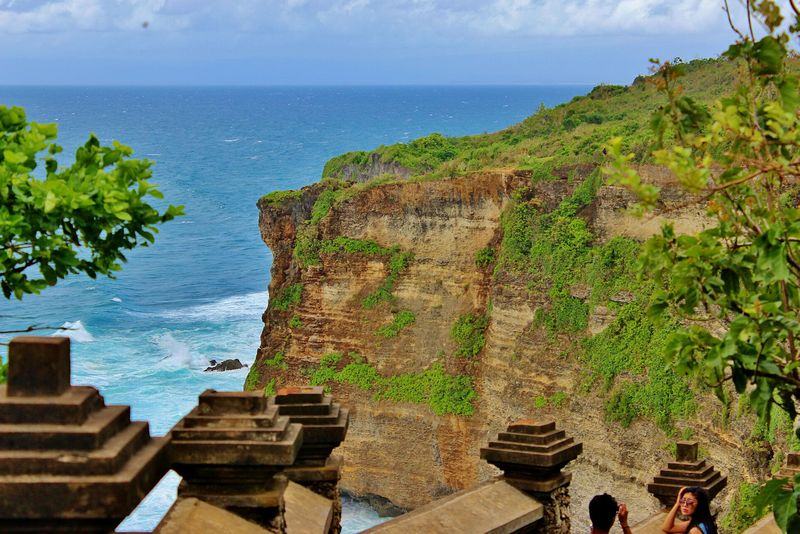
Pura Luhur Uluwatu stands on a cliff about 70 metres above the sea at the south-west tip of Bali, and it is counted among the island's great directional temples that guard Bali from the sea. Its history goes back at least to the 11th century, when the sage Mpu Kuturan is linked to its development. In the 16th century the priest Dang Hyang Nirartha added shrines here and, according to tradition, attained enlightenment on the cliff, which gave the temple the word "Luhur" in its name.
Legend says the monkeys that live in the grounds descend from his guards. Whatever their ancestry, they are now as famous as the temple.
2. What Visitors Can See
The innermost courtyard is reserved for worship, so visitors see the temple from its outer grounds and from the clifftop paths that run north and south from the gate. Those paths are the real reason to come early: low walls, frangipani trees and views straight down to the surf, with the temple's tiered shrine on the point.
Everyone wears a sarong and a sash, lent at the entrance, and shoulders should be covered. Following local custom, women who are menstruating should not enter the temple area.
3. Tickets, Hours and Payment
Since 3 January 2026, temple entry costs IDR 60,000 for foreign adults and IDR 40,000 for children aged 4 to 12; children under four go free. Indonesian and KITAS visitors pay IDR 40,000 and IDR 30,000. The gate takes cash or QRIS payment, so bring rupiah; international cards are often not accepted.
The temple is open from 7 AM to 7 PM every day, except around Nyepi: in 2026 it closed early on the eve of the Day of Silence, with no Kecak, and stayed shut on Nyepi itself. Parking costs a few thousand rupiah.
4. The Kecak Fire Dance
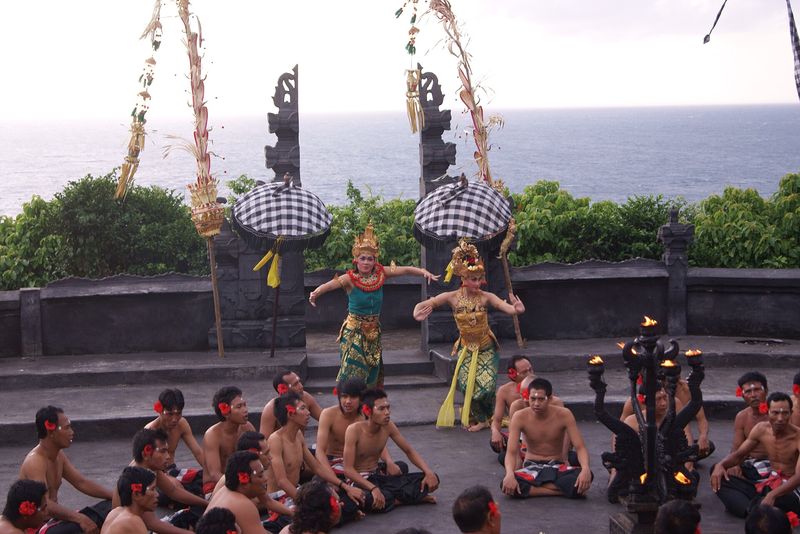
The Kecak was created in the 1930s in Gianyar from an older trance ritual, and Uluwatu's open-air amphitheatre on the cliff has become its most famous stage. There is no orchestra: a chorus of dozens of men provides the rhythm with their voices, while dancers in costume act out an episode of the Ramayana.
The story follows Rama and Sita in the forest, Sita's abduction by the demon king Rahwana, and Hanuman, the white monkey general, who finds her in Alengka, is captured and set on fire. The finale, with Hanuman kicking burning coconut husks across the stage, comes as the last light goes.
The show runs from 6 PM to 7 PM daily, and the box office opens in the late afternoon. On busy nights a second show follows at 7 PM. Tickets cost IDR 150,000 for adults and IDR 75,000 for children under 10, on top of temple entry. Buy a Kecak ticket online or at the box office on the day.
5. Getting a Good Seat
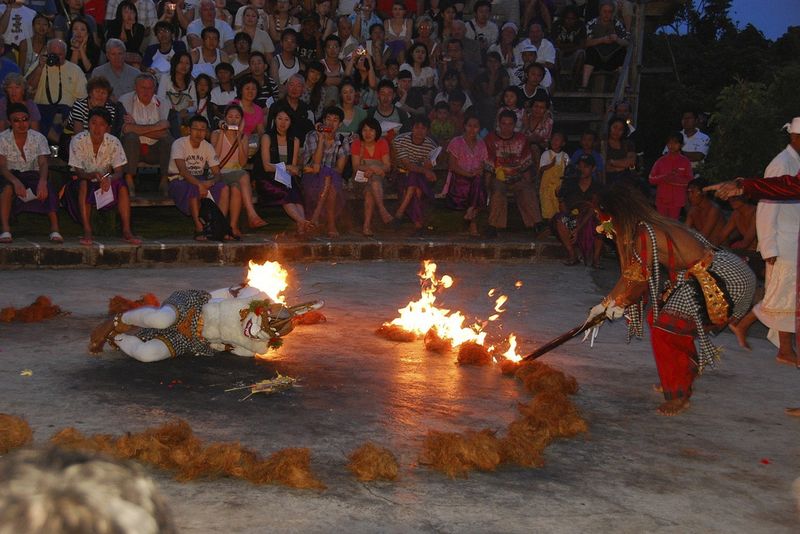
Seating is first come, first served on stone tiers with no backs, and the amphitheatre fills well before 6 PM. Arrive by 4:30 PM, walk the clifftop paths first, then take your seat around 5:15 PM.
We'd sit in the upper rows, near the centre: you see the whole circle, the sea behind it and the sunset, and you are clear of the smoke from the fire finale. The front rows feel the heat of the fire; seats facing the late sun are the hottest until it sets.
6. The Monkeys: How Not to Lose Your Sunglasses
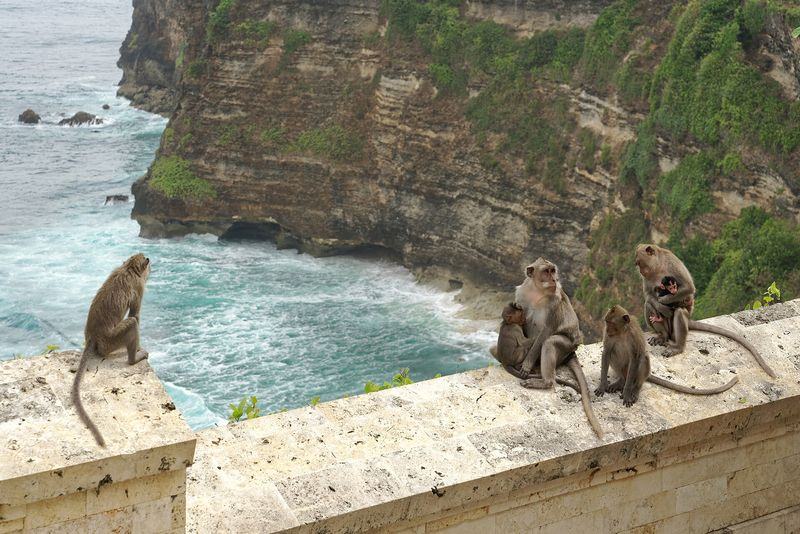
Uluwatu's long-tailed macaques are skilled thieves. Researchers who studied them in 2021 counted almost eight robberies an hour, and found that about half the identified monkeys stole. The monkeys grab glasses, hats, phones and flip-flops, then trade them back to the staff for food, holding out for better fruit when they have taken something more valuable.
- Put sunglasses, hats and earrings in a zipped bag before you enter.
- Hold your phone with a wrist strap, or keep it away.
- Carry no food and no plastic bags.
- Do not touch, feed or tease the monkeys.
- If something is taken, do not chase. Ask a uniformed monkey handler, who will trade fruit for it.
In 2025 the temple moved the main feeding area to the grounds near the new east car park, to keep the monkeys away from ceremonies. The temple says none of its monkeys has had rabies; after any bite or scratch, see a doctor straight away.
7. Ceremony Days
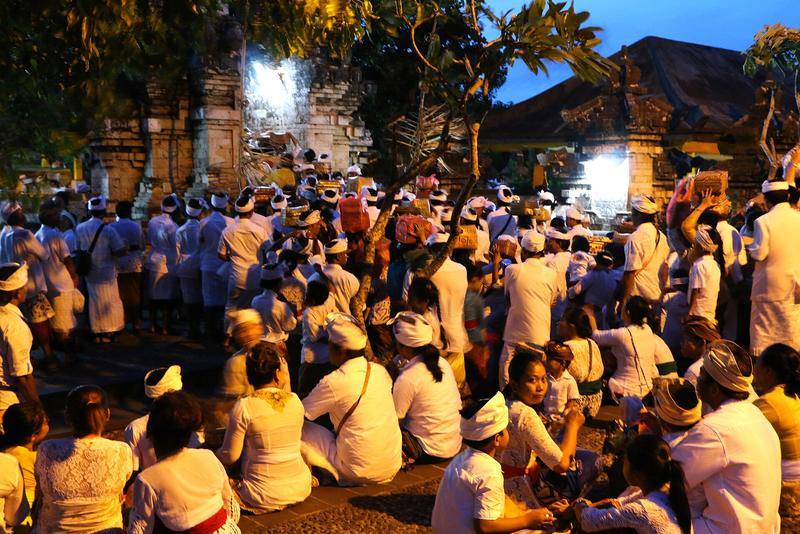
The temple's anniversary ceremony, its odalan, comes every 210 days on the Balinese calendar. During the May 2025 ceremony many areas were closed to tourists and traffic was heavy, though the Kecak went on as usual. By the same calendar, the next ceremonies fall around 2 February 2027; check locally before you go.
Ceremonies are a reason to visit respectfully, not to avoid the temple: watch from where you are allowed and never walk through a procession.
8. Getting There and the 2026 Traffic Scheme
There is no public transport to the temple, so come by car with a driver, taxi or ride-hailing app. Allow about 40–70 minutes from Nusa Dua, 30–60 from Jimbaran, 60–100 from Seminyak or Sanur and longer from Canggu or Ubud.
Since July 2026 Badung regency has run a permanent evening traffic scheme on the roads around Uluwatu, with turn restrictions at busy junctions near the temple. Leave earlier than the map suggests, and arrange your return before the show: ride-hailing cars are scarce after 7 PM. A sunset and Kecak tour with transfers avoids the problem.
9. Karang Boma: The Quieter Kecak
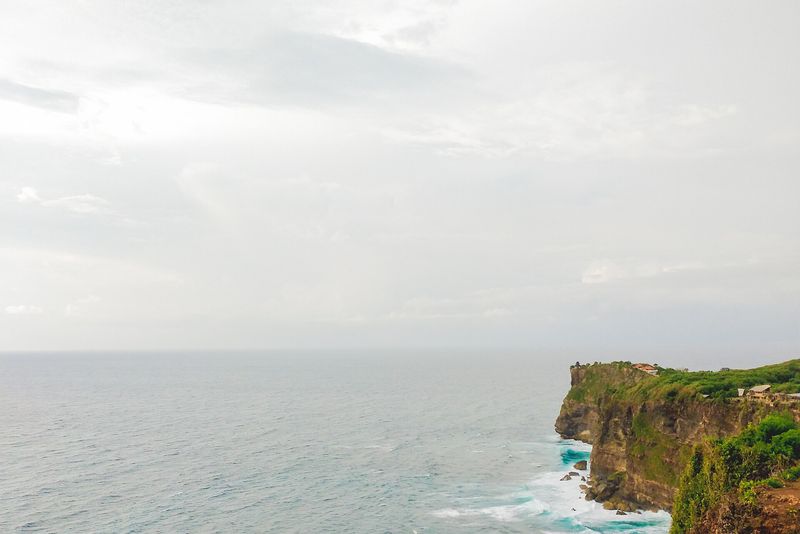
About a kilometre from the temple, the grassy Karang Boma cliff runs its own sunset Kecak every evening, with a smaller crowd and the same ocean backdrop. It does not replace the temple visit, but it suits travellers who want the dance without the queues; book a Karang Boma Kecak ticket ahead.
10. Access and Mobility
Stone stairs lead from the car park up to the temple, and parts of the clifftop path are stepped, with no ramps. The amphitheatre is stepped stone seating. Visitors with limited mobility can enjoy the level stretches of the cliff path and sit near the amphitheatre entrance.
Frequently Asked Questions
How much is the Uluwatu Temple entrance fee?
Entry is IDR 60,000 per foreign adult and IDR 40,000 per child aged 4–12, since 3 January 2026. Children under four go free.
What time is the Kecak dance at Uluwatu?
It runs from 6 PM to 7 PM every day, with a second show at 7 PM on busy nights. The box office opens in the late afternoon.
How much is the Kecak ticket at Uluwatu?
Tickets are IDR 150,000 per adult and IDR 75,000 per child, separate from temple entry.
Is the Kecak ticket included in the Uluwatu Temple entry?
No. You pay temple entry and the Kecak ticket separately.
What should I wear to Uluwatu Temple?
Cover your shoulders; a sarong and sash are lent at the entrance.
Are the Uluwatu monkeys dangerous?
They rarely bite but often steal. Secure glasses, hats and phones, carry no food and ask a handler if something is taken.
What time should I arrive for the Kecak?
Arrive by 4:30 PM to walk the cliffs and find a good seat before the amphitheatre fills.
Can I pay by card at Uluwatu Temple?
Bring cash or a QRIS payment app; international cards are often not accepted at the gate.
How long do you need at Uluwatu Temple?
Allow about three hours with the Kecak: an hour on the cliff paths, time to find a seat and the one-hour show.

Written by
Travel & Lifestyle Writer
Bali-born · raised in Sanur · English Literature, University of Edinburgh
Aluna Saraswati is a Bali-born freelance travel and lifestyle writer at Baligasm. Raised in Sanur and educated in English Literature at the University of Edinburgh, she combines local insight with a global perspective. Passionate about Balinese cuisine, lesser-known corners of the island, scenic destinations and cultural experiences, Aluna writes practical travel guides and stories that help visitors discover Bali beyond the obvious. She is currently based in Bali, though her work often takes her off the island.
Add Baligasm as a preferred source on Google (opens in a new tab)