
Uluwatu · Beach
Bingin Beach, Uluwatu
A classic reef barrel, low-tide rock pools and a cliff still recovering from the 2025 demolition.
By the Baligasm editors · Updated 29 October 2026 · Photo by @resisadventure
Overview
Bingin Beach: before you go
Bingin is a short ribbon of coarse white sand and live coral below the Pecatu cliffs on Uluwatu's west coast, 5 to 10 minutes north of Padang Padang and 40 to 90 minutes from the airport. Entry is free; only parking is charged. Surfers and anyone after low-tide rock pools will find it worthwhile, but it is no swimming beach and has had almost no facilities since July 2025. One or two hours is plenty unless you surf.
Bingin sits at the base of a limestone cliff in Pecatu, with Dreamland to its north and Padang Padang to its south. For decades it was the surf village people pictured when they thought of Uluwatu. Cliffside trading stalls grew into warungs, then into homestays, villas and restaurants piled on top of one another, joined by a winding staircase; according to Bali's civil police, some had stood since the 1980s. The draw was always the wave: a short, hollow left over shallow reef that appears on almost every list of Bali's finest barrels.
That village no longer exists. Commission I of the provincial legislature inspected the cliff on 6 May 2025 and later counted about 45 tourism businesses operating on land their owners did not hold. The Badung regent signed a demolition order on 15 July, and on 21 July Governor Wayan Koster and Regent I Wayan Adi Arnawa watched crews begin on 48 buildings. Officials cited government land inside a protected coastal setback and green zone, no permits and three ignored warnings, and said seven businesses had foreign backers. Many local staff lost their jobs, and a year on the clean-up was still incomplete.
The beach itself never shut and the wave never changed. Today you find a bare cliff with heaps of rubble and graffiti on the remaining walls, a rough path with broken steps, a couple of vendors with cold drinks and coconuts, umbrella hire and a single surf school. There are no toilets, showers, loungers or restaurants on the sand. Crowds have shrunk: one visit in May 2026 found roughly a quarter of the former scooter numbers in the car park and a lineup made up mostly of regulars. Cafés and villas on the plateau above, away from the cleared land, still trade.
Rebuilding is under way, slowly. A temporary way down was ordered after the regent sat down with residents and the Bingin Boardriders club in November 2025. Six months later, the regency's public works agency set out a phased plan: a safe descent via a new three-metre-wide staircase, clean water, showers and public toilets, plus room for wooden stalls and a performance stage, with a second phase in 2027. Concrete blocks for the steps had arrived by late May. Be clear about one thing: with coral underfoot, waves breaking near the shore and no lifeguard, Bingin is not for swimming. Padang Padang's sheltered cove, 5 to 10 minutes south, is.
- Opening hours
- No gate; open all day, but visit in daylight
- Ticket
- Free; parking IDR 5,000 per scooter, IDR 10,000 per car, cash
- Time needed
- One to two hours for the pools and the view; a morning to surf
- Best time
- Low tide for rock pools, mid tide for surf; April to October
- Dress code
- Beachwear, plus reef shoes for wading and the pools
- Location
- End of Bingin Beach Road, Pecatu; 5–10 minutes north of Padang Padang
Bingin Beach, end of Bingin Beach Road, Pecatu, South Kuta, Badung, Bali
Open in Google Maps ↗Read it on the Blog →What to see
What to see at Bingin Beach
The Bingin left
The main wave is a left-hander of under 50 metres over shallow live coral: a steep drop, a barrel, then a fast inside section called Greedies that unloads onto dry reef. Mid tide is ideal, with a south-west swell from head high to about one and a half times that, with the south-east trade wind offshore. At low tide it turns short, quick and dangerous. Surf guides consider it a wave for advanced surfers, and for capable intermediates on smaller days.
The lineup since the demolition
Before 2025 you might count 20 to 30 surfers out by mid-morning, with a well-established local hierarchy. In May 2026 fewer people were in the water, mostly familiar faces, and the Bingin Boardriders' contests were still paused. The hierarchy remains: wait your turn, never drop in, and expect locals to take the best sets, particularly in the afternoon.
Impossibles and Bingin Rights
Two further breaks share this reef. Impossibles stretches south towards Padang Padang, producing long, fast walls on bigger swells, though only a share of them can be ridden through to the end. Further north, towards Dreamland, Bingin Rights only wakes up at low tide with extra swell, and as it never gets as big as the main peak, intermediates like it. On days the main peak is too big, surfers drift to Impossibles or Padang Padang.
Rock pools at low tide
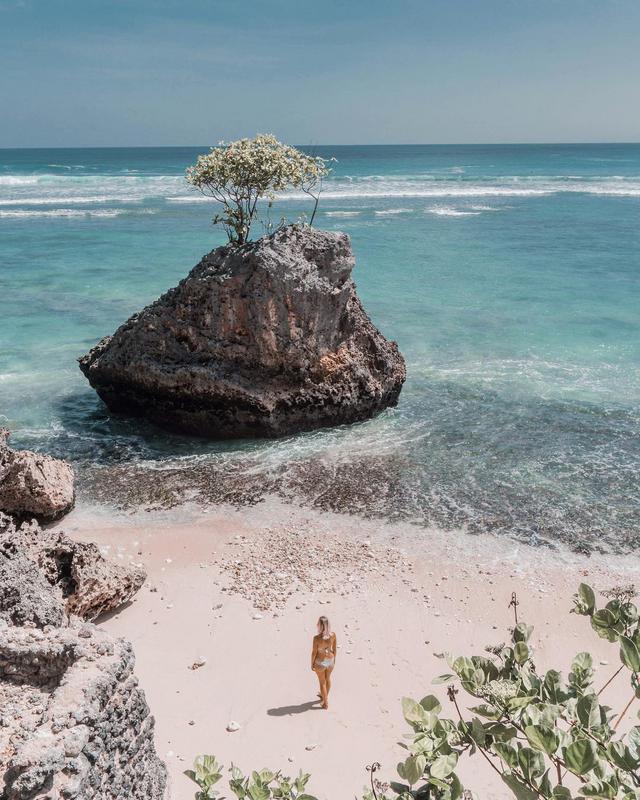
As the water drops, the reef shelf in front of the beach empties into shallow pools among the coral heads, the best reason for non-surfers to make the trip down. On a small-swell day you can sit in one and watch the surf, with a rock crowned by a little tree standing in the shallows behind you. Wear reef shoes: the coral is sharp and slick, urchins have been reported, and stray sets can sweep over the outer edge of the shelf.
The cleared cliff and the path
The descent tells the story. From the car park a narrow lane gives way to a twisting track and half-built, cracked steps, passing heaps of debris and spray-painted walls on the former warung sites; allow about eight minutes. The old staircase counted somewhere between 150 and 190 steps, depending on who did the counting. Badung's plan swaps it for a three-metre-wide stairway, so be ready for building work and diversions.
Evening light from the sand
Because the beach looks north-west, the sun itself slips away behind the headland; what you get instead is a pink and orange sky with surfers outlined black against it. More people come down late in the day, though numbers remain well below pre-2025 levels. For the full sun-into-sea moment, neighbouring Dreamland faces due west. Begin the climb before dark, as the path is unlit.
Cafés on the clifftop
With nothing left to eat at beach level, lunch happens up on the plateau. Salty Coffee, next to the car park, doubles as the usual meeting point for rides, and the lanes off Bingin Beach Road hold cafés, villas and guesthouses that stood outside the cleared zone. The Cashew Tree, where the regent met residents in November 2025 to discuss the beach's future, is on the same road.
Seasons
Best time to visit Bingin Beach
Let the tide set your timing. Surfers want mid tide, ideally dropping, on a south-west swell; low tide makes the wave short and hazardous over very shallow coral, and high tide strengthens the current running along the reef. Non-surfers should come at low tide on a small-swell day, when the pools appear and the beach widens. Look at a tide table the evening before.
Mornings bring offshore trades and soft light. Surfers used to start paddling out around 7 am, with numbers peaking a few hours later; afternoons belong mainly to local riders. The sand is busiest late in the day, when people come for the sunset colours. Middays are hot, with no shade unless you rent an umbrella.
The dry season, April to October, is also surf season, with offshore wind and the most reliable swell. Between November and March swells are smaller and less predictable, the path turns slippery, and heavy rain has washed demolition debris down onto the sand. On Nyepi, 8 March 2027, everyone on Bali stays indoors and the beach is out of bounds.
Getting there
How to get to Bingin Beach
Padang Padang and Labuansait Road5–10 minutes
About 3 km by scooter or car: north on Labuansait Road, then down Bingin Beach Road. You could walk, but the road is narrow and mostly without pavements.
Uluwatu Temple15–20 minutes
Roughly 7 km by road. Do the beach first and save the temple for sunset so you only drive the route once.
Ngurah Rai airport (DPS)40–90 minutes
About 20 km by car through Jimbaran and up Uluwatu Main Road. Steer clear of 4 to 7 pm, when the Jimbaran junction jams.
Jimbaran20–45 minutes
Around 13 km up Uluwatu Main Road. Bingin comes before the temple turn-off, so you avoid most Kecak traffic.
Nusa Dua30–45 minutes
About 19 km across the plateau via Ungasan.
Kuta or Seminyak1–2 hours
A 22–27 km drive through Jimbaran: allow up to 1.5 hours from Kuta and up to 2 from Seminyak.
Canggu1.5–2.5 hours by road
Roughly 37 km by road with a driver. Alternatively, GoBoat sails from Nelayan Beach and lands at Padang Padang in about 35 minutes, sea conditions permitting; Bingin is then a short ride north.
| From | Time | How |
|---|---|---|
| Padang Padang and Labuansait Road | 5–10 minutes | About 3 km by scooter or car: north on Labuansait Road, then down Bingin Beach Road. You could walk, but the road is narrow and mostly without pavements. |
| Uluwatu Temple | 15–20 minutes | Roughly 7 km by road. Do the beach first and save the temple for sunset so you only drive the route once. |
| Ngurah Rai airport (DPS) | 40–90 minutes | About 20 km by car through Jimbaran and up Uluwatu Main Road. Steer clear of 4 to 7 pm, when the Jimbaran junction jams. |
| Jimbaran | 20–45 minutes | Around 13 km up Uluwatu Main Road. Bingin comes before the temple turn-off, so you avoid most Kecak traffic. |
| Nusa Dua | 30–45 minutes | About 19 km across the plateau via Ungasan. |
| Kuta or Seminyak | 1–2 hours | A 22–27 km drive through Jimbaran: allow up to 1.5 hours from Kuta and up to 2 from Seminyak. |
| Canggu | 1.5–2.5 hours by road | Roughly 37 km by road with a driver. Alternatively, GoBoat sails from Nelayan Beach and lands at Padang Padang in about 35 minutes, sea conditions permitting; Bingin is then a short ride north. |
Know before you go
Tips for your visit
- 01Check the tide before you leave: low for the pools, mid for the surf.
- 02Bring reef shoes. Coral and rock cover the bottom, and urchins have turned up in the pools.
- 03Do not plan on swimming. There is no lifeguard, and Padang Padang's calm cove is 5–10 minutes away.
- 04Carry cash for parking, drinks and an umbrella (about IDR 100,000 for the day), plus water and sunscreen; shade is scarce.
- 05There were no toilets or showers on the beach in mid-2026, so use the cafés at the top before heading down.
- 06Vehicles stop at the top, where scooters and cars park in separate areas. In a car, being dropped off beats hunting for a space.
- 07Ride-hailing drivers can drop off and collect at the car park; Salty Coffee beside it is the easiest place to meet.
- 08Watch your footing through the rubble, and stay clear of the foot of the cleared cliff after heavy rain. The path is steep, uneven and impossible with a pushchair or wheelchair.
- 09Surf here only if shallow reef and a crowded lineup feel normal to you; beginners should book a lesson at Baby Padang, Balangan or Dreamland.
- 10Respect local priority in the water. Dropping in is the fastest way to end your session.
- 11Leave before dark, as the path has no lighting, and expect detours while the phased stair and toilet works continue into 2027.
FAQ
Bingin Beach questions, answered
Is Bingin a good place to swim?
+
Not really. The seabed is coral and rock, waves break near the sand and nobody is on lifeguard duty, so this is a beach for surfing and wading. When the tide is out and the swell small, the reef shelf forms pools to sit in, wearing reef shoes against sharp coral and urchins. For a proper swim, head 5 to 10 minutes south to Padang Padang.
Why were the buildings at Bingin torn down?
+
On 21 July 2025 Bali's governor and the Badung regent oversaw the start of demolition on 48 cliffside villas, restaurants and homestays. The government said they stood on state land inside a protected coastal setback without permits, and had ignored three written warnings. Sand and surf remained accessible throughout, while the cliff became a bare site, still partly covered in debris, waiting for redevelopment.
Can I still visit Bingin Beach?
+
Yes. It never closed, and people still surf and sunbathe there. You reach the sand on a rough track through the demolished area, and in mid-2026 the beach had only a few drink sellers, umbrellas for hire and one surf school, but no toilets, showers or restaurants at beach level.
How many steps lead down to Bingin?
+
The old staircase between the warungs, somewhere between 150 and 190 steps by various counts, went with the buildings. A steep, winding path and broken steps now take about eight minutes through the rubble. Badung's first phase of works includes a three-metre-wide staircase, so the route may shift during 2026 and 2027.
Can beginners surf at Bingin?
+
No. Expect a steep take-off into a quick, tubing left above barely covered coral, plus a busy lineup where locals come first. It is a wave for advanced riders, and for strong intermediates only when the swell is modest. Learners are better served by lessons at Baby Padang, or at Balangan and Dreamland when the swell is small.
Which tide suits the Bingin wave best?
+
Mid tide, preferably falling, on a south-west swell of head high to roughly one and a half times that, with offshore south-east trades. Low tide makes it short, fast and risky over very shallow reef. On a larger swell a higher tide is surfable, although rising water pulls a stronger current across the reef.
Is there an entrance fee?
+
No ticket is needed and there is no gate. The only charge is parking at the top, IDR 5,000 for a scooter or IDR 10,000 for a car, paid in cash. An umbrella on the sand costs about IDR 100,000 for the day, so carry small notes.
Can I get food or use a toilet at Bingin?
+
Only just. In mid-2026 the beach had a couple of vendors with cold drinks, coconuts and snacks, but no toilets, showers, loungers or restaurants. The first phase of Badung's works adds public toilets, showers and a clean water supply. Until those open, eat and use the facilities at the plateau cafés, such as Salty Coffee by the car park.
Is Bingin still worth the trip?
+
Surfers will say yes: the wave is as good as ever and the lineup thinner than before 2025. Non-surfers staying close by will get a pleasant low-tide hour out of the pools and the outlook. If you want to swim, sit in the shade and eat lunch without climbing back up, choose Thomas Beach, Dreamland or Padang Padang until the new facilities open.
What are the distances to Padang Padang, Dreamland and the temple?
+
Both are close. Head south about 3 km along Labuansait Road and you reach Padang Padang in a 5 to 10-minute scooter ride. Dreamland is the northern neighbour, inside the Pecatu Indah estate, and takes between 5 and 15 minutes by road depending on your route. Allow 15 to 20 minutes for the 7 km to Uluwatu Temple and 40 to 90 for the airport.
Nearby
Pair it with
Padang Padang Beach
The closest calm swim, a cove entered through a gap in the cliff, with the Padang Padang Left offshore; 5–10 minutes by scooter.
Dreamland Beach
Broad, west-facing sand a few steps from parking, for sunset and a dip in the gentler northern corner; 5–15 minutes by car.
Uluwatu Temple
The clifftop sea temple, its macaques and the 6 pm Kecak at sunset; 15–20 minutes by car.
Balangan Beach
A long arc of sand and reef on the Bukit's north side, with surf schools on small days; 20–30 minutes by car.
Melasti Beach
Calm south-coast water at the foot of white cliffs, reached by road rather than stairs; 25–35 minutes by car.
More in Uluwatu