
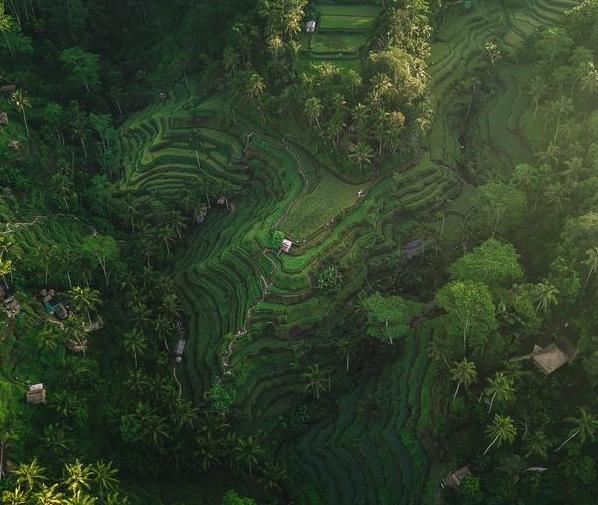
Rice terraces, jungle gorges, temples on every corner and a food scene to rival any city: Ubud is the Bali most travellers fall for. It's also where the island's art, dance and spiritual life are most visible, from evening dance shows at the palace to the offerings on every step.
For 2026, this guide covers the one-way traffic trial around the centre, the latest entry fees, where to stay by area, how to stay safe and the 2027 dates to plan around.
Ubud at a glance
- Where: central Bali, about 37 km (1–1.5 hours off-peak) from Ngurah Rai Airport.
- How long: 3 nights minimum, 4–5 with day trips.
- Best months: April to October; the rains peak from January to February.
- Getting around: walk the centre; hire a driver for day trips (app pickups are restricted in the centre).
- Before you go: pay the IDR 150,000 tourist levy on Love Bali.
1. Where is Ubud?
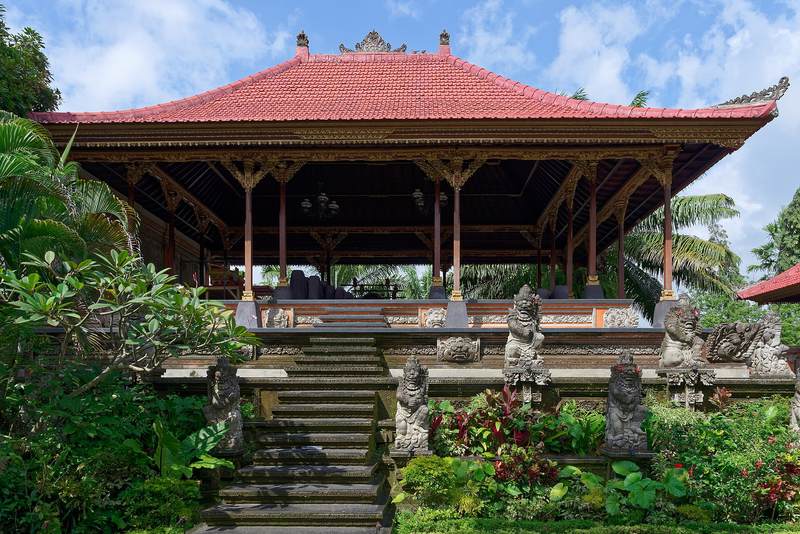
Ubud is a town in the hills of central Bali, in Gianyar Regency, about 200 m above sea level. It's around 37 km by road from Ngurah Rai International Airport and 22 km north of Denpasar, the capital. The wider Ubud district is home to about 75,000 people (2020 census) and takes in the villages of Sayan, Kedewatan, Penestanan, Peliatan and Mas.
From the airport, allow 1 to 1.5 hours off-peak and 2 to 2.5 hours or more in the late afternoon and on holiday weekends. Most visitors pre-book a private driver or a hotel transfer, so someone is waiting in arrivals. Ride-hailing cars collect from the airport's designated pickup area rather than the kerb, and evening arrivals land in the worst of the traffic. On a budget, the Kura-Kura shuttle runs from Kuta via Sanur to Ubud for IDR 100,000 one way (IDR 160,000 return).
Seminyak and Canggu are 31–36 km away, roughly the same drive, and Sanur, the nearest calm swimming beach, is about 45–90 minutes by car.
2. Why is Ubud so famous?
Ubud has been Bali's cultural heart for almost a century. In 1936 the prince Tjokorda Gde Agung Sukawati founded the Pita Maha artists' association here with the painters Walter Spies and Rudolf Bonnet, and the town has drawn painters, dancers and writers ever since. The name is said to come from ubad, the Balinese word for medicine, after the healing herbs that grew along its rivers.
Today that heritage sits alongside yoga studios, award-winning restaurants and some of Asia's best jungle resorts. Rice terraces, river gorges and temples are only minutes from the centre, and the Ubud Writers & Readers Festival, founded after the 2002 bombings to bring visitors back, is now one of Southeast Asia's biggest literary events.
3. What is special in Ubud Bali?
Most of Ubud's highlights are within walking distance of the palace junction:
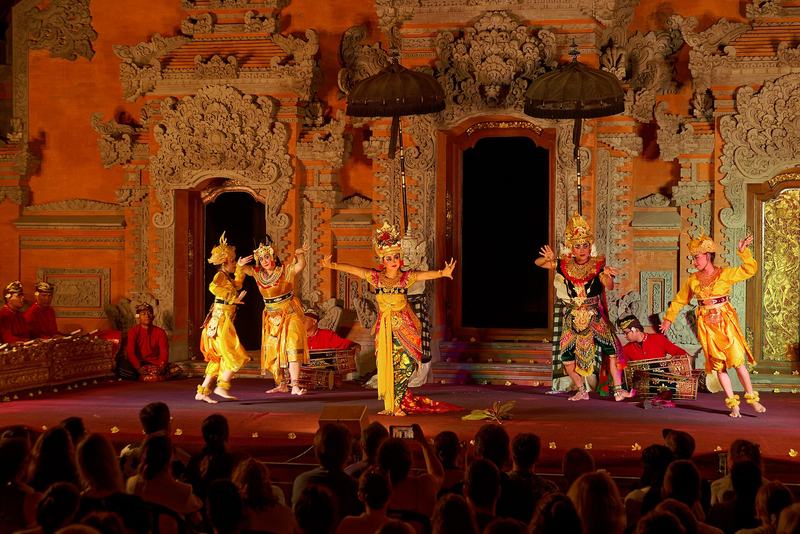
- Ubud Palace (Puri Saren Agung): the home of the last ruling king of Ubud, Tjokorda Gde Agung Sukawati, and still owned by the royal family. The outer courtyards are free to visit by day, and Balinese dance is performed in the courtyard most evenings (around IDR 100,000).
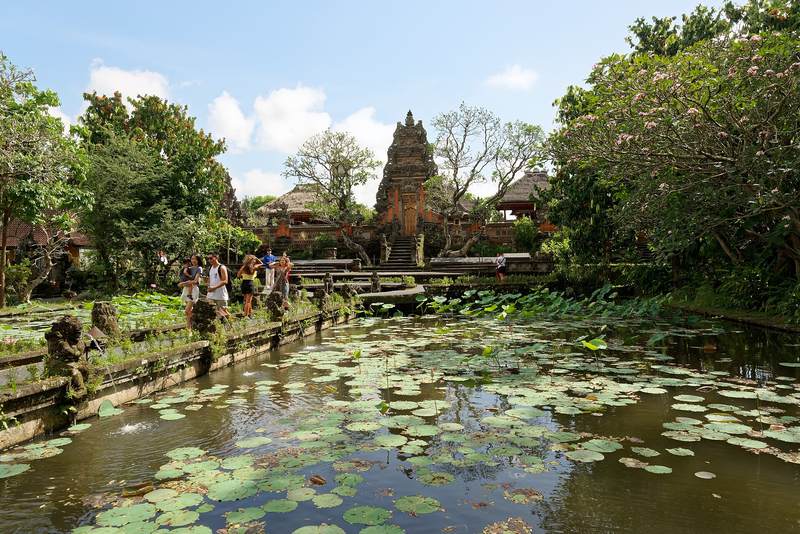
- Pura Taman Saraswati: a temple to the goddess of learning, reached across a lotus pond behind Café Lotus. Entry is IDR 65,000 for international adults and IDR 50,000 for children, and booking ahead is advised. The grounds are open from 8 AM to 7:30 PM (Fridays until 9:30 PM), except on Nyepi and during private ceremonies, and sarongs are required.
- Sacred Monkey Forest Sanctuary: forest temples and hundreds of long-tailed macaques. Open 9 AM – 6 PM (last entry 5 PM); IDR 130,000 adults, IDR 100,000 children. Don't bring food or loose items.
- Ubud Art Market: opposite the palace, for sarongs, baskets, woodcarvings and paintings, open daily until about 5 PM. Bargaining is expected.
- Art museums: Museum Puri Lukisan (opened in 1956 with Rudolf Bonnet as first curator), the Neka Art Museum (daily 9 AM – 5 PM), ARMA (Agung Rai Museum of Art), and the Blanco Renaissance Museum, home of the painter Antonio Blanco from 1952 until his death in 1999.
For more sights in and around town, see our best places to visit in Ubud.
4. How to Get Around in Ubud
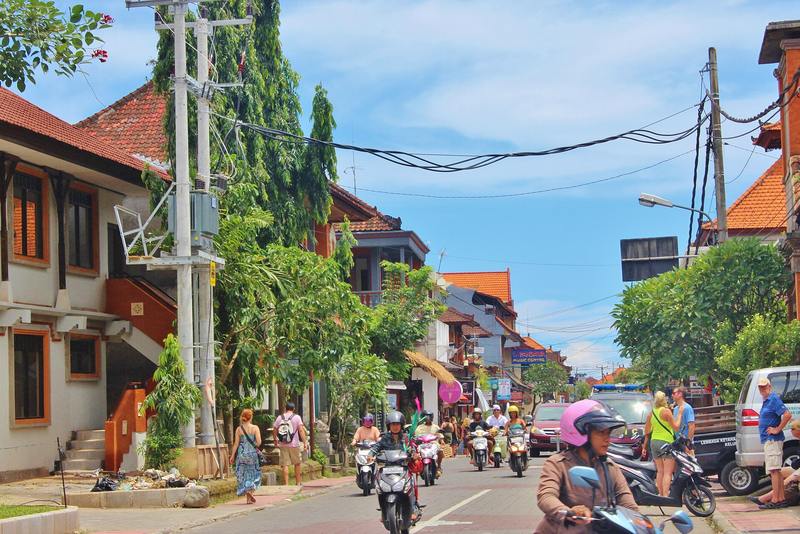
Central Ubud is compact and best explored on foot: the palace, the market, Saraswati temple and the Monkey Forest are all within about 1.5 km of each other. Since 8 September 2026, Gianyar's transport department has been trialling a new traffic layout: Ubud Main Road runs one way eastbound from the Monkey Forest Road junction to the Arjuna statue, Pengosekan Road runs one way northbound, and tour coaches are kept out of the centre, with drop-offs at Dalem Puri. It's still a trial, so expect detours and allow extra time if you're driving.
Ride-hailing apps work for drop-offs, but pickups in central Ubud are restricted by local transport groups, so walk a few streets out of the core or use a local driver. For day trips, hiring a car with a driver for the day is the easiest option.
If you rent a scooter, Bali's 2025 rules for foreign visitors (Governor Circular No. 7/2025) require a valid international or national driving licence and a helmet. Ubud's roads are narrow and hilly, so only ride if you're experienced.
5. When is the Best Time to Visit Ubud?
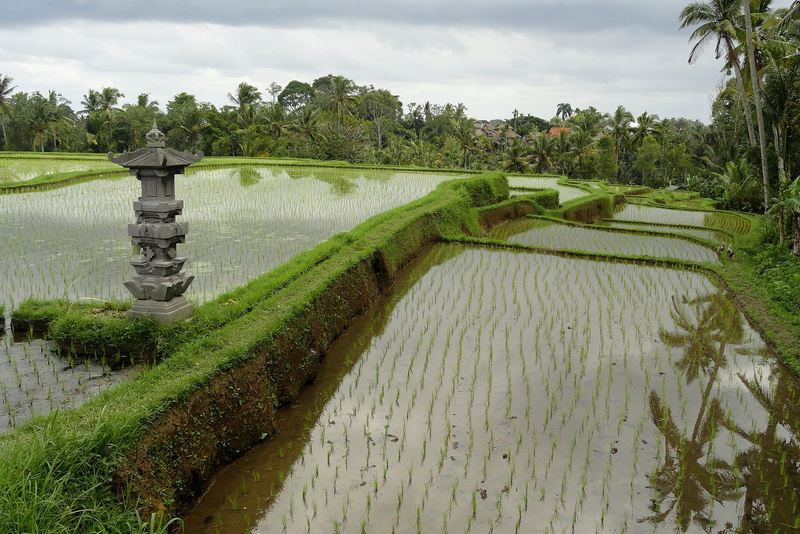
The dry season runs from April to October, and August is usually the driest month. The wet season runs from November to March, with January usually the wettest month, when heavy afternoon storms are common. Temperatures barely change through the year: warm days around 30 °C and mild nights in the low 20s.
For 2026/27, BMKG, Indonesia's weather agency, expects the rains to arrive later than usual, from November, with the peak in February 2027.
- Ubud Writers & Readers Festival: held each October; the 2027 edition runs 20–24 October.
- Ubud Food Festival: held each year in late May at Taman Kuliner (the 2026 edition ran 28–31 May).
- Galungan and Kuningan: 13 and 23 January 2027, then again from 11 August 2027, when villages are lined with bamboo penjor.
- Nyepi, the Day of Silence: Monday 8 March 2027. All of Bali, including the airport, closes for 24 hours. In 2027 it falls just before the Idul Fitri holidays (10–11 March), so expect busy roads and full flights that week.
Travelling in the rainy months? Read our guide to the wet season in Bali.
6. How many nights do you need in Ubud?
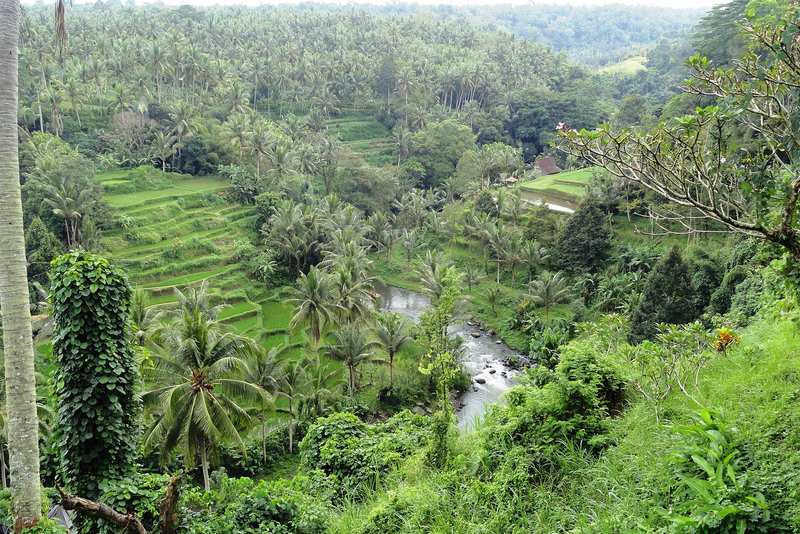
Three nights is the minimum to see Ubud properly: one day for the centre (palace, Saraswati temple, Monkey Forest and the art market), one for the rice terraces and water temples to the north, and one for a cooking class, a spa and an evening dance show.
Stay four or five nights if you want to add a Mount Batur sunrise trek, the waterfalls or a few slow days at a jungle resort. A popular split is three or four nights in Ubud followed by the beach in Uluwatu, Seminyak or Sanur.
- Day 1: Campuhan Ridge Walk at sunrise, Ubud Palace, Saraswati temple, the Monkey Forest and a dance show.
- Day 2: Tegallalang rice terraces, Tirta Empul water temple and Gunung Kawi, then a late lunch with a view of the Ayung valley at The Sayan House.
- Day 3: a waterfall in the morning, a cooking class or museum, and dinner at one of Ubud's best restaurants.
7. Ubud or Uluwatu: Which is better?
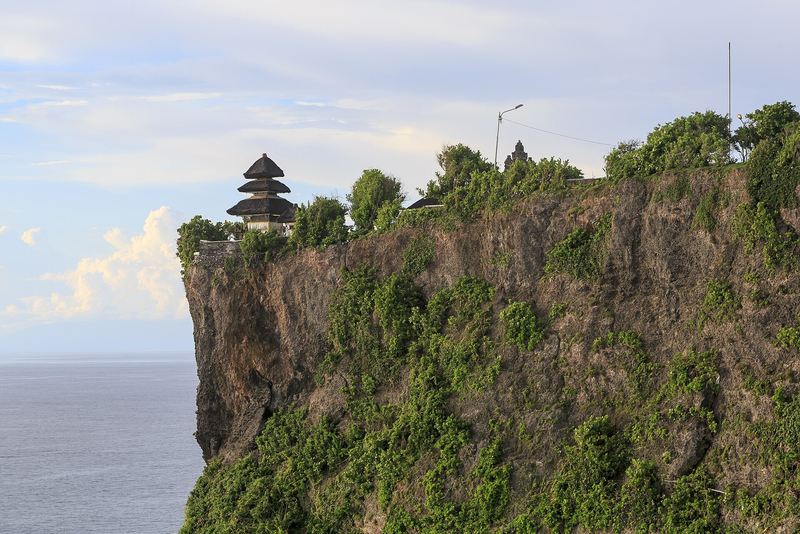
They're two different Balis, about 54 km apart (allow 1.5–3 hours by car), so most first-time visitors do both.
Choose Ubud for culture, rice terraces, temples, yoga and food, with cooler evenings and jungle-view resorts. Choose Uluwatu for beaches, world-class surf, clifftop sunsets, the Kecak dance at Uluwatu Temple and beach clubs.
Ubud itself has no beach. If you want sea time without a long transfer, Sanur is the nearest calm beach, 45–90 minutes away; Seminyak and Canggu suit travellers who want cafés, shopping and nightlife.
Start in Ubud while you're fresh, then finish at the beach. See our guides to things to do in Uluwatu and the best hotels in Uluwatu.
8. Where to Stay in Ubud?
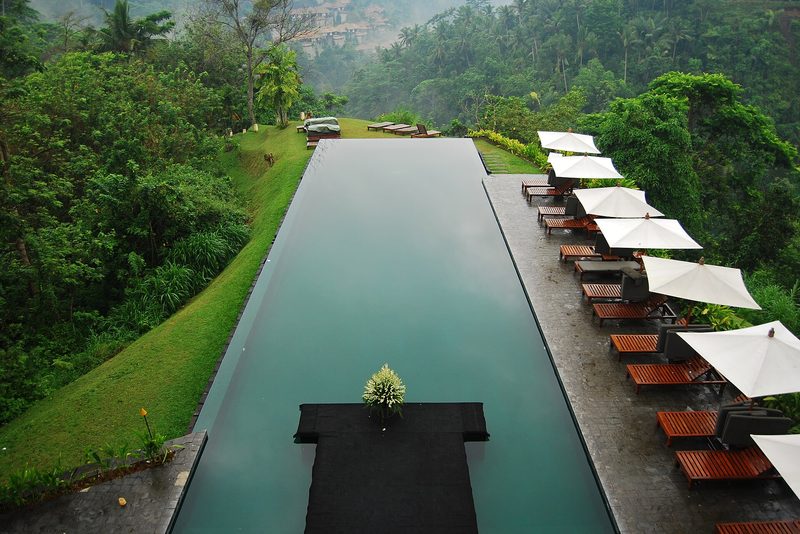
Where you stay changes your trip more in Ubud than almost anywhere in Bali. Prices below are from-rates per night for two adults, taxes included, and change with the season.
- Central Ubud: walk to the palace, cafés and the Monkey Forest. Try Alaya Resort Ubud on Hanoman Road (from IDR 2,564,000) or Bisma Eight (from IDR 4,872,000).
- Penestanan and Nyuh Kuning: calmer villages a 15–25-minute walk from the centre, Penestanan on its own ridge across the Campuhan bridge and Nyuh Kuning just south of the Monkey Forest. Good for longer stays in villas and guesthouses without needing a car every evening.
- Sayan and Kedewatan: the Ayung River valley, 10 minutes west, home to Four Seasons Resort Bali at Sayan (from about IDR 18,100,000), Mandapa, a Ritz-Carlton Reserve, Amandari and the bamboo houses of Bambu Indah.
- Payangan and Tegallalang: quieter, greener and further north, with COMO Shambhala Estate, Alila Ubud, Padma Resort Ubud (from about IDR 4,100,000) and Capella Ubud's tented camp.
- On a budget: The Craft Hotel Ubud (from IDR 1,648,000) and Novotel Bali Ubud Resort (from IDR 2,263,000) both have pools.
Compare all 40 picks in our guide to where to stay in Ubud, or see the best affordable hotels in Ubud.
9. The Best Activities to Do in Ubud
Eat your way around town
Ubud has some of the best food in Indonesia, from tasting menus to family-run warungs. Locavore NXT, the restaurant-lab that grew out of Locavore, serves a tasting menu at IDR 2,250,000++; Pasir, Melali and Maluku are favourites in town, Alchemy is the best-known of the plant-based cafés, and Nasi Ayam Kedewatan Ibu Mangku and Warung Makan Bu Rus are classic local lunches.
Nights are low-key: cocktail bars, live music and dinner with a view rather than clubs. See our full list of the best restaurants in Ubud, the best bars in Ubud and the local warungs worth the trip.
Walk the Campuhan Ridge
This free, paved ridge path starts by Pura Gunung Lebah, near the Blanco museum bridge, and runs about 2 km between two river valleys. Go at sunrise, before it gets hot.
Watch a Balinese dance
Legong, Barong and Kecak performances are held most evenings at Ubud Palace and other temples in town. Tickets are sold at the gate or in the street during the day.
Take a class, a yoga session or a spa day
Ubud is the place for a Balinese cooking class, a silver-jewellery or batik workshop, or a morning at one of its many yoga studios. For massages and rituals, see our guide to the best spas in Bali.
10. Exploring the Surroundings of Ubud
Some of Bali's best sights are less than an hour away:
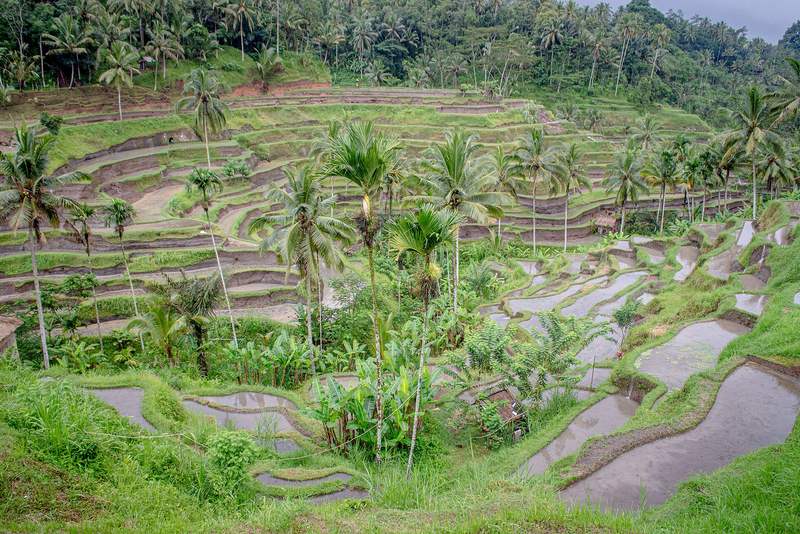
- Tegallalang rice terraces (10 km north): go early to beat the tour buses. There's a small entry fee and farmers' donation points along the paths.
- Tirta Empul (19 km, Tampaksiring): the water temple where Balinese come to purify themselves in the spring-fed pools. IDR 75,000 adults, IDR 50,000 children, daily 8 AM – 6 PM; the purification ritual is booked separately. Gunung Kawi, with its 11th-century shrines carved into the cliff, is a few minutes up the same road.
- Goa Gajah (5 km south-east, Bedulu): the Elephant Cave, a meditation cave with a carved demon mouth and old bathing pools. About IDR 50,000 for adults and IDR 25,000 for children, open daily from 8 AM; sarongs are provided.
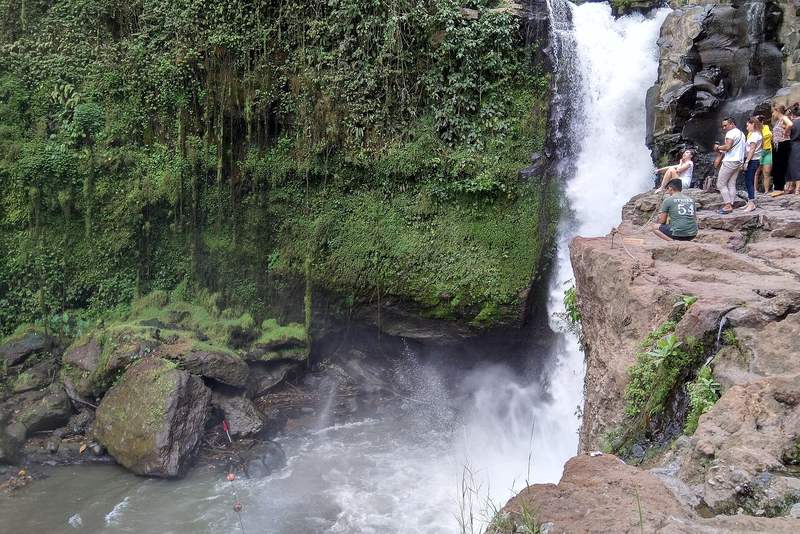
- Waterfalls: Tegenungan (10 km south) is the biggest, Tibumana (in Bangli) the best for a swim, and Kanto Lampo the most photogenic.
- Mount Batur (about 43 km): sunrise treks start around 4 AM, and group treks with a local guide usually cost about IDR 400,000–800,000 per person, so check what the price includes.
- Penglipuran village (Bangli): one of Bali's best-kept traditional villages, IDR 50,000 for foreign adults. Pair it with the rice-terrace valley of Sidemen, about 1.5 hours from Ubud, for a quieter alternative to Tegallalang.
Prefer a tour? Book a Mount Batur sunrise trek, a Tegallalang and Monkey Forest day tour or a swing and waterfalls tour on Klook, or see our best things to do in Bali.
11. Is Ubud safe for tourists?
Yes. Ubud is one of the calmest parts of Bali, and the risks are mostly everyday ones: traffic, uneven pavements, monkeys and the weather.
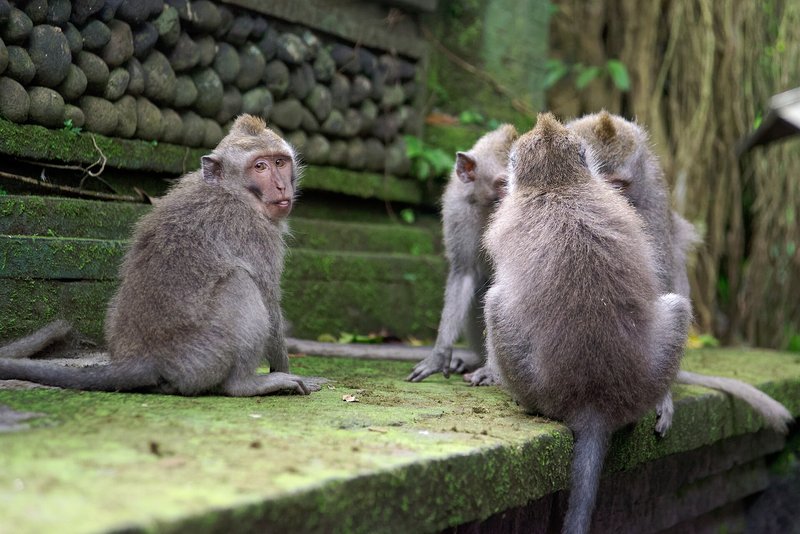
- Monkeys. The macaques in and around the Monkey Forest grab anything loose and can bite or scratch. Don't feed, touch or stare at them, and leave food and plastic bags behind. Bali has rabies, so have any bite or scratch from a monkey or dog cleaned and checked at a clinic the same day.
- Traffic and pavements. Pavements in the centre are narrow and broken in places, with open drains and parked scooters, so walk single file and carry a torch on unlit paddy paths after dark.
- Scooters. Ride only with a valid licence, a helmet and real experience; Ubud's hills and blind corners are not the place to learn.
- Water and mosquitoes. Don't drink tap water; use bottled or filtered water. Dengue is spread by day-biting mosquitoes, especially in the wet season, so use repellent.
- Waterfalls and rivers. Rivers rise fast after heavy rain. Skip waterfalls and river walks during or straight after a downpour, and stay out from directly under falling water.
- Emergencies. Dial 112, Indonesia's emergency number, and keep your hotel's phone number and your travel insurance details handy.
12. Insider Tips for Visiting Ubud
- Pay the tourist levy. Most foreign visitors pay a one-off IDR 150,000 levy, in force since 14 February 2024. Pay it on the official Love Bali website or app before you fly (the quickest option), at the cashless counters at the airport, or at registered hotels and attractions during your stay, and keep the voucher on your phone.
- Respect temples. Bali's 2025 rules for visitors ask for modest dress at temples and keep visitors out of the inner and middle courtyards unless they are there to pray in traditional Balinese dress; women who are menstruating may not enter these areas. Temples also expect a sarong and sash. Our guide to the best temples in Bali covers dress codes and fees.
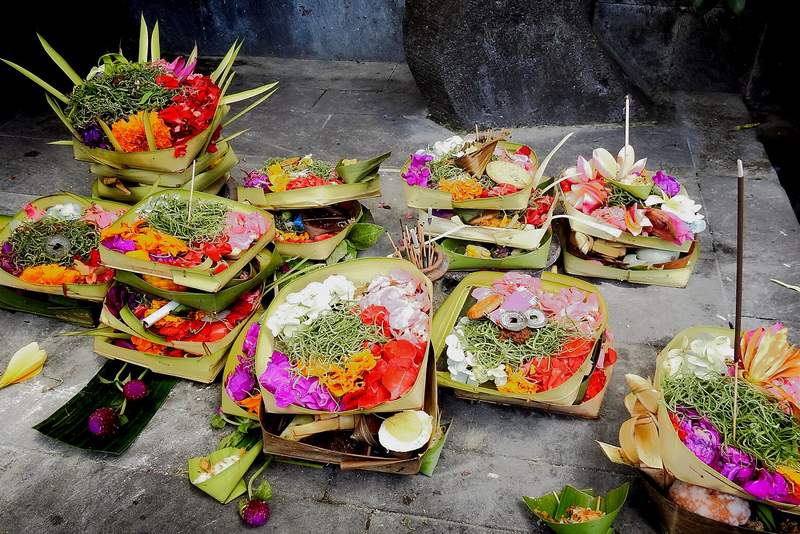
- Watch your step. The small palm-leaf trays on pavements are canang sari, daily offerings to the gods. Walk around them.
- Pay in rupiah. The same rules require payment in rupiah (cash or QRIS) and currency exchange only at licensed money changers.
- Mind the monkeys. Keep sunglasses, hats and snacks out of reach, in the Monkey Forest and beyond.
- Pack for rain. Even in the dry season, Ubud gets afternoon showers. A light rain jacket and shoes with grip are worth packing.
Frequently Asked Questions
How many days do you need in Ubud?
Three nights is the minimum to see the centre, the rice terraces and the water temples. Four or five nights lets you add a Mount Batur sunrise trek, waterfalls and some slow resort days.
How far is Ubud from Bali airport?
About 37 km by road. It takes 1 to 1.5 hours off-peak and 2 to 2.5 hours or more in the late afternoon and on holiday weekends.
Can you use Grab or Gojek in Ubud?
Yes for drop-offs, but pickups in central Ubud are restricted by local transport groups. Walk a few streets out of the centre to book a ride, or use a local driver.
Where is the best area to stay in Ubud?
Central Ubud if you want to walk everywhere; Penestanan and Nyuh Kuning for calmer stays that are still walkable; Sayan and Kedewatan for valley-view luxury resorts; Payangan and Tegallalang for quiet jungle retreats.
Is Ubud safe for tourists?
Yes. The main risks are traffic, uneven pavements, monkeys that grab bags and bite, and waterfalls after heavy rain. Get any animal bite or scratch checked the same day, and only ride a scooter with a valid licence and a helmet.
Is there a beach in Ubud?
No. Ubud is inland, in the hills of central Bali. Sanur, 45–90 minutes away by car, has the nearest calm swimming beach.
Is Ubud worth visiting?
Yes. It's Bali's cultural heart, with the royal palace, temples, art museums, rice terraces and some of Indonesia's best restaurants, all within a short drive.
How much is the Ubud Monkey Forest ticket?
IDR 130,000 for adults and IDR 100,000 for children (2026). It's open daily from 9 AM to 6 PM, with last entry at 5 PM.